#30 – Fury Of The Northmen, Time Life BOOK REVIEW

February 28, 2018
krauserpua

Fury of the northmen

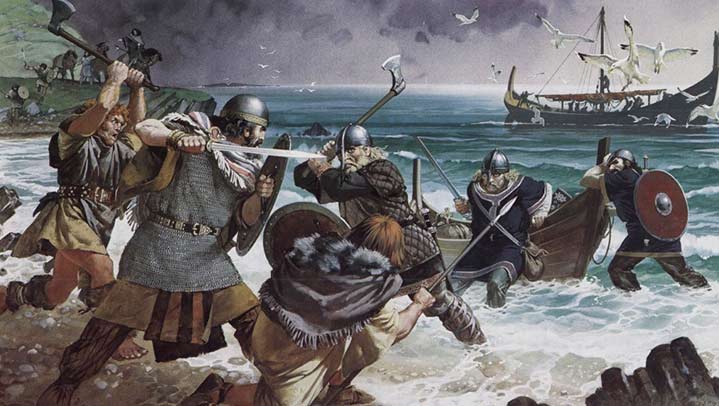
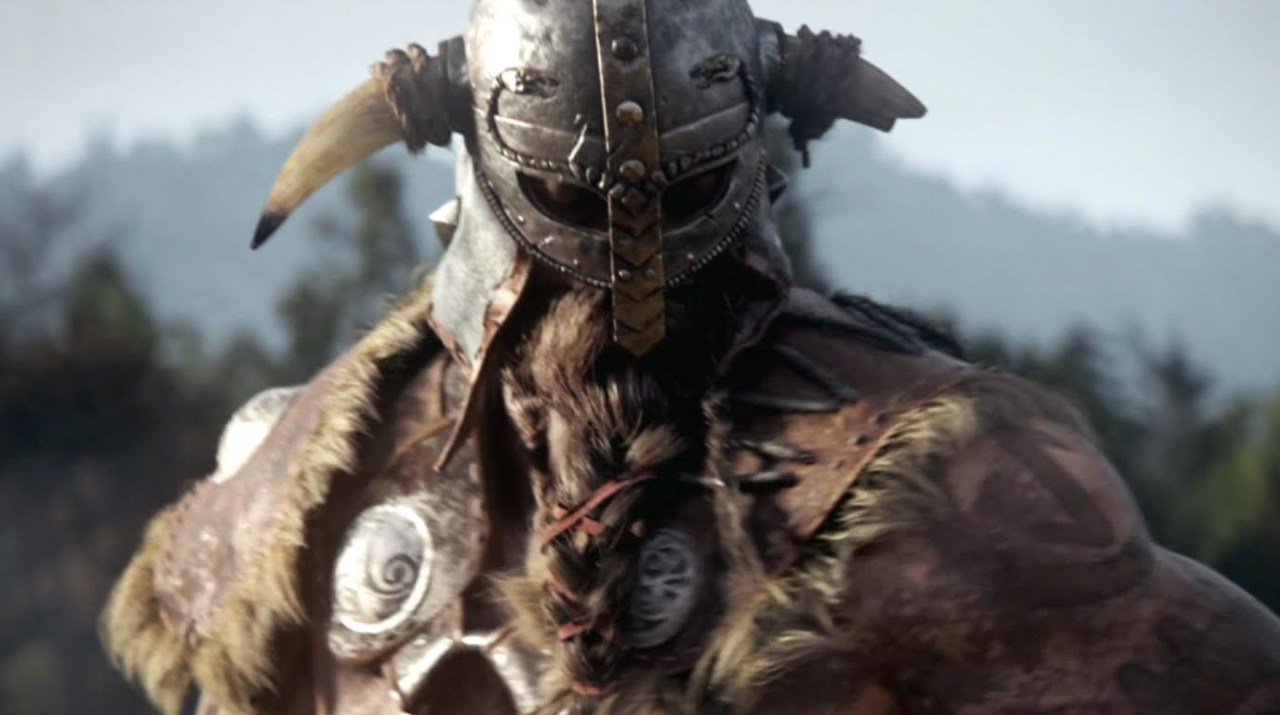
My brother has been recommending I watch the Vikings TV show for quite some time. Apparently there’s lots of raiding, fighting and wenching going on. I resisted that call but did get my fair share of Viking type behaviour from Skyrim and then later in the Skellige islands in The Witcher 3. There’s something about the windswept coastal villages, thatched huts, and dour manner that appeal to me as a Northman.

Now that the Time Life history of the world reaches the Vikings with volume seven I was getting very curious. Frankly, I’d grown a little tired of reading about headhunters flaying each other in Peruvian mountains or Persians beheading entire cities over bizarre sectarian differences. Far better to just strap an axe to your back, jump in a longboat, and then go raiding and pillaging. It’s the original Euro-Jaunting.

Celtic-Warrior-history-and-facts

There were many surprises to me about the Vikings, seeing as I’d only ever conceived of them as ale-swilling village-raiding heathens. Here are some:

  • The Baltic region gives entry to both the Dnieper and Volga rivers, which both flow right down into the Black Sea via Kiev and Moscow respectively. The Vikings used these as major trading routes, bullying the slav villages along the river banks into paying tribute.
  • It was the Vikings who first built up Kiev from a pissant village into a major settlement. On their trading visits to Arabs, they’d shanghai lots of local slavs to sell into Arab slavery, hence the root of the word ‘slave’
  • The Vikings didn’t much distinguish between trading and raiding so from 860AD they had a century-long series of cracks at besieging Constantinople, still by far the biggest and most impressive city of the era. Though it gave the Byzantines conniptions, the Vikings never succeeded.
  • They introduced the jury trial system to Britain.

They were dirty pagans, of course, but it was interesting to read about Norse legends and the use of runes. Round about 800AD the Vikings first got to adventuring in the East and the slavs called them the Rus, which is likely the source of the original name Russia [1]. They also took the easterly fork of the Volga to ride by camel all the way to Baghdad [2].

In the West things were stranger still because after repeated Viking attacks on the Frankish settlement of Paris, a peace agreement was reached by which the Vikings were conceded territory north of Paris which over time became Normandy and the Vikings became Normans. Thus in 1066 when Harold of England fought Harold Hadrada at Stamford Bridge and then raced to Hastings to fight William The Conqueror, it was really a Viking invasion at both ends.

It’s all a bit too much for me. I’d always assumed they were just drunken roughnecks who sailed across the North Sea, smashed some shit up on England’s eastern seaboard, then sailed home to drink ale and butt heads. How wrong I was.

for honor

I reckon this’ll draw some IOIs

These Time Life books always have four sections, intended to cover the whole of the globe within the timespan of the volume. So section two is more on the Byzantines who by now had completely split from Rome to form a rival Christian empire (and thus create the Orthodox patriarchs in opposition to the Catholic popes), had fallen under a weak king then risen again under a strong king. Mostly they were content to extract crushing taxes from their subjects and then plot against each other without end. Section three has the Japanese getting their shit together to create the unified Heian dynasty which produced lots of poetry, calligraphy, court drama, and then finally fell apart to plunge the country into centuries of war between rival fiefdoms.

Most surprising of all in this book is the fourth and final section on North America. It concerns the settled agrarian peoples around the Ohio and Mississippi rivers from 1000BC through to it’s zenith in the 11th century until it’s sudden decline and collapse. Note these were not the Indians Redskins Native Americans who we are currently told were the original people of the US. I’d never even heard of the Mississippians and Ohians.

That’s what’s fascinating about reading all these history books. It’s not just how much I’ve forgotten from my school days but how much of it was never on the syllabus to begin with.

If you are fascinated by wild uncouth men setting sail for Kiev and Moscow to oppress the locals and steal their women, you’ll very much like my memoir series Balls Deep, A Deplorable Cad, and Adventure Sex

[1] A bit weird seeing as what we now call Russians are actually Moscovites and Slavs.
[2] Then a major city and key point on the Silk Road trade with China and India.

#29 – Black Ajax, George MacDonald Fraser BOOK REVIEW

February 28, 2018
krauserpua

Black Ajax

It’s not Floyd nor Adrien Brody

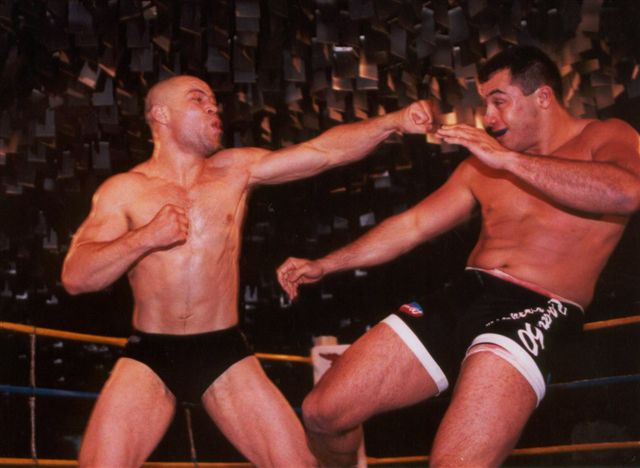
Back in the late 90s, before the internet really existed, I was well into my Mixed Martial Arts. The UFC had only been going five years and a little over a dozen shows. It had been banned from television after Chinese agent Senator John McCain called it “human cockfighting” and used his pull with the boxing industry and state athletic commission to ban it. Some shows, such as Extreme Fighting Championship, even had all the fighters and staff arrested by local police after the event.

It was wild west times for MMA. Just like boxing in the bare knuckle era of the 1800s.

MMA was interesting back then. Fighters tended to specialise in one discipline, entered MMA after achieving much in their own sport, and often had personality too. Nowadays they all look the same: crappy tattoos, facial hair, herky-jerky sprawl’n’brawl style, and giving interviews less interesting than the typical Premiership post-match piece. And don’t get me started on the women…..

Silva_vs_Mariano

Before it became MM-Gay

Sigh, I long for the good old days of MMA. Back when collegiate wrestlers would blow themselves up with steroids then fly down to Brazil for a bare-knuckle bout with local BJJ guys. The days before rounds and referee stand-ups. The days when weight classes were a bit gay and time-limits were getting in the way of the fun.

Sure, it was corrupt as fuck. Sure you had the Japanese writing “we don’t test for steroids” in contracts to make sure their fighters got the hint. Sure, the Yakuza would force managers to sign away fighter rights at the point of a gun.

But this was all good fun. We had Jose Pele Landi Jons, Igor Vovchanchin, Rumina Sato, and Mikhail Avetysan. We had 350lb Bob Sapp piledriving a still-functional Rodrigo Nogeuira. I was well into it and collected all the VHS tapes I could. I got lucky finding one tape trader who had every single Pancrase and Shooto event from Japan, going back to 1993 and 1989 respectively. And I watched them all.

I can barely watch MMA now, it’s become so boring and chavvy. Pride has long gone and no major Japanese promotion has arisen to take it’s place. The UFC is painfully tedious to watch most of the time, being sloppy boxing. Oh there’s the occasional great fight and the occasional interesting fighter (for example Nick Diaz) but I find myself skipping through on fast forward nowadays. [1]

But those wild west days….. oh my!

https://www.youtube.com/watch?v=yCJso06DuxE

Black Ajax is written by the creator of the Flashman series, George MacDonald Fraser, and though I haven’t read the latter I very much mean to now. It sounds like it’s Alexandre Dumas but if the Three Musketeers were all alcoholic womanizers. Black Ajax is set during the wild west era of British boxing, in the early 1800s. Specifically, it follows former slave and first great black fighter Tom Molineaux on his voyage to England to take on reigning champion Tom Cribb [2]. It follows his development, his life in England, his being trained up from a crude slugger into a real “millin’ cove”, and then finally the big fight.

Structurally, the book is experimental. Each chapter is a different participant in the drama reminiscing on the times, and on Tom. His trainers, manager, mistress chip in as well as sports writers of the day. It’s written as speech in an approximation of old English and uses much of the old jargon.

The lefties among you will likely find the language eye popping as it doesn’t SJWise the thoughts of 1800s Englanders. For example:

“Ah’s a fighter!” roars Tom, looking monstrous, and yet in awe of this fiery browbeater half his size. “Ah won my freedom fightin’! Won fiffy-fi’ thousand’ dollahs, beatin’ Black Ghost, an’ my master set me free.”
“Well, ‘imagine that!” cries Bill, in mock amazement. “You mus’ be one hell of a fightin’ terror, Tom Molineaux!” He stepped back, slipped off his coat, and squared up. “C’mon then! You show me! Sport your fives, boy! Fall to, an’ let’s see how you goin’ to beat Cribb!”

That’s some of the milder language. This book is all nigger-this, nigger-that, plus having Molineaux racing around London banging every white slag he can find. I seriously doubt a publisher would touch it nowadays. Black Panther it isn’t.

The book’s momentum drags somewhat in the middle because it’s taking 250 pages to cover just a few fights and the build-up between them. However one thing it does fantastically well is recreate the feel of the times [3] immersing me in the sights, smells and attitudes of 1800s London. Everyone is a rapscallion and Flashman’s dad the worst of the lot. I especially enjoyed hearing boxing discussed using old jargon and concepts. It feels very well researched.

Had there been film-reel footage of the fights I’d have immediately watched them on YouTube. Instead I had to settle for warriors of a later era, watching myself a bit of Burmese boxing (Muay Thai without the gloves, mostly) and then the late great Philadelphia fighter Benny Briscoe and the ol’ mongoose Archie Moore. Oh just watch Benny move. Now that’s old time!

If you’d like to immerse yourself in an old-time art back when it was all wild west, get yourself a copy of the original Daygame Nitro. Or for the same price you could get five times the content at five times the quality by purchasing Daygame Infinite, the Floyd Mayweather Jnr of pick-up advice [4]

[1] I’m sick to my back teeth of Conor fucking Macgregor.
[2] The Tom Cribb pub still stands near Piccadilly Circus and indeed I’ve had a few idates there back in 2010
[3] Presumeably. I’m not that old as to remember them personally
[4] But arguably less cunt-ish

#28 – Accuse The Toff, John Creasey BOOK REVIEW

February 28, 2018
krauserpua

In the unlikely event that I ever discover the secret of immortality, one of the first things I’ll do with my newfound unlimited time is try to read every one of John Creasey’s six hundred plus novels. Sometimes you find an author who just fits what you want to read, and Creasey’s potboilers from an England of a pre-EU age suit me just fine. His most famous characters are the Scotland Yard policemen Inspector West and Commander Gideon, but he also had a series with an upper-class British equivalent of a Raymond Chandler private eye.

Chateux Krauser

I’ll shut myself up in Chateau Krauser till I’m finished

I’m talking about the Honourable Richard Rollison, also known as The Toff. He has the charm and foresight of James Bond, the rough-n-tumble put-up-yer-mitts of a Peter Cheney hero, and he straddles both the aristocratic society and the street level duckers and divers. Quite the man.

This story was written in 1943, when the outcome of WW2 was still uncertain but leaning towards the Allies. It opens with an off-duty commando walking along Chiswick High Road when he suddenly loses his mind and opens up with a revolver on passersby, before escaping in a car. Things aren’t quite as they seem and The Toff takes an interest in the case. It’s a nice crime yarn that’ll suit anyone into police procedurals, hard-boiled, or espionage thrillers.

Accuse the toff

I read this edition

As I hinted above, what draws me to Creasey, aside from his absolute mastery of the 200-page potboiler format, is his image of England. He’s as wolfish as they come and this is a world where commies, krauts, frogs and homos are not welcome. It’s in reading these old pre-Marxist novels that one thing really stands out: no class conflict.

The Marxist world view holds that society is a battleground upon which competing identity groups vie for power and wealth. Back when the bearded parasite himself (Marx) was writing, the key battle was proletariat vs bourgeoisie [1] but the Bolsheviks soon found new enemies of the revolution in the Kulaks, or the Mensheviks, or pretty much anyone really. In our post-Modern world these competing identities are called “intersectionalism” and until recent was essentially “straight white men” vs “everyone else”. [2]

Marxism is an ideology of permanent division. It’s about a gang of malcontents stirring up whatever division they can, and this expresses itself in modern fiction. Of course while doing so they profess the same unity and tolerance that they persistently undermine. Watch for this next time you read a modern book. Look for asides suggesting the author considers the world to be a battleground of identities, such as assuming cops are the enemy of the people, or the rich are screwing the poor, or religion is a fraud to anaesthetise the masses. Marxism positively drips from modern literature once you look for it.

None of that shit with Creasey.

Gentleman

“We’ll have no such tomfoolery in here, thank you”

Like Dennis Wheatley, Creasey presents a people unified across class and geographic boundaries [3] and tied by the horizontal bonds of community, religion, race, parish, hobbies and so on. The nation is like a body politic, an organism. It’s enemies are occasionally rival groups from without but the dozen or so Creasey books I’ve read don’t pit nation vs nation. Rather, his enemies are criminals. They are dastardly rule-breakers. They are a defective malcontents, chancers, and greedy scumbags. They aren’t honest men of competing interests (as a Marxist may call a terrorist a ‘freedom fighter’) and ideology doesn’t justify them in robbing and killing their fellow citizens. Not at all. These villains know exactly what the right thing is and choose to do wrong.

They are rabbits.

As the world shifts back to K and the noose is slipped over the necks of rabbits, it is nice to read fiction professing the K world view. Ten years ago I’d have read this in sadness, lamenting at a lost age. Now, it is like a preview of the world to come. I’ll bet that after the Day Of The Rope, Creasey will find his way into reprints [4]

If you admire highly-educated dashingly-charming heroes who command the respect of men and the desire of women, you’ll love the Honourable Nick Krauser and his adventures in Balls Deep, A Deplorable Cad, and Adventure Sex.

[1] How very ironic that the two men who wrote the Communist Manifesto for the worker’s movement and neither had a real job in their whole lives
[2] Not by accident as if your goal is to tear down civilisation you’d naturally demonise the one group essential to maintaining that civilisation. Though now the left is eating it’s own with ever faster and more vicious enthusiasm, such as the Blacks throwing the whites out of the Democrat Party, and the different race feminists attacking each other. Splitters!
[3] Within a nation, not across nations
[4] It’s all very subtle, mind. Creasey presents his worldview through allusion and nuance rather than hit you over the head with a fifteen page lecture in chapter two like Dennis Wheatley does every time out.

#27 – The Hitler Werewolf Murders, Leo Kessler BOOK REVIEW

February 28, 2018
krauserpua

Hitler Werewolf Murders

World War 2 wasn’t all fun and games, you know. I know it seemed like a great laugh, putting on your great coat, climbing into a tank, and blowing shit up. Frankly, I think I’d have a whale of a time. Thing is, I’d want to do it like I do Call Of Duty and set all the bots to recruit difficulty and have fast regenerating health.

I picked up Guy Sager’s memoir of war on the Eastern Front, The Forgotten Soldier, and got a quarter of the way through before thinking fuck this, it’s boring. Lots of tragedy and precious little fun. So instead I pull this gem from my bookcase.

Werewolves, you say? Surely you’re familiar with the werewolf women on the SS

No? How about the famous werewolf biker gangs of California?

https://www.youtube.com/watch?v=6nQDGTli3uc

It pains me to crush your dreams, but the werewolves of this Leo Kessler book are not shape-shifting lycanthropes but rather it’s just a tough-sounding name for a squad of assassins trained up by the SS in 1945 in a last-gasp bid to stave off Allied invasion [1]

Leo Kessler was an odd sort. He jumped on the Sven Hassel WWII bandwagon to write lurid adventure stories of German troops full of drinking, officer baiting, wenching, and hellish battles against the Russians. None of these bandwagon hoppers were real, by the way. Wolf Kruger the retired German assault captain was actually Iron Maiden-loving English horror writer Shaun Hutson. I found out Leo Kessler’s real identity in the Newcastle branch of a the Child Support Agency [2]. The woman across the desk saw me pull out a Kessler paperback at lunchtime and commented:

“I know him. He’s my uncle”

Turns out his real name is Charles Whiting and he’s a former military historian. I’ve got no idea if he’s a good one. When you read books like The Hitler Werewolf Murders it’s not the historic accuracy that drives you. Consider this passage:

Otto took off his leather flying helmet and clambered out of his seat. He staggered back to where they sat on their parachutes in the captured American bomber and, shouting above the roar of the engines, said: “Buckle on your chutes! Ten minutes to the DZ – dropping zone!”
They nodded and rose to their feet, including the woman.
She wasn’t pretty, but he knew under her bulky overall, she had a nice pair of tits. [page 4]

The assassination squad is thus parachuted behind American lines tasked with murdering a local collaborator in the German town. A bit later the woman has infiltrated the collaborator’s house on a reconnaissance.

She knocked on the door. There was the sound of footsteps. The door squeaked open. A pretty, dark-haired woman of her own age stood there. “Sie wunschen?” she asked politely.
Behind the maid there was a full-length mirror and she caught a glimpse of herself: tall, erect and those big breasts of hers straining to burst out of the poor synthetic material of her pullover. [page 14]

After the murder is committed, the Werewolf team is broken up by on-rushing sentries and the woman escapes into back streets then the next day she looks to hitch a ride out of town.

On the first leg of her journey she had been picked up in a jeep by a callow young Belgian soldier who had eyed those splendid breasts of hers as he had braked to a stop. [page 39]

Things turn out bad as she fails to pass a military checkpoint and is arrested in the ensuing chase through a forest. Finally, she’s held in interrogation at an American base.

He swaggered off, leaving the two of them to stare at the woman, who had risen from her wooden stool in the corner of the makeshift cell.
She was a big sturdy woman in her mid-twenties, with enormous, proudly jutting breasts and a pale, defiant face.” [page 50] [3]

Lest you think this is all about admiring the decolletage of buxom Nazi wenches, there is some story here. The Werewolves murder a half dozen collaborators so the military police of the occupying Americans is tasked with tracking down the killers. They discover there’s a training camp on the German side in a hillside castle, the Werewolf HQ. So a commando raid is planned using newly-formed SAS troopers and it all ends in a bloody catastrophe for both sides. Think of it like The Dirty Dozen or Inglorious Bastards with bigger tits.

I neither recommend nor warn against this book. It’s exactly what it sounds like and canters along at a fair pace with the usual lashings of banter, sex, and violence. It lacks the hard-bitten edge of Sven Hassel, feeling somewhat more comical. And if you can’t be bothered, try watching this for the same vibe.

Ilsa She Wolf of the SS

They made three sequels

If you like chasing after big-breasted wenches and fancying yourself as a member of an underground secret society, you are probably itching for a copy of Daygame Infinite which can be obtained by clicking here and sending me a pack of Ami cigarettes and three crates of 20mm ammunition for an anti-aircraft quad-cannon.

[1] I have no idea if there really existed such a squad outside of Leo Kessler’s mind. He wrote histories of the Werewolves under his real name. We can certainly hope.
[2] Long story, but I was there to do a few day’s work in the back office. Nothing to do with my own bastard kids, should I have any
[3] Big tits and mid-twenties birds. Love it.

#26 – Empires Besieged, Time Life BOOK REVIEW

February 28, 2018
krauserpua

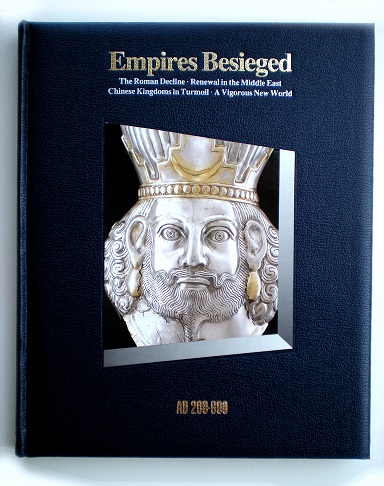
I’m afraid I’ll be going off on a tangent in this review because this book was actually #21 and I’m up to #33 now, so the details are all rather hazy.

Empires Besieged

One of the most important axioms you can ever internalise is history is written by the victors. I used to brush that statement off, knowing it to be true but never fully appreciating just how deeply it is intertwined with the fabric of how we view the world. It puts us in the heady realms of unknown unknowns.

“There are known knowns. These are things we know that we know. There are known unknowns. That is to say, there are things that we know we don’t know. But there are also unknown unknowns. There are things we don’t know we don’t know.” – Donald Rumsfeld

This goes back at least as far as Plato’s cave, an allegory later turned into The Matrix movie. Here’s how it’s commonly described: A group of prisoners have lived chained to the wall of a cave all of their lives, facing a blank wall. They watch shadows projected on the wall from objects passing in front of a fire behind them, and give names to these shadows. The shadows are the prisoners’ reality, which they take to be reality because they know no other. They cannot perceive the true form of reality. The inmates of this place do not even desire to leave their prison; for they know no better life.

When reading history, you are looking at the shadows. Whoever writes it determines how you perceive history.

In reading Empires Besieged it was illuminating to consider which cultures were the subject of historical discussion and which were not. As a bare minimum, a culture needs to have left behind evidence they existed. Many times in a discussion of the great civilisations of China, Greece, Rome, and Persia there’ll be reference to such-and-such a tribe who got smashed. They disappeared from history and most of the records of them ever having existed is the chroniclers of the culture that smashed them.

Attila Total War

An empire besieged, yesteryear

Some of these tribes survived but interbred and were absorbed by others. Throughout this Time Life series there are the ‘big’ cultures where historians know a lot, stretching from Ancient Egypt up through Rome before swinging out east to Greece, Middle East, Persia and over to China. Outside of that narrow belt there be dragons. The nomadic tribes of the Siberian steppe are a constant menace for over a thousand years but they didn’t have scribes and ultimately they lost the game of thrones. The barbarians of northern Europe are similarly dark, known only for their marauding raid into the great civilisations. It’s not until around 200AD that we come to know much about who they are.

“That’s all ancient history” you may say, but modern history is also written by the victors. You can see this daily in the MSM, and can test it too. Watch a Donald Trump speech in full (or a Jordan Peterson interview) and then observe the crafting [1] process that reshapes the message before it is entered into the official narrative history. There are a lot of Americans who still think Trump said all Mexicans are rapists and that he sexually abused dozens of women [2]

Roman britain

Roman British history, as rewritten by 2017’s victors

I’ll bet you have a completely inaccurate view of World War 2 and the Holocaust [3]. The official narrative is that Nazis are bad, they persecuted Jews, they started the war, then murdered six million Jews, and it was all rather unprovoked. Perhaps a bit to do with the terms of the Versailles treaty, but we still need to punch Nazis. If you haven’t studied history you may be surprised by the following:

Every damn time

Down the memory hole for you, inconvenient fact

I’m not pretending those bullet points are the whole truth. I’m not pretending the Nazis weren’t unsavoury characters. But how much of that did you know? Frankly, the Holocaust (the bit that was real) sounds to me like an under-reaction after decades of intense provocation. Germany was under attack from Jews on the West, the East, and internally in an existential fight for its own existence as a nation and a people.

Funniest thing of all is, when seen through the non-stop battles and genocides of history, this whole German-Jew thing is just another in a long line of ethnic struggles.

If you like the idea of invading Germany to corrupt its women then you’ll probably like Daygame Infinite. If you’d rather read a fake story written years after the fact by a lying piece of shit, you may prefer Balls Deep Anne Frank’s diary.

[1] i.e. “lying and propagandising”
[2] This will change, because Trump is winning. However for now, the old winners still run the MSM
[3] Though I trust my readers have a much higher than average chance of having researched the topic and hit upon the truth.

Daygame Infinite Review #2

February 27, 2018
krauserpua

You know how it is: you wait ages for a bus and then three come along at once. It sounds like enthusiastic daygamers are finally getting to the end of the epic journey that is reading Daygame Infinite. Here’s a review recently posted to a closed Facebook group of daygamers by Mr. R. I present it in its entirety and without edits.
Infinite smaller res cover
It’s taken a long time to finish reading the book, but I’m now ready to share my review of Daygame Infinite, the latest and most in-depth book from the dark sorcerer of daygame himself, Nick Krauser.
In short: I think it’s an excellent book, filled with solid knowledge, but its usefulness depends on your level. This is a book for experienced daygamers who want to improve, not for guys who want to jump in and “give daygame a try”.
In long: I think most of the content will be no use to guys who aren’t actually out there approaching. Which is good, because it’s not a list of “do these actions and get laid”, it’s in-depth examinations of real-life situations that you need to apply to your own circumstances.
Even if you read Krauser’s responses and see nothing like what you’d do, he explains not only what he was doing, but also explains why he did it, giving you the framework to explore your own reactions and consider whether they’re the right choice in any given moment.
If there’s a downside to the book, it’s that it doesn’t ‘flow’ like a novel, but that’s because it’s a real textbook, and you should dive in and out of sections for reference when you need to. It’s not a book designed for repeated cover-to-cover reading.
As you’d expect, Infinite covers the whole process from approach to bedroom, but in fact one of the major sections is all about everything before the approach – how to understand yourself and your needs, and put yourself in the position to actually enjoy daygame without being so driven by outcome or process dependence.
The book fits together with Daygame Mastery – in the earlier book you get the “what to do” instruction, while Infinite proves the explanation of why that action was recommended. Mastery is the book that takes you from your first few successes to solid intermediate level, Infinite is the follow-on that supports creating your own style and cultivating a congruent masculine persona.
So which volume you should buy depends on where you are in your journey. Everyone can pick up a copy of Mastery and find some useful tips and techniques to apply, but Infinite requires that you’ve reached a certain point before it will even become possible to understand the meaning behind the words. This isn’t a boast “look how advanced I am”, it’s just an acknowledgement that some issues never come up until you’ve had enough success to think “so, what next?”
Why do I rate it so highly when it has (potentially) such limited audience? Though I have spent time with Krauser hearing about his thoughts on daygame in detail, I also independently came to several of the same conclusions he did in the past year and a bit of intensive daygaming since leaving the UK. It won’t resonate with everybody, but if you’re a guy at intermediate level who’s actively approaching but finding less satisfaction from the process, the introspection triggered from comparing your actions and motivations to those in the book will rekindle some of the love, and return the joy to your approaches.
You can buy your copy of Daygame Infinite by clicking here. Full disclosure: I know Mr. R. I did not badger him for a review nor promise anything in exchange. He paid full price for his copy.

More Daygame Infinite Seminar

February 25, 2018
krauserpua

I’ve been so carried away with my reading (I’m now onto book #32 of 2018) and new content for the Daygame Mastery reissue that I forgot to keep the Infinite seminar flowing. Sorry lads, here’s part three.

In other news I am proud to link the world-first Daygame Infinite review [1] from a London guy you’ll be hearing a lot more of in 2018: Thomas Crown. “Why a lot more?” you ask. Because he’s closing in on the release of his first memoir, which will no doubt do the rounds among Euro-Jaunt circles. Also, his blog is pretty good too. Here’s his overall thoughts on my book:

“Most people expected the book to be a home run, and I was one of them. My expectations were met. The book is excellent and I acknowledge the “Daygame Infinite vibe” when I go out now” – Thomas Crown, link above

In other news, I have settled on writing TWO new sections for the Daygame Mastery reissue. The first is a 13k-word “Banter Clinic” that just passed it’s editing stage today, so I’ll send it off to my layout guy tomorrow. While he’s painstakingly laying out the WhatsApp chats I shall finish up the new inner game section. I still expect it to be released before the end of March.

[1] I’ll link others too, so long as you don’t shit-talk me of shill other people’s products such that me linking ends up shilling for them too.

#25 – The Hand Of Fu Manchu, Sax Rohmer BOOK REVIEW

February 23, 2018
krauserpua

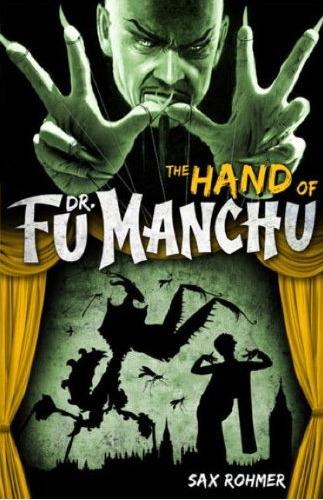
Hand of fu manchu

There are even better covers

I was watching the new Netflix sci-fi drama Altered Carbon last night, episode four, and was struck with how utterly degenerate modern culture is. The show is basically Blade Runner 2049: The TV Show. The production values are eye-poppingly slick so that it feels like a Hollywood blockbuster the whole way through. However, two contrary impulses overcame me while watching:

  1. This is so sadistically vicious
  2. This is so mind-numbingly boring

How can both feelings co-exist in a single 55-minute episode? Early on the girl cop – a thoroughly loathsome grrrl – is running her mouth with vulgarities at work and then takes offence at a male prisoner being brought in. He’s got his hands cuffed behind his back and two burly cops escorting him. So this cunt of a woman stuns him with a cattle prod in the nuts. She assaults the bound prisoner right in front of the entire office.

Rather than beat the shit out of her, or bring her up on charges, or even mildly remonstrate with her, her colleagues just continue with work as usual. This scene seemed meant to let you know she’s a tough no-nonsense independent woman. It was simply sadistic.

Ortega

The actress is certainly good at portraying a cunt

Later it gets worse. The main character, a Ryan Gosling-a-like, is captured by a shadowy group and then tortured in virtual reality (the twist being he can be tortured to death and revived ad infinitum). These scenes are outrageously vicious, sadistic to the extreme that I can’t think of a single movie on the notorious 1984 “video nasties” list that comes close.

But this is almost-network TV and…. meh!

The rest of the show has a dream-like ambience to it where nobody seems quite real and everything feels underwater. It was then that I figured out what was striking me so oddly about this TV show….. it was a metaphor for the modern rabbit people [1]

Anonymous Conservative has made much hay from the observation that as rabbits drift further into r-selection their amygdala is so withered that they need ever-increasing stimuli to get the dopamine rush they are addicted to. It’s like a junkie needing ever more dope. We see this in the pick-up community with lost-soul PUAs getting into ever more depraved sexual practices until they are all hanging out in fetish sex clubs with horrendously unattractive women. We see it with jaded bedroom trolls scouring LiveLeak and BestGore for stimulation. And we see it in movies with ever-increasing sadistic violence.

It’s not absolute power that corrupts absolutely. It’s the absolute comfort you can acquire when you have absolute power. Consider this Thomas Wictor thread for a reference on what absolute leaders get up to. See what this blog is saying about the what bored rich people get up to.

When everything is easy, your amygdala withers and you pursue every more degeneracy for stimulation, and every moment between these hits is utter boredom. It’s nihilistic. It’s like watching an episode of Altered Carbon.

Altered carbon

Beautiful and sadistic

Sax Rohmer’s The Hand Of Fu Manchu is almost quaint by comparison. It’s the fifth of his books and if you haven’t heard already, Fu Manchu was the prototype for the James Bond super-villain. Like Altered Carbon it too presents a sonanbulistic dreamy world as unofficial detectives haunt a dystopian metropolis where nothing seems quite real and they are constantly on the fringes of a secret world. Whereas Altered Carbon has mind-hacking as the narrative device to explain all the confusion, Fu Manchu has opium, hashish and bizarre Chinese elixirs (it was written in 1917). Altered Carbon has it’s secret society of hi-tech conspirators whereas Fu Manchu runs the secret Si-Fan group of Chinese and Tibetan spies.

Really, the parallels are quite interesting. Altered Carbon is essentially an old-school hard-boiled detective story pasted into a cyberpunk future [2]. The difference is that Sax Rohmer lived in a K-selected world. In his world all of England is united in defence of it’s culture and territory. The Yellow Peril is an enemy here and little good comes from letting foreigners in, unlike Altered Carbon which wants us to accept a multi-cultural shithole as the norm [3]

Sax Rohmer is also unburdened because he’s not writing for an audience of nihilistic thrill-seekers desperately craving an escape from modern life. Everyone in Rohmer’s books talks politely, they wear suits, they are punctual, and there are none of the pointless exchanges that pepper modern TV dramas:

Him: Fuck you
Her: No, fuck you!
Him, No, FUCK YOU!

That’s not actually a scene from Altered Carbon, by the way.

Comparisons aside, the reason I’ve now read the first five Fu Manchu books is they present a nice alternative to their contemporaneous Sherlock Holmes stories. Both are puzzling mystery stories set in late Victorian London with a detective and his trusty (but dim-witted) sidekick exploring the secret worlds of conspirators. Arthur Conan Doyle was notable for his crisp well-organised and highly logical manner whereas Sax Rohmer plays up the mystical and the confusing. It seems like Dr Petrie (the narrator) is constantly confused and can’t seem to stop putting his foot in it. He’s a bumbling fool, unlike Dr Watson who was oafish but never got in Holmes’ way. Petrie is constantly sabotaging investigations because he’s madly in love with a gook in Fu Manchu’s employ – in this book he has the deadly Chinese doctor held at gunpoint and lets him go in order to get his gook back [4]

These books are crime fiction done the old-fashioned way. Atmosphere, a cat-and-mouse chase, everyone has a Browning pistol in his suit pocket, and most murders are knifings (and don’t happen ‘on camera’). There’s none of the sadism you see in modern TV.

Back in 1917, people had plenty of other things going on to keep their amygdala busy.

If you like the idea of a mastermind who runs an international empire of nefarious actors who spread across European cities to befuddle and dishonour local women, always one step ahead of the police, you could try Daygame Infinite. Your hypnotic induction into my frame begins there.

[1] That’s r-selected idiots, to you
[2] So, yeah, Blade Runner. It even has the Japanese script everywhere and lots of rain
[3] The white male hero lets a Mexican woman tell him what to do in real life, and an African woman tell him what to do in his flashbacks. It’s horribly mis-cast and both are just mouthy cunts.
[4] Should’ve just paid the bar fine, imo

#24 – Son Of Monte Cristo vol.1, Alexandre Dumas BOOK REVIEW

February 22, 2018
krauserpua

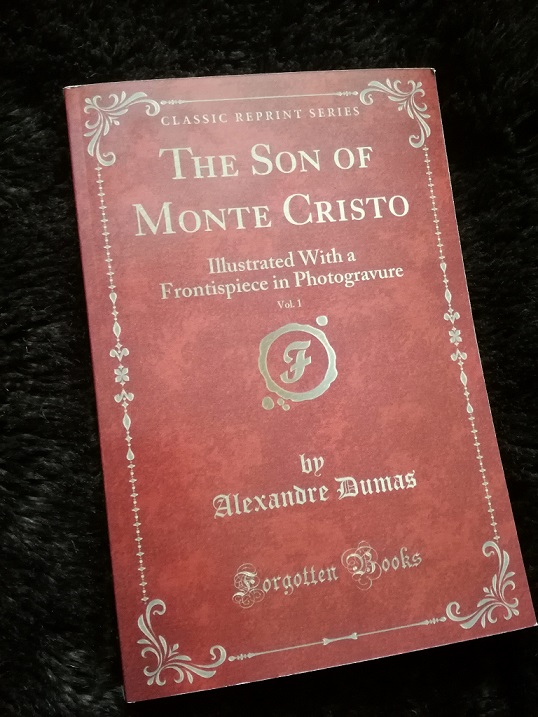
Son Of Monte Cristo

Quite a nice reprint edition actually

The French newspapers of the immediate post-Napoleonic era were the Kindle Unlimited of their day. Nowadays, prolific writers churn out episodic content for Amazon’s platform and build up a series-loyal readership. Each yarn unravels over small novellas, each following on from the next, as you are exhorted to save money by purchasing the bundle now. Successful writers can find their brand expands beyond their ability to produce new stories and thus a network of ghost writers, editors, proof-readers and cover designers make a living from the one writer’s brand.

Back in 1850, Alexandre Dumas was up to exactly the same thing. This book is an example because he quite clearly didn’t write it. He’d created the Dumas name-recognition and Count Of Monte Cristo was one of his most popular books. Readers thirsted for more stories within the Marvel Monte Cristo universe so, when Dumas had died without furnishing a sequel, ghost writers obliged on his behalf.

This book is actually written by Jules Lermina, a Frenchman who wrote not only this and another Monte Cristo story, but also stories inspired by Edgar Allan Poe and stories which pre-figured the Tarzan stories of Edgar Rice Burroughs and the yellow peril stories of Edgar Wallace [1]

Three stooges

You don’t know the Three Edgars?

If I didn’t already know this wasn’t Dumas, I’d have guessed it within a handful of pages. Although Lermina does a serviceable job of imitating Dumas’ style, he can’t reproduce the quality. In particular, this book is extremely fast-paced to the extent that Lermina wastes almost no time on scene-setting or character development. This is a book of action. Characters do, they don’t much think.

This is a double-edged sword. I like derring-do as much as the next red-blooded male but to care about events you need to care about the characters experiencing them. Dumas was especially good at drawing scheming avaricious men, vampish women, and deluded pompous oafs. He’d constantly set characters to secretly swindle each other while making grand public gestures of nobility. Many many times upon reading Dumas, a wry smile crept onto my face.

Lermina is too straight-forward for that. In his story the white hats are all good and the black hats are all bad. It’s balls-to-the-wall and the plot hurtles forwards. I do wonder if he took this approach knowing his limitations, figuring that fast-moving action is the best way to prevent the reader lingering long enough to notice cracks in the edifice.

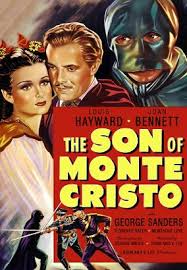
Movie poster

It would work well as a movie

As a simple tale of adventure in the Monte Cristo universe, I enjoyed this. In its 380 pages we have a public trial of Benedetto (a cutthroat whom Dante revenged himself upon near the end of Dumas’ original novel) and wrapping up of loose ends. The main characters are scattered to the winds. Benedetto escapes his sentence as a galley slave and reinvents himself as a pro-Austrian plotter in occupied Italy. Before the story is through, we’ve seen Paris intrigue, Marseille jail breaks, Italian revolution, tussles with desert Arabs in Algeria, and a big pub brawl on the wharf. Heady stuff.

Dumas patiently plotted his stories, switching perspectives from chapter to chapter to set up each plot thread in the first third, so the reader can enjoy all paths crossing in the second third. By the end of the last third, things have resolved in ways that were theoretically predictable from the beginning. Dumas relies a little on providence to supply chance encounters (e.g. the protagonist bumping into the antagonist in the same street in a city as large as Paris) and furnishes multiple rug-pulling surprises but it always feels fair and reasonable. Lermina isn’t as far-seeing so his story is more like a toddler telling a story.

And then this happened… and then that happened… and then this happened….

Still, I started reading this book at midnight, hit the halfway mark at 3am (my bedtime) [2] and then finished it the next morning by my third cup of coffee. I enjoyed it. I dare say it was a page-turner. It’s certainly an easier read than Dumas.

If you liked Count Of Monte Cristo and want more, you could do worse. If you like reading light, slightly-nonsensical fiction and wonder how the equivalent books were in 19th century France, you could do worse. Otherwise…. there are far better books out there, including dozens by the man that Lermina is imitating. That said, I will be reading volume two soon.

If you want to read a large high-quality book which has been shamelessly imitated by lesser writers, you could do worse than Daygame Mastery. If you want a real legitimate sequel, there’s only Daygame Infinite

[1] Evidently, he had a thing for men called Edgar.
[2] I’d had my supper, but thanks for asking

#23 – Light In The East, Time Life BOOK REVIEW

February 21, 2018
krauserpua

My favourite author of all time is Robert E Howard. He’s best known for his Conan saga but he also holds the distinction of inventing the Sword & Sorcery genre with his Solomon Kane character. Not limiting himself to any one genre, he’d write anything that was manly and would earn a writer’s check from the 1920s-30s pulp magazines. Thus he wrote Lovecraft-style horror, wild west tall tales, and my favourite of all, crusader stories.

Gates of empire

The wrong book

A great collection of crusader stories can be found in Gates Of Empire (Wildside Press) [1] featuring stories written from 1931 to 1934. These are lusty, epic yarns of Frankish knights battling marauding Arabs and Turks. Consider this opening to Lord Of Samarcand:

“The roar of battle had died away; the sun hung like a ball of crimson gold on the western hills. Across the trampled field of battle no squadrons thundered, no war-cry reverberated. Only the shrieks of the wounded and the moans of the dying rose to the circling vultures whose black wings swept closer and closer until they brushed the palled faces in their flight.”

Wait a minute, you say. Aren’t you reviewing the wrong book here?

Well, Gates of Empire is all about the Crusades which were a Frankish counter-attack to the Turkish invasion of Constantinople. Howard never left his home town of Cross Plains, Texas but he was a voracious reader of history. It was the spirit and events of these times, around 1000AD to 1200AD that he fictionalised in his best stories. Take, for example, The Lion Of Tiberius:

“The battle in the meadowlands of the Euphrates was over, but not the slaughter. On that bloody field where the Caliph of Bagdad and his Turkish allies had broken the onrushing power of Doubeys ibn Sadaka of Hilla and the desert, the steel-clad bodies lay strewn like the drift of a storm. The great canal men called the Nile, which connected the Euphrates with the distant Tigris, was choked with the bodies of the tribesmen, and survivors were panting in flight toward the white walls of Hilla which shimmered in the distance above the placid waters of the nearest river. Behind them the mailed hawks, the Seljuks, rode down the fleeing, cutting the fugitives from their saddles. The glittering dream of the Arab emir had ended in a storm of blood and steel, and his spurs struck blood as he rode for the distant river.”

None of this made much sense to be, historically, as I first read it ten years ago. I’m aware Howard wasn’t going for strict historical accuracy but these eddies and flows of empire had no meaning to me. I lacked the greater perspective of world history within which to anchor these battles, and to colour them with knowledge of the customs and culture of that era. It is reading these Time Life books that has deepened my enjoyment of Howard’s work.

Light in the east time life

The right book

Right now I’m reading about the Seljuks, who became what we know as Turks. They were a nomadic border tribe of sheep herders related to the Mongols and they too fought on horseback, were expert mounted archers, and fought primarily harrying battles based on mobility. They emerged from around Turkmenistan [2] and swept through Persia, defeating the Byzantine Empire in a decisive battle at Manzikert in 1071.

Reading the Time Life description of the build-up, battle, and aftermath felt ripped straight out of a Howard story. The Seljuk leader Alp Arslan (“Heroic Lion”) pushed out of Persia where he led his Sunni Muslim army under the name of Bagdad’s Sunni caliphate. His goal was an internecine battle with the Shiia anti-caliphate in Egypt and to clear the way he reached a non-aggression treaty with Byzantine emperor Romanus. As Arslan pushed through Syria, Romanus took advantage of his absence to reconquer Christian Armenia from Muslim influence, so Arlsan turned back around and eventually the battle of Manzikert ensued.

His army routed, Romanus was captured but treated well and agreed a new treaty because Arslan was not interested in taking Byzantium. However upon his return to Constantinople, palace plotting by his top general Adronicus had placed a rival on the throne and Romanus was blinded and exiled:

“Carried forth on a cheap beast of burden like a decaying corpse, his eyes gouged out and his face and head swollen and full of worms and stench, he lived on a few days in pain and smelling foully, and finally died” [contemporary historian]

Arlsan himself was killed after returning east to put down a rebellion. Capturing a fort, the commander was presented to him bound up. The commander so infuriated Arslan with his insults that the Seljuk leader had him released so that he could shoot him dead himself, but his arrow flew wide. In the ensuing confusion, the prisoner drew a concealed dagger and sprang at the Sultan, stabbing him before he himself was hacked to pieces. Arslan died four days later, in 1072.

Howard’s stories brim with such events. Lion of Tiberius seems directly inspired by the Seljuk advance on Egypt, and Turkic-Arab fighting. It tells the story of a son of the defeated Arab who is convinced to lay down his arms in defeat upon promise of quarter, and promptly blinded in spite by the victorious general, dying soon afterwards. His man-at-arms, an Englishman John Norwald, is captured and condemned to life as a galley slave. Twenty years later he hunts down the general, infiltrates his camp at night, and stabs him to death with a dagger. I’m sure Howard knew the story of Romanus and Arslan.

Crusaders

“Fucking get stuck in lads!”

I’m quite regretful that it took until my fifth decade in life to make a genuine study of world history. It’s one thing to slot more pieces into my overall Grand Scheme Of Everything mental map – that’s an obvious benefit of this study project. What I didn’t expect is to enjoy my fiction reading a lot more.

If you’d like to learn the Grand Scheme Of Banging Chicks, you can’t do any better than Daygame Infinite. It’s the best book out there and not a word of fiction.

[1] There are far cheaper versions available. I just linked the one I own.

[2] I’d always wondered why that country was named so, despite being rather far from Turkey. Now I know.