#38 – 20,000 Leagues Under The Sea, Jules Verne BOOK REVIEW

March 9, 2018
krauserpua

book cover

Here’s a rule of thumb I use in deciding if a book is any good: do I keep putting it down and reading other books instead?

I bought Twenty Thousand Leagues Under The Sea (TTLUTS) in Serbia in November last year. I’d just knobbed a gypsy-looking girl from Nis who had massive [1] fake tits. I decided that was me done with chasing girls for the year so I wandered into a big bookshop just off the Knez Mihailova main boulevard [2] to their huge English language section and perused the Wordsworth Classics shelves.

Fake tits

Seriously, just like these

“I’ve never tried Jules Verne. He was the original sci-fi writer wasn’t he?”

I wish I hadn’t. I read thirty pages – this story starts off good – but got distracted with Resident Evil VII and the Mafia III dlcs. I read another twenty pages at the arse end of December and was bored. There were still two hundred pages remaining and I just didn’t much fancy the job. It felt like hard work.

Between starting and finishing TTLUTS I read thirty-seven other books. That’s how poor an impression poor Jules Verne made on me. But what’s so wrong with this book?

Here’s my thoughts.

1. Intention + Obstacle
The key driver behind drama is that the protagonist wants/needs something (intention) and then must try to overcome the obstacles in his way. Think back to any fictional book or movie you enjoyed and you can easily pull out the intentions and obstacles. TTLUTS starts out well with mysterious reports of a sea monster than has rammed ships in every ocean, new stories about it, and then a hunting expedition setting out to kill it. The narrator is a natural scientist aboard the hunting ship. This is the good start the book gets off to:

Intention: Find and kill the sea monster
Obstacle: Locating it, and besting it in battle.

As we all know and the cover makes clear, the “sea monster” is actually the world’s first submarine, The Nautilus, piloted by Captain Nemo. The narrator is rescued from the sinking ship and held politely as prisoner aboard the submarine along with two of his colleagues, his servant Conseil and a grisly Canadian harpooner called Ned Land.

From this point on the intention and obstacle disappears. The rest of the book is just Nemo taking them on an underwater magical mystery tour [3] and the narrator documenting the fauna and sea life in excruciating detail. There are occasional dramas, such as being attacked by savages, being trapped under ice, but they all come and go quickly. There is no long-term momentum.

This means the book flounders badly. It’s becalmed, like a sailing ship without wind. This more than any other thing is what makes the book drag. It’s aimless.

Finding-Nemo-finding-nemo-3570035-853-480

Wish I’d never found him

2. Horrible prose
Jules Verne cannot write a good paragraph to save his life. Some of his paragraphs are so long and turgid that they last longer than an enter page. Each page in this paperback edition has 42 lines and approximately 12 words per line. So, some paragraphs are over FIVE HUNDRED words long. That’s a wall-of-text that would make even the most insane conspiracy theorists of QAnon scholarship think “that dudes’s crazy writing walls of text like that”.

Worse is that so much of the prose is pointless zoological detail. For example:

“The vegetation of this desolate continent seemed to me much restricted. Some lichens of the species unsnea melanoxantha lay upon the black rocks; some microscopic plants, rudimentary diatomas, a kind of cells, placed between two quartz shells; long purple and scarley fucus, supported on little swimming bladders, which the breaking of that waves brought to the shore. These constituted the meagre flora of this region. The shore was strewn with molluscs, little mussels, limpets, smooth bucards in the shape of a heart, and particularly some clios, with oblong membraneous bodies, the head of which was formed of two rounded lobes. I also saw myriads of northern clios, one and a quarter inches long, of which a whale would swallow a whole world at a mouthful; and some charming pteropods, perfect sea butterflies, animating the waters on the skirts of the shore” [page 193]

Did that just paint a memorable image in your mind? Of course it fucking didn’t. That’s only the second half of a paragraph too! Lest you think I chose the worst example, I assure you I just turned to a random page a moment before typing. Imagine page after page of these walls of text while nothing is actually happening in the story. Your eyes will glaze over and you’ll struggled not to skim until there’s some action. [4]

3. No character development.
Captain Nemo is a well-educated, cultured man who holds a deep bitterness against landlubbers which is never explained nor resolved. Conseil is a polite plucky servant who says “yes sir” and “I should think so sir” to his master. The narrator is fascinated by the sea adventure and wishes to record everything while half-heartedly thinking of escape. Ned Land is a gruff whale hunter who is impatient to get back on land so as to board another boat and start killing sea beasts again. That’s it. The characters are completely one-dimensional. We never find out their back stories, or deeper motivations, or hopes and dreams, or interests. They never change from page one to page 244. Nobody has a character arc and they barely even interact with each other except to exchange pleasantries.

This book is awful. So why is it considered a classic?

I can only assume it was Verne’s imagination capturing the readership. This book was written in 1870 when science fiction didn’t exist. By casting his book as an adventure under the sea and then pretending to document its wonders, the reader could feel like they were getting a travelogue. It reads a bit like a BBC2 Holiday show.

Fuck the lot of you cunts

Better off with a ticket for this kind of thing

There’s no excuse for the shitty prose or absent plot. It was written a full 25 years after The Count Of Monte Cristo. Frenchmen had long since figured out how to write a good novel.

If you’d like a travelogue of a wild adventure above the sea, gasping in excitement at all the exciting street fauna wandering past the narrator, you’ll have to buy my memoir Balls Deep, A Deplorable Cad, and Adventure Sex

[1] And I mean massive.
[2] Belgrade has many bookshops, all of which seem to do a brisk trade. Yet another reason why I like Serbia.
[3] Living in his yellow submarine. Did you see what I did there?
[4] Bear in mind this is not scientific witness. Verne is just making all this shit up because half the time the Nautilus is in deep ocean that had never been visited for real.

Part 5 of the Daygame Infinite talk

March 7, 2018
krauserpua

Here’s some daygame content for a change, the next part of my Infinite talk.

In other news I booked up my first two months of travel for the 2018 season. I’m going to prioritise girlfriends, socialising with buddies, and drinking beer over the usual skirt chasing but I certainly expect to keep my hand in with the game. Should any pretty girl be sufficiently indiscreet to throw me a come-hither look you can bet I’ll still pounce upon it.

I’ve signed up all four of the residential coaching sessions I wanted to do this year. I’m may yet add to them, so feel free to contact me if you’re interested. Read the “Coaching” tab at the top of the page for details. As yet I’m undecided. People interested in coaching July/August are the most welcome to enquire.

I’m pleased to announce there’s a detailed third review of Daygame Infinite in the comments to this post. Here’s a few snippets:

“The case scenarios cover three different types of girls and also provides further “calibration examples” which is effectively more examples (that’s a good thing). I can say from my personal experience in adopting a similar style (not using same words, but style) that the engagement I am getting from girls has both increased and improved.”

“The book is damn good”

So click on the link if you’d like a third opinion on the product.

#37 – Durkheim, Frank Parkin BOOK REVIEW

March 6, 2018
krauserpua

Durkheim Past Masters

But why is Freud on the cover?

I’m a fan of high quality scholarship and it thrills me to my panties to find an unexpected gem. Frank Parkin’s overview of sociology’s founding father Emile Durkheim is such a book. It’s not going to blow your socks off, but it’s a succinct insightful introduction to a complex thinker, written by a man in full command of his subject.

So impressed was I that I had to look a bit more into Parkin’s background. It seems he was one of those well-read cynical English professors who could effortlessly delve into, exegesise, and compare competing theoretical paradigms without becoming a shill for any, nor lose his cutting humour. Parkin specialised in Leftist theory without being what we red pillers would call a leftist. Consider this in his 1979 book Marxism And Class Theory:

“Contemporary western Marxism, unlike its classical predecessor, is wholly the creation of academic social theorists – more specifically, the creation of the new professoriate that rose up on the wave of university expansion in the 1960s. The natural constituency of this Marxism is not of course the working class, but the massed ranks of undergraduates and postgraduate students in the social sciences; its content and design mark it out exclusively for use in the lecture theatre, the seminar room, and the doctoral dissertation…. professorial Marxism has, in the manner of all exclusive bodies, carried out its discourse through the medium of an arcane language not readily accessible to the uninstructed…. [professorial Marxists’] presence at the gates of the Winter Palace[to join the revolutionary fight] is perfectly conceivable, provided that satisfactory arrangements could be made for sabbatical leave” link here

Lol. Parkin knew where the Western universities were headed. His primary scholarly focus was upon the three founding fathers of sociology: Marx, Weber and Durkeim. He wrote overviews of all three men. So, let’s turn back to Durkheim. The best thumbnail sketch of the Frenchman’s ideas comes on literally the last page of this book:

“Durkheimian sociology is driven by a concern to identify pathologies in the body politic with a view to offering practical remedies.” [page 86]

He was both a functionalist and a postivist. Crudely, his functionalism means his metaphor for society was the body, in which all parts are there to fulfill a function and, all parts contributing correctly and in balance will result in a healthy body. His positivism means he sees social facts as things that can be observed and analysed much as how the physical sciences see physical things [1]. With these twin commitments, Durkheim sought to carve out a space for the emerging discipline of sociology and a methodology with which to research it. He put this to the test with his famous study of suicide, about which all sociology undergrads are taught in their freshman year, myself included.

Frank-Parkin-014

Parkin, yesterday

He began by confronting an intriguing puzzle. Actuarial statistics give us a wealth of detail about people’s life chances including their cause of death. In aggregate, we know how many people of a given country will commit suicide next year as accurately as we can predict the average rainfall. Like the rainfall, the fact we can’t predict any individual case does not stop the aggregate amounts being extraordinarily constant year to year.

Given that we know in advance the approximate amount of people who will kill themselves next year, how could suicide possibly be explained as a purely individual phenomenon? This is the case for sociology: if statistical trends are discernable between groups, the explanation cannot be simply individual differences. So Durkheim set himself to an innovative analysis of such trends.

The general consensus in sociology (and of Parkin) is that Durkheim asked the right questions but got the wrong answers. I’m inclined to disagree. I think his writing around turn of the 20th Century was remarkably prescient but the oddities of events in the last century gave the illusion of him being passe. Consider his answers to the suicide issue and judge for yourself.

His statistics showed suicide rates were higher in particular social groups: divorcees higher than married, city dwellers higher than villagers, members of small families higher than large, Protestants higher than Catholics, and educated higher than less educated. From this he concluded that the central explanatory thread was the strength of “moral community”.

People deeply enmeshed in the norms and values of a community are less likely to top themselves. People isolated or adrift are more likely. As Parkin puts it:

“Durkheim concludes from all this that insulation from the suicidal current is best afforded by the bonds of social integration. Members of closely-knit groups or cohesive moral communities enjoy the greatest protection” [page 15]

A further cause of moral un-mooring is “anomy” which occurs under conditions of social or personal upheaval such as stock market crashes or personal destitution [2]. Anomy is the sudden loss of meaning in your life that can occur in the dislocation of the humdrum routine of daily life and upsetting of traditional values and expectations. These can be both social or personal events, and thus amendable to both sociological and psychological research.

Anomy is most likely to afflict those lacking a moral community, and the uptick in anomic suicide is a symptom of societal breakdown (and to a functionalist, a thermometer for the health of the body politic).

Does that sound relevant today? Well, I’m so glad you asked Sonny Jim. Let’s see what Steve Sailor has been writing lately.

“I coined the term the White Death last year when attention finally turned to a remarkable fall in life expectancy among some white populations”
“I’ve been pointing out since November that the spike in increases in deaths by (especially) drug overdose, suicide, and alcoholism seem to be centred in whites who turned 18 in the late 1960s through the early 1980s: i.e., the long Sixties.”
“So, here’s another model: the White Death is less demand-driven, more supply-driven by innovations in first, providing pain pills, then in Mexican black tar heroin gangs marketing at the retail level to whites in obscure parts of the country.”

Sailor weaves in lots of themes so you’d best head over to his site if you want to get abreast of his analysis. I’ll just pull out two things. Here are two of the major risk groups for early death either through dramatic suicide (e.g. shooting yourself) or slow suicide (e.g. heavy opioid use).

  1. Baby boomers enamoured with the Cultural Marxism of their hippy formative years
  2. Young unemployed white kids frozen out by NAFTA, immigration, and globalisation.

I don’t much give a fuck about the baby boomers [3] so lets talk about the kids. White millennials have been raised in a culture that since before their birth is completely corrupted by Marxism. That culture worships nihilism, decadence, libertinism, post-modernism, narcissism, and the noble savage. It hates truth, science, testosterone and white skin.

These kids have been brought up by a culture that hates them, and screams it in their face every single day from cradle to grave. They are the kids of mass-bastardisation, the globalhomo alliance, and Jew trickery. The modern Marxist state has severed all bonds [4] that could give these kids Durkheim’s “moral community”.

1-donald-trump-meme-get-in-pussy-making-america-great-again1

So what a surprise that there’s an opioid-driven suicide crisis among that demographic. A crisis so serious God Emperor Trump declared a national emergency over it [5]. Trump governs like a functionalist, intimately concerned with the health of the body politic.

This analysis is all well and good but the mind-blown element of Durkheim’s thought comes when he discusses socialism. Bear in mind he died shortly after the Bolshevik power-grab so he’s really discussing the utopian socialism of Saint-Simon and Marx, more than he is Lenin or Stalin. I’ll quote Parkin at length because this is gold:

“In his lectures on socialism, given towards the end of the nineteenth century, he adopts the posture of a medical man called in to diagnose a strange and worrying illness. Socialism is examined as the symptom of a disease; its very appearance is a sure sign that society is sick. Socialism, he writes ‘a cry of grief, sometimes of anger, uttered by men who feel most keenly our collective malaise. Socialism is to the facts which produce it what the groans of a sick man are to the illness with which he is afflicted’…
… Socialism for Durkheim, like religion for Marx, was not itself an ailment but an external sign or symptom of an underlying malady. Society would have to be cured before socialism would go away. Seen in this way, socialism was functionally equivalent to suicide. A high or abnormal suicide rate sends out the same kind of warning signals to the organism as the presence of a socialist movement. The remedial steps taken to ensure fewer people kill themselves should at the same time bring about the demise of socialism. The appropriate treatment for both is good social hygiene.” [page 67]

God I love that. As psychologists we can diagnose Leftism as a pathological disorder of the individual. As sociologists we can diagnose Leftism as a pathological disorder of the body politic.

If you’d like to chase skirt in order to resolve your own pathological disorders, you can’t do better than Daygame Infinite. It’ll encourage you in your misadventures.

[1] He wasn’t so crude as to think people are as easy to study as rocks, but that’s the gist of it.
[2] Or mass immigration into your country.
[3] They are the locust generation. They spent all their grandparents’ money, all their own, all their kid’s, and then ran up debt to steal their grandkid’s money as well. They inherited utopia and bequeathed us a multi-cultural Marxist hellhole.
[4] “socialism made the error of confusing bonds with bondage” is a great Parkin one-liner [page 70]
[5] Seeing as those drugs are all coming through the southern border via Mexican cartels, you can see why Marxists don’t want the wall. The last thing they want is the hated white man rediscovering his moral community.

#36 – The Divine Campaigns, Time Life BOOK REVIEW

March 5, 2018
krauserpua

The Divine Campaigns

Before faggots stole “divine” as a word

Finally, this twenty-volume history of the world is getting to a topic I can enthusiastically get behind, the Crusades. Get stuck in there, my son!

As has happened many times over during my little 2018 “learn history” study exercise, I’ve not only had the factual blanks filled in on various periods of history but I’ve also tended to shift my opinions on the matter [1]. My main takeaway here is how unlikely the whole Crusades episode was, that thousands of Dark Age knights from Western Europe would call truce on their vicious internecine struggles and then voyage East to give Muhammad a bloody nose. This was a time before EasyJet and Airbnb, lest you forget.

Before we get into the real history, let’s just say a prayer of thanks for all the awesome stuff that the Crusades gave us:

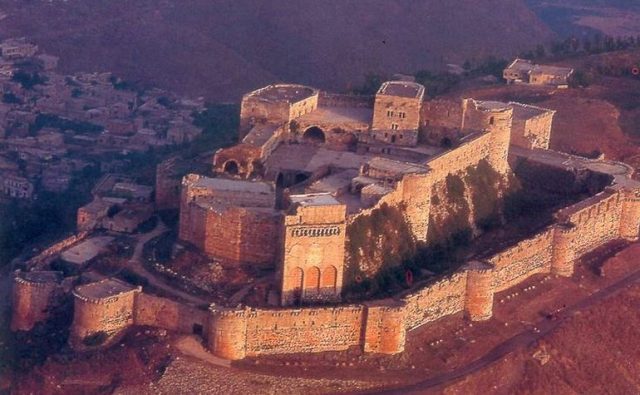
  • Awesome castles dotted throughout Syria, such as Krak De Chevaliers
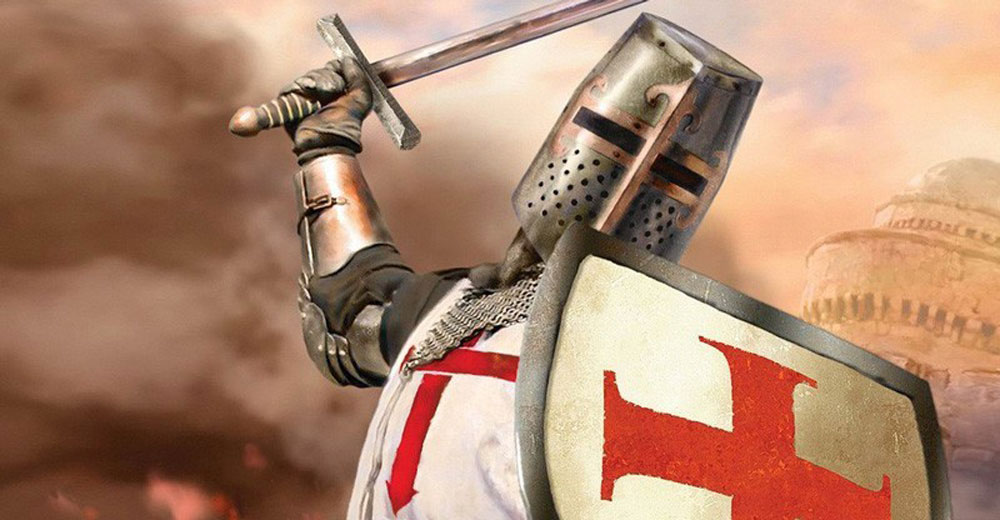
  • Awesome battle armour and swords, many reproduced in video games such as Dark Souls
  • Awesome historical fiction about adventurers in the Middle East, e.g. Gates Of Empire
  • Awesome modern-day Deus Vult themed t-shirts and bedspreads.
Krak-des-Chevalier-castle-overhead-view-640x395

Imagine living in this cunt. Would be awesome

Western Europe of the 12th century was feudal. That’s not as obvious as it sounds because the era of Empire had only recently passed, such as the Romans stretching their borders as far as Northern England, Charlemagne uniting most of Europe, and then the Vikings turning themselves into Normans. With the weakening of centralised power, European power became regional again and local warlords dominated. The end result was a network of highly militarised nobles who were obliged to provide knights and men-at-arms to the King, but who were otherwise self-ruling. Western Europe, insulated from all the chaos towards the East, had reorganised itself into army divisions spoiling for trouble but no existential threat to worry them.

Interestingly [2] the Christian world had it’s own pilgrimage route to Compostela in North-Western Spain. Four major roads, beginning each in Paris, Vezelay, Le Puy, and Marseilles, converged at the Pyrenees mountains than a single highway crossed Spain almost to its Atlantic coast. It seems to have been quite a thing. Picard wrote a tour guide for it and:

“The pious travellers provided a living for many: pedlars, entertainers, confidence tricksters and money-changers abounded all along the route” [page 45]

Traveller’s rests at hospices drew the Hospitallers knightly order and Templars originally established in the Holy Land. It sounds like a good little jaunt.

Anyway, to the Crusades. There were three, and only the first was a success. There should’ve been a fourth but the kind of yahoos detailed in Sir Nigel were on it, so they got sidetracked and just sacked Constantinople instead even though the city was supposed to be on their side.

templar

“Excuse me, do you have a moment to talk about Jesus Christ?”

The unlikely first crusade succeeded largely because of division in the Muslim world. Two rival dynasties saw themselves as true successors to the Prophet: the Abbasids of Baghdad and the Fatmids of Cairo, sunni and shia respectively. Against that fighting there was civil war in Egypt and the Seljuks had carved their own little piece out of Egyptian territories. This meant that Syria, which was tossed between each side regularly, wasn’t under anyone’s firm control.

It all came to head when the Byzantines had a crack at the Seljuks in Anatolia, failed miserably, and then sought aid from arch-rival Rome rather than be overrun by the Turks. Pope Gregory VI in Rome couldn’t help but the Byzantines survived under emperor Alexius and then, spotting opportunity when the last undisputed Seljuk leader died in Baghdad, Alexius looked East and had a thought.

“I fancy a crack at that” [3]

He wrote a speculative letter to the new pope Urban II requesting aid for a little jaunt into Anatolia. Time Life suggests taking Jerusalem wasn’t on his mind because it had been many centuries since Byzantium had embraced the Holy City. Urban had a thought:

“All those Sir Nigel yahoos are heavily armed, spoiling for a fight, and currently just running around Europe smashing shit up. Let’s point them towards the Muslims”

Saint Augustine had already defined, in the fifth century, that Christians can view warfare as holy, even an act of love, if its object were to restrain sinners from evil; if it were carried out under due authority and with a charitable disposition of the heart. Urban sweetened the pot further by declaring all those who went to fight the infidel, whether they lived or died, would receive complete absolution of their sins and thus certain salvation [4]

modern-knight

Point me towards the infidels

Crazy heavily armed yahoos pointed at foreigners and promised salvation. Sign me up!

The Crusades were wildly popular, the Woodstock of their time. A People’s Crusade of barely-armed fanatics led by Peter The Hermit walked right into a Turk ambush and were massacred but by 1097 the real knights had assembled in Constantinople then 40,000 struck out into Anatolia. A series of victories followed and as they pressed on into Syria, Alexius wisely pulled his men back, letting the yahoos march into certain death without pulling his empire down with it.

A series of wild risks that pay off, Muslim division and internal treachery, and occasionally inspired leadership from Raymond of Toulouse led to the Crusaders unexpectedly reaching and then taking Jerusalem in 1099. Unfortunately it was all so improbable, so far from home, that holding it all was impossible. By 1144 the Muslim counterattack began reclaiming territory that further Crusades could not recapture.

It’s a fascinating period and my biggest takeaway is how unlikely the enterprise was and how fragile the Frankish empire in the Middle East. It’s the equivalent of Pakistani or Turkish Muslims deciding to set up their own empire in somewhere so far from home as…. I dunno…. say Luton, Bradford, Highbury, or Rochdale.

If you’d like to strap on your cowboy boots, leather jacket and skull rings then sally forth into foreign lands to teach those infidels a thing or two by stealing their women, I think Daygame Infinite will give you complete absolution for your sins.

[1] Don’t get me wrong, I still think the Crusades were fucking awesome and I hope we have a fourth one to kick that Islamist boor Erdogan out of Constantinople.
[2] To me, at least.
[3] His actual words, I’d wager
[4] Though not 72 virgins in death, or a harem of kidnapped sex slaves in life, so not quite so sweet a pot as ISIS promised their jihadis.

#35 – The Prisoner In The Mask, Dennis Wheatley BOOK REVIEW

March 5, 2018
krauserpua

The Prisoner In The Mask

I’m very much into reading nowadays [1] and, lately, have put more thought into learning the craft of writing than I have into that of chasing skirt. I guess writing is a skill suited to my advanced station in life because it’s something I can improve at year-after-year for literally decades. At some point, pretty young ladies are going to look at me and say “ewwwwwww! get lost grandad” and my player career will come to an ignoble end. Not so with writing.

My Writer’s Journey has seen me casting my eyes around for a learning methodology. How does one become good at writing? Here are some of the things I’ve tried:

  • Read several “How To Write” books that explore the mechanical structure and the mindset of writing novels. It feels something like the academic side of Game study.
  • Watch seminars and lectures from top writers advising younger writers, such as the Aaron Sorkin and David Mamet Masterclass series.
  • Read lots of books from many different eras to absorb how others do it.
  • Write my own material and then hire or cajole other writers and editors to review it with feedback, which I then implement in a rewrite.
  • Edit other people’s writing, to get an outside perspective on problems that occur in the writing process and how to fix them.

I’m serious about becoming a good writer and I’m hopeful about my progress. Just as with Game or any other skill, if you apply yourself in the right direction you’ll improve. I remember being extremely proud of my first memoir Balls Deep upon release in late 2014. I’ve written five books since then (one unpublished) and have improved such that Balls Deep feels cringe now [2].

So where is this preamble leading?

asses

Not relevant to today’s post

I tend to deconstruct books as I read them, observing the craft of the writer below the words in order to pick out learning points for my own writing. “oh, here’s the bit where he establishes the stasis for the protagonist” or “here’s where he foreshadows the reversal” and so on. Sometimes I’ll admire a writer’s smooth and invisible insertion of exposition while other times I’ll shake my head at how clunkily it is thrown at the page. Recently, I’ve come to notice a difference in structure between old and new fiction. Let’s see if I can articulate my thoughts.

Writing gurus often distinguish between plot-driven and character-driven fiction. The vast majority of paperbacks, including likely 99% of genre fiction, is plot driven. The Quarry book I recently reviewed is one of them – there’s a template and each book differs in location, supporting cast, and small details here and there, but they all proceed in much the same structure. For epic fiction there’s a single template: the monomyth. Regular fiction has the eight-point story arc, and the three act structure. This is why modern books feel so samey. For hundreds of years writers experimented with the novel form and over time there was convergence upon a limited prescriptive formula. Writer training and reader tastes shifted to accommodate it.

Not unlike how every popular song sounds the same nowadays [3]

There’s an upside to this. As a reader you know what to expect, get all the right buttons pushed, and it’s a formula that has been fine-tuned to keep you engaged from beginning to end. Modern books tend not to drag or take odd diversions from the main story arc. If you read a half dozen books per year you won’t mind, and likely won’t notice, this convergence and its throttling of variety. Having read 37 books in two months, I’ve noticed.

Modern “character-driven” novels are not character driven at all. They are plot-driven stories that happen to have strong characterisation. You can tell this because you feel an underlying structure akin to a funnel. The book begins with a wide funnel and ends narrow. That’s rather abstract, let me try to explain [4]

The story begins with a wide-open field. Let’s say it’s Quarry drinking beer in his lakeside retreat in chapter one. Things could go in any direction. Detrioit? Chicago? Memphis? Mexico City? Quarry is a pin in the centre of a map but we as yet have no idea where the story will take him. So the Broker arrives and they converse, a contract killing being pitched to Quarry.

What job is it? Will it be a quick hit of an accountant who embezzled a mob boss, or perhaps it’s complex such as killing another assassination team before they kill their target?

rabbit road

I suspect I’m being encouraged to go a particular way

By chapter two, the story has taken some direction. He’s going to Memphis and the job is to protect a controversial pornographer and to thwart a hit ordered on him. That big wide funnel has just narrowed. Most of the world, and most of the potential situations within it, have been discarded. They won’t enter into this book. You could call it narrative focus.

Quarry rolls up in Memphis and now, on a smaller scale, he’s in a wide open field. Who will he meet there? How will they react to him? What oddities will they observe that determine how he plans his job?

By chapter five we’ve met all the main characters, gotten an inkling to their friendships and enmities, and the likely avenues of threat. The funnel narrows again.

I won’t go into the whole story but beneath the surface, the book reads like a wide funnel gradually narrowing down to a fine point – the climax. At no time does it widen out again. At no time does Max Allan Collins throw out the funnel and send Quarry down a new funnel [5]. Modern stories have a certain inevitability about them, proceeding relentlessly towards the end point in the funnel – usually in a straight line. Or to use another metaphor, the plot threads introduced in the first few chapters are like side roads all converging to join the highway, then the highway lanes merging into a single lane. Always moving forwards.

When the protagonist suffers a reversal (i.e. a setback) he isn’t actually set backwards. Rather the antagonist has simply pulled further ahead. The overall story momentum is forwards, even if the gap between antagonist and the pursuing protagonist has widened following the reversal.

If Quarry has a bar fight in chapter 6 you know he’s going to win easily. If the same bar fight happens in chapter 15 he’s probably going to suffer a significant reversal, because that stage of the plot template requires it. If his friend Boyd is also in the fight, he’ll survive because he’s a recurring character. If it’s a friend he just met in this book, he’ll probably die in the fight.

Modern books have the same predictability as modern music. Even the plot twists are predictable at the meta-level [6] like the “different bit” that occurs after the second chorus in a pop song before the reprise [7].

Character-driven stories, theoretically, shouldn’t have a plot. Their dynamic is to create an interesting protagonist, put him into situations, and then see how he handles it. Even the writer shouldn’t be clear where the story is headed until he begins thinking in his character’s shoes. This gives character-driven stories the feel of a “random walk” in finance terms – there appears to be direction to the movement but you can’t predict it, only observe the pattern after it’s finished. You don’t know what’s coming next, but you’re keenly anticipating how the character will get himself out of the mess he’s in.

The-Devil-Rides-Out-Duc-de-Richleau

A strong character, yesterday

Dennis Wheatley books are like that. They are a snakes and ladders game for the hero.

When I first read him, I had a sense that the funnels didn’t apply. The story would seem headed in a particular direction and then suddenly switch. For example in The Prisoner In The Mask, the story is about Duke de Richleau hanging out at his dad’s manor in Russia when some French royalists try to recruit him in an effort to restore the French monarchy in the 1880s. They settle upon a strategy of putting de Richleau into a Paris cadets school as a coach who can keep an eye on their preferred claimant to the throne, a teenage boy of blue blood. All the plans are carefully laid until suddenly at a drunken graduation celebration, a betrayal sees the party raided by police. Duke de Richleau must react quickly to this surprise and things turn deadly. He’s now a wanted criminal, on the run.

The entire plot shifts, the best laid plans thwarted. All of that cadet school stuff becomes completely irrelevant for the rest of the book because that plan was binned. The next act is all about rescuing the young noble from prison (he’s the man in the mask now). On and on it goes like this as de Richleau is presented with unexpected situations and must think on his feet and plot a new course of action. At no time does the book narrow the funnel. It never feels inevitable.

The story is like a winding mountain road, going up, down and winding back in on itself. It’s not a straight highway merging lanes down to one.

In this case, the royalists completely fail in their plans to restore the monarchy [8]. That would be like Quarry failing to complete his mission – it wouldn’t happen, the modern reader would feel cheated. I realise this is why I like Dumas so much. His books too draw compelling characters and set them off to achieve objectives but all kinds of turbulence upsets their plans and forces them to completely change tack. They often fail in their quests. I like books when you don’t feel this relentless inevitability of the hero closing in on success with barely a backward step [9]

And in case I didn’t mention it earlier, I liked The Prisoner In The Mask. It’s a solid espionage and adventure yarn in the usual Wheatley style.

If you’d like to fortify your compelling character so as to bravely and intelligently meet all unforeseen reversals upon the streets, you can’t do better than Daygame Infinite, everyone’s favourite pick up guide.

[1] This likely comes as a big surprise based on how little I’ve talked about books recently.
[2] I’ve noticed that when I do something to the best of my ability, I think it’s great. Then when my ability improves and my best becomes better, the old stuff feels cringe.
[3] And are all written by the same two Scandanavian men
[4] You can see I’m struggling to articulate the concept. I haven’t been able to find anyone talking about this from whom I can borrow concepts or jargon.
[5] Because that would break the rules of modern plot-driven fiction and likely anger the reader who invested in the first funnel.
[6] You may not know the specifics of how the plot is twisted, but you know it’s coming and have an inkling what it’ll involve.
[7] We all know the pop structure of Verse-Chorus-Verse-Chorus-Different Bit-Verse-Chorus-Chorus-Fade
[8] You probably knew that already, seeing as the grubby communists of France still don’t have a monarch. They seem to prefer a closet-case EU puppet who bangs grandmothers.
[9] Except the predictable reversals at points four and seven as required by the eight-point story arc.

#34 – Far Eastern Adventure Stories, April 1931 BOOK REVIEW

March 4, 2018
krauserpua


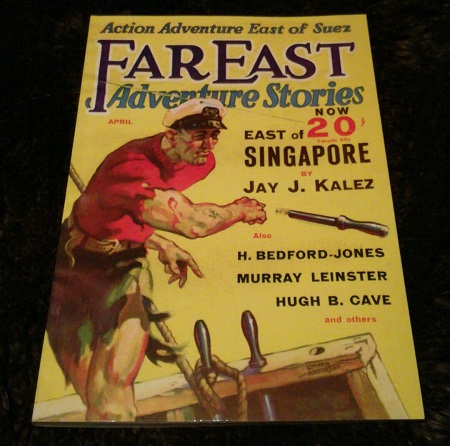
Far East Adventure Stories

There are several reasons why I enjoy reading historical rather than modern fiction. Much of it is down to the depressing nihilism and Marxism of modern popular fiction. There are still many great books written, but they are niche. If it’s in a bestseller list today it’s almost certainly trash. Quality and themes aside, I like historical fiction because it’s like taking a holiday into another time and place.

Mirror neurons, I believe a commentor recently said. Magical things they are. If you get close to somebody feeling certain emotions then your mirror neurons fire and let you share those emotions [1]. Immersing yourself in fiction is a great way to broaden your mind. I really don’t get this common idea that only non-fiction counts as learning. I often advise clients that a good way to build masculinity is to leverage the mirror neurons by consuming heroic fiction.

Another good reason to read old books, rather than new books about old times, is the lack of anachronism. It’s very odd to read a medieval story where the female characters are kick-ass go-grrrrrls. In reality they’d have been backhanded across the face and kicked down the cellar stairs, at best. Old books are written from the frame of their times and it can be illuminating to see how people thought back then. Mentally, it takes you outside your comfort zone. Here’s a good example

Savage Trickery

Note the story is billed as “funny”. What do the authors of this 1931 story find funny? Here’s the plot. Two explorers for the American Asiatic Academy of Archaeology are sent to Sumatra upon rumours a stone age tribe lives in the jungle. The AAAA wants proof one way or the other. The man who started the rumour, George Hanley, has gone missing. These two intrepid chaps take a canoe up river into the green hell and are immediately captured by a cannibal stone-age tribe. They are hustled to the village, locked into a cage, and they see a row of shrunken heads including that of Hanley who preceded them. The language is rather non-PC:

The giant glared back. But after a few seconds his snaky eyes wavered, just as those of an animal might do. No animal can steadily meet the gaze of a white man standing still. And this brawny brute, although strong enough to tear Tom apart, was not much more intelligent than an orang-outang. He soon proved it.

That’s a tame section.

The intrepid explorers are able to convince a jealous native, using sign language, to challenge the chief and then in the ensuing melee they escape with their rifles. But they don’t have any proof for the AAAA! So they recover their 16mm camera and set to filming the scrap between rival factions of the small tribe and then….

…. shoot them all and torch the village. While filming. Basically it’s Cannibal Holocaust or Africa Addio forty years early. Hilarious. They return to the US and screen their footage to the AAAA of the stone age tribe they found and then wiped out. This is the AAAA’s response:

“Yes,” said the president, “undoubtedly they are Gormoras every foot of this film reveals the traits of the Neolithic Age. What utter savages – giant brutes – they must be! And now, in behalf of the academy I wish to congratulate you upon your splendid achievements: your bringing the facts of George Hanley’s fate: these films, the proof of a Stone Age existence that will electrify the scientific world.”

The president of this esteemed academy is congratulating the two men on wiping out the stone age tribe they were sent to find, so long as they returned with a snuff movie proving it. Funny, you see?

Imagine how a Refugees Welcome do-gooder would react to this story, should they read it while handing out Soros-bought life jackets and mobile phones to Somali cannibals waiting in Libya for a ferry ride to Italy. Different times, different thoughts about “the other”.

This Far East Adventure Stories is the second I’ve read from this series. Adventure House is a small publisher that specialises in producing facsimile reprints of original pulp magazine in full, including advertisements. The quality is wildly variable between series. For example New Mystery Adventures has great covers but childish writing. FEAS is pretty good. This April 1931 issue only has one dud story, the first one. The rest are ripping yarns. They move fast, pull you into the scene, and because it’s crammed with EIGHT stories there’s lots of variety.

This issue has a rescue mission into the Malay forest to battle an agitated crocodile god cult (that’s the dud), a revenge story in the Bornea wharfs between a captain and his first mate, a police heist investigation in the Burmese logging camps, a slave rebellion against brutal Portuguese masters in West Africa, an old hunters tale of searching for a lost Elephant graveyard retold in a bar between retired ivory traders, the aforementioned murderous explorers in Sumatra, part 3 of a 4 part novel about Moroccan bandits fomenting rebellion against French colonials funded by an old treasure, then finally a confrontation between a Saudi emir and a bandit leader he captures.

Pulp reproductions

Two on the left are great, two on the right are trash

Don’t think these are just trash. Some great fiction writers got their start in the pulps. For example, in an advertisement here for a sister magazine, Amazing Detective Stories, it heralds the next issue having stories from Erle Stanley Gardner and Edgar Wallace – two bestselling crime writers. The key is to find the right pulp, because writing quality varies massively between titles.

You can find them all on ebay. I think I’ve read a dozen or so over the years.

If you blah blah blah blah blah Daygame Infinite blah blah bullshit who cares blah blah blah Daygame Overkill blah blah.

[1] My untested hypothesis is that psychopaths and autists both suffer from malfunctioning mirror neurons, hence their lack of empathy and learned rule-based system for guessing emotions in others

#33 – Quarry’s Climax, Max Allan Collins BOOK REVIEW

March 3, 2018
krauserpua

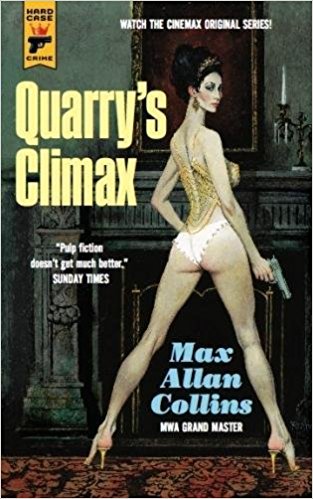
quarrys climax

I wonder why hit men are so compelling as fictional characters. What little I’ve seen of real life assassins suggests they are weaselly ragamuffins and about the least cool section of society. Fredrick Forsyth’s Day Of The Jackal introduced the idea of a meticulous, highly-skilled assassin hunting the high value target of French president Charles De Gaulle. In contrast, the coke-addled skinny-fat sicarios of Mexican cartels [1] are a pathetic bunch.

Quarry is one of the cool fictional hit men.

This series was started in 1971 about a young soldier returning from Vietnam to find his wife in bed with a draft dodger. Quarry goes around to the man’s garage the next day to remonstrate and ends up crushing him under a car. He avoids prosecution but the case attracts the attention of The Broker, a middleman for arranging assassinations. He recruits Quarry and the legend is born. These stories have a nice old-school Mid-Western feel in the books.

The series didn’t catch on and died after a few books but when Charles Ardai republished them for his Hard Case Crime imprint they found an audience. And then it was picked up for TV. Have a look at this trailer. I watched all of season one. Great stuff.

Unfortunately the series was cancelled before filming the second season. Bollocks! [2] I do recommend it though. They moved it to Memphis for a sweaty southern feel but otherwise remained faithful to the books. It even features Marlo Stanfield in the pilot.

I’ve read all the Quarry books now and they are rather formulaic. He’ll be minding his own business at his lakeside cabin when the Broker calls with a job. He heads off to join his partner Boyd who had spent a week doing surveillance on the target. Then Quarry gets involved and shoots them.

Oh, did I mention that he bangs every single woman in the story? Or that he never gets himself into danger, and thus never needs dig deep in courage or wits to save himself?

He’s basically a super hero.

That got me thinking to the difference between when I read the first few Quarry books pre-game, and the rest of them post-game. It’s not the same experience. When I was a chode, I was living with my ex-wife, working in an office and resigned to living vicariously through others for adventure. Quarry was fantasy wish-fulfullment, a cool badass who rolls into a new town, bangs some hotties, then whacks the target. So when Max Allan Collins has the local nubiles throw themselves at Quarry under the most unlikely situations I just nodded my head and took my vicarious enjoyment.

Now, post-game, I just think “that wouldn’t happen” [4]

More fundamentally, Quarry is no longer adventure lived vicariously. You see, post-game, I’ve been the cool badass [5] rolling into a new town, banging some hotties and then whacking the target. Except for the last bit. Foolish though it may be, I now mentally put myself into Quarry’s position and think “how would I work that situation”, or “what would be the real-life way this fictional situation would play out?”.

I dare say I wonder what his notch count is.

If you’d like to live vicariously through the adventures of a cool badass you’ll probably want to buy Quarry. If you’d rather there was even more shagging per book, how about you try my memoirs Balls Deep, Deplorable Cad, Adventure Sex.

[1] Who, quite comically, seem to get themselves decapitated and dismembered for Liveleak on a regular basis
[2] If any readers know of a hard-boiled series about a professional assassin, please let me know. La Femme Nikita and Quarry are the only two I know of and I’ve watched every episode of both [3]
[3] Come to think of it, if you know of a novel or short story series of that type I’d like to hear about it.
[4] Though to be fair to Collins, many of the girls sleep with Quarry for an angle such as to pump him for info when working for the opposition, or they are just coke whores or strippers at work. Some MILFs too. So in that sense it’s not all so unlikely.
[5] In my own mind, at least

#32 – Sir Nigel, Arthur Conan Doyle BOOK REVIEW

March 3, 2018
krauserpua

Sir Nigel

I read this edition

Chances are if you’re familiar with Sir Arthur Conan Doyle it’s because of his Sherlock Holmes stories. They are possibly my favourite short story collection of all time [1]. I was quite surprised to learn that Conan Doyle grew to resent his character, felt it wasn’t his best work, and dragged his heels on the final His Last Bow collection because he didn’t want to write it. Given these conditions, I’m amazed the quality was so high.

I tried his Professor Challenger series late last year and the first, The Lost World, was excellent. The first two chapters are a brilliant narrative example of alpha game, and then it becomes an adventure story. The other four Challenger stories are a bit shit. I then discovered he’d written a series of historical romances and my brother gave me a copy of Sir Nigel, an adventure tale set in 1350s about an ambitious squire who sets off to battle the French and win honour. It’s a tale of chivalry.

I really enjoyed it. It felt like reading about an English D’Artagnan. The pacing is sweet, the language convincing for the age, and it opens out nicely. We join Nigel as a young troublemaker in his own shire playing pranks on the local monks, his spirit for adventure having found no outlet. Events conspire to give him an out, so he joins a raid of Calais planned by King Edward. His journey begins and the level of his challenge scales up as he drifts further from home. Pranks on monks change to swindling goldsmiths, highway rascals, capturing a small boat of fighters. The stakes keep rising and the battles bigger under the final climax in a pitched battle between English and French armies. It felt akin to the learning curve of a good RPG. It made me want to play Kingdom Come Deliverance. Or Mount And Blade.

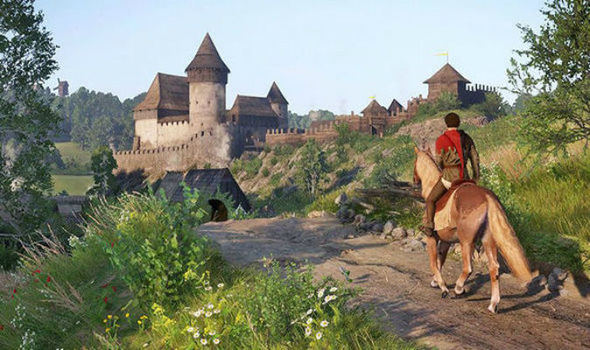
Kingdom-Come-Deliverance-update-922794

Tally ho!

Good salesmen can sell snow to Eskimos. Good writers can make believable a preposterous world. Admirable, even. That’s what Conan Doyle does here. The language is relentlessly upbeat and all “tally-ho” and “let’s have a solid play for honour, good sir” while this little band of English knights reave across the French countryside. I had to stop myself and separate out the tone from what was actually happening. Here’s the gist of the story:

A bunch of knights seek adventure. They are motivated entirely by doing honourable deeds that advance their name, in order to impress the women back home. That’s it. No empire, no greater good. Just personal advancement through honour. This makes their decisions seem comical and brutal to the modern eye, such as:

  • While storming a boat carrying a spy from England to France, the English kill a dozen Frenchmen. The leader is a knight in heavy armour so when he’s subdued he formally surrenders himself to ransom. Nigel sends him to his missus to deliver news of this deed, and thereafter the knight is freed to return to the enemy camp. How about the commoners on that same boat? They are all thrown overboard to drown.
  • While travelling overland to a designated rendezvous with English forces at a French castle, one set of English stumble upon an obvious ambush. The hot-headed second-in-command rushes his men into the trap to win glory with many losses and twenty archers captured. Those archers are taken to a raider’s castle and tortured. So the English attack the castle with a comical lack of forethought, many dying. They think this is good because of the valour they’ve shown.
  • Best of all, the kings of France and England reach a truce the same day Nigel’s group arrive at their rendezvous from which to launch an attack on the local French castle. That evening the French lord rides over and is welcomed at the English feast. He explains how the truce will prevent each side winning honour, so together with the English lord they contrive a way to fight anyways. Nigel and the French lord have a spurious disagreement over whether French or English women are hotter as a pretext to fight the next afternoon. Each side brings thirty warriors, agree to ban archery, and then have a bloody melee where most of them die.

If it wasn’t so well-written it would make my head spin. This is the first war story I’ve read where the front-line soldiers are mortified at the idea of truce and try to circumvent it. All for bragging rights to the missus back home.

montypython

This actually happens, in less gruesome form

This was a period known as the Dark Ages in Europe. The book begins with the Black Death killing half of the English population, leading to many great opportunities for those remaining. Northern France is a mess of rival baronies fighting non-stop. Into that mix ride thousands of knights-errant whose sole aim is to pick fights to win honour. They’ll fight anyone. Several times the English party is almost beaten because two knights on the same side pick a quarrel over nothing. These buffoons care nothing for team objectives and will derail everything in a heartbeat.

Conan Doyle doesn’t hide this. He writes that the whole of Northern France is near famine because peasants can’t bring in harvests because of all the battling and raiding. The English make good cheer of looting and burning, bringing home the furniture and heirlooms of every French manor they despoil. From reading the Time Life history it does seem that a primary effect of chivalry was that mobs of knights-errant (and their less honourable counterparts, red barons) turned the whole area into a war zone so that any time something was built, it was either stolen or burned to the ground. Hence a Dark Age.

I was commenting to a friend today my general world-view.

The world has stores of value. Some people create that value, and it then attracts others who try to loot it.

For all their bravery and chivalric code, these knights-errant are looters. They are a curse on the land, denying normal people the stability they need to harvest crops, build villages, and create civilisation. They are the ISIS of their day, the Bolsheviks, the Mongols. Parasites. That said, it’s a great story and I enjoyed every page of it.

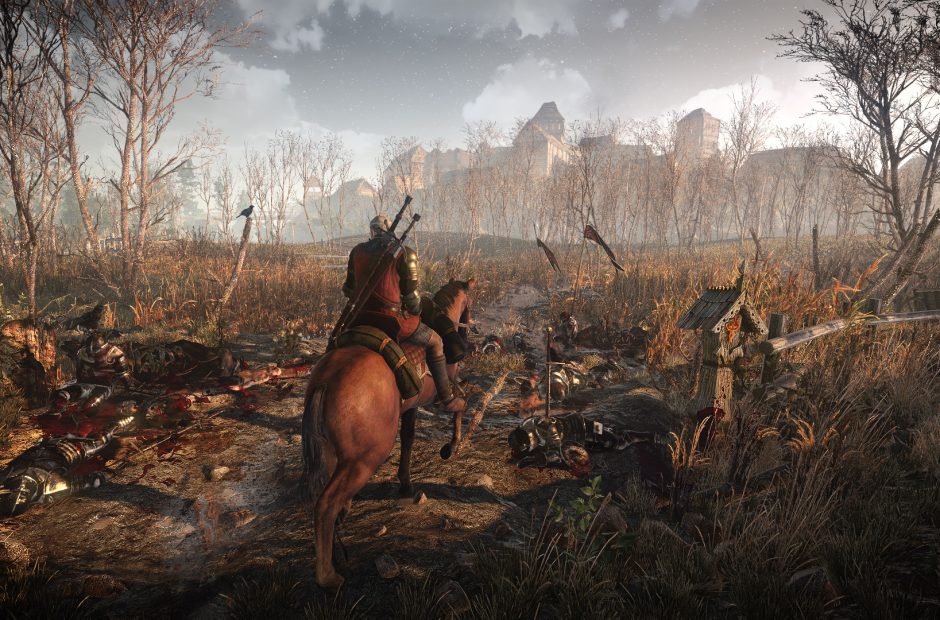
the-witcher-3-1-3-470x310@2x

Witcher 3 captures the time well

If you’d like to build value and act as an honorable knight of the streets, impressing maidens with your courage and dynamism, buy Daygame Infinite. It makes every other pick-up book look like a pagan shitpile from the Dark Ages

[1] I prefer individual Robert E Howard stories, but his don’t form a cohesive whole like Conan Doyle’s. Nor did any of his series run so long.

Part 4 of the Infinite talk

March 2, 2018
krauserpua

I was commenting to a fellow traveller today about these book reviews I’ve been doing. Some yahoos have been fouling the comment section with words to the effect of “why all this book nonsense, you should talk about birds?”

I’ve noticed that some people are unwilling to learn something unless it’s written down – overtly and obviously – in textbook format. There’s merit in that but much of what humans learn comes through osmosis. You learn by doing, or being around those who are doing [1]. I know this from time spent hanging around players ahead of myself [2]. Additionally, the lessons learned implicitly and covertly through storytelling tend to sink deeper into your subconscious that those learned by rote from textbooks.

It was with this in mind that I wrote my three memoirs to be textbooks masquerading as stories. It’s also why I continue to write book reviews on this blog [3]. It’s one thing to write a quickie eBook about Alpha Mindset For Playboys exhorting the poor reader to “develop a strong frame” or to “cultivate one’s mind and construct a solid mental map of the world”. Anyone can write that [4]. I think it works better to lead by example and show the frame being built and the mental map being filled in with details.

Still, for those of you who need it all in bullet points and simple obvious language, here’s the next part of the Daygame Infinite talk.

If you’d like a textbook that makes everything really obvious and in-your-face you might want to try Daygame Infinite, available by clicking here. You won’t be challenged by subtly or nuance.

[1] Mirror neurons are a wonderful thing
[2] And also Jimmy Jambone
[3] For as long as I’m actually making reading a major personal goal
[4] And indeed pretty much everyone does, to judge from Amazon and blogging

#31 – The March Of Islam, Time Life BOOK REVIEW

March 1, 2018
krauserpua

March of islam

I’ve occasionally given readers a hint towards what I think of Islam, and particularly the third great wave of Islamic conquest that attacks Europe now, mostly via immigration. I haven’t read the Koran, don’t ever intend to enter a mosque without automatic weapons, and certainly haven’t attended a madrassa. My knowledge of and interest in Islam comes entirely from the perspective of an infidel who would very much like to keep them out of my lands. What goes on in Muslim lands doesn’t concern me: that’s their business. Close the mosques, send the immigrants back, and reconquer Constantinople. They can keep Antioch, Damascus, and Baghdad.

Over the last couple of years I realised that I’ve been treating Islam the same way Cold Warriors used to treat the Soviet Union, as a vast faceless monolith. Knowing that the white peoples of Europe consider themselves a multitude of nations with many variations in national character [1] I knew, deep down, that Islam isn’t one army all of a single purpose. For a long time this awareness just pecked at the edges of my main interest in reconquista. Little things here and there:

  • Banging a few Muslim girls who hadn’t the slightest interest in jihad, and who drank beer.
  • Reading Nassim Nicolas Taleb’s tweets about Levant culture and it’s historic opposition to Gulf culture.
  • Seeing how little support ISIS actually had beyond a few goat-fucking longbeards and the Iranian mullahs.
  • Hearing about how many Taliban fighters were recruited because the Taliban was the one organisation in Afghanistan that didn’t rape little boys.

I grew increasingly interested in learning a little more about the trends, divisions, and schools of thought within Islam. Reading Time Life’s March Of Islam is the first time I’ve become wise to Islam’s history and I dare say I’m rather surprised. Here are three learning points:

  • Muhammad wasn’t a jihadi.
  • Life under early Islamic rule was preferable to Byzantine, Sassassian, Turkic, Hun or Egyptian rule
  • The first great wave of Islamic expansionism wasn’t the total war I thought it was.

Here’s the rise of Islam as I understand it from this book: For most of early history, Arabia was irrelevant. The Egyptians built pyramids, farmed the Nile valley, and created a vast empire. The Greeks and then the Romans built up massive cities, advanced the arts, and campaigned across the known world. Persians too. This whole time, the Arabs were riding camels from oasis to oasis and living under tents down in the desert scrub of what is now Saudi Arabia. The one exception to this was the flatter, greener coastal areas where thriving small towns built up at key sailing ports along the Chinese Silk Road through the Red Sea, as this was the most convenient route to the Mediterranean.

Saudi

The first thousand years, basically

Muhammad comes off somewhat like Jesus. Of low birth, he grew up among the raider-trader Arab nomads and with it was imbued with their ascetic lifestyle and clannish value system. Upon moving in to Mecca he gained in prominence as a wise head so he set up in the courtyard of his modest home and dispensed both worldly and spiritual advice, and with time came to adjudicate disputes [2]. The rulers of Mecca thought him too big for his britches and chased him out. He settled again in nearby Medina, doing the same as before. But now he was pissed at the Mecca lads and, utilising his desert raider upbringing, he formed a small gang of bandits to raid the caravans between Mecca and Medina. Before long he was strong enough that Mecca bent the knee and let him back.

And that’s it. Soon after he died.

My overwhelming impression of Muhammad is that he was a hard-bitten desert nomad and wise sage who limited himself to his local area. No expansionism. No conquest. No jihad. He didn’t build palaces nor hoard gold. Didn’t take many wives. I suspect he’d have been as outraged with the pomp, arrogance and greed of the Ottoman Court as Jesus would be with the satanist pedophiles bishops who live in opulence in the Vatican today.

Muhammad was so small-scale. No-one outside the Arab peninsula even heard his name until he was long dead.

Turkish palace

This would suit the Byzantines more than the first Muslims

Yes, yes, I’ve heard about him marrying a six-year-old girl. I’ve heard there is rather bloodthirsty advice in the Koran about stoning women and beheading infidels. Thing is, by the standards of the time (e.g. what the Persians, Olmecs, Chinese, Huns, and even Christians were getting up to those days) it’s mostly par for the course.


Squabbles over succession led to the Sunni-Shia split that remains to this day and in the next few hundred years of Islam, the hawkish Muslims were more concerned with fighting sectarian battles than conquering Europe. This book argues that the first great wave of Islamic expansionism was mostly peaceful [3]. The main reason they were able to spread so fast was because Islamic rule imposed such a light burden upon the conquered, and thus many found the Islamic yoke lighter than the Byzantine, Roman, Persian, or Egyptian yoke. These lands had spent 1,000 years passing between empires so they expected it to be someone’s yoke.

The Byzantines would tax you mercilessly, convert you to Orthodox Christianity, conscript you in their army, and it seemed a pretty oppressive rule all around. The first Muslims asked just five things of you:

  1. Worship Allah, with Muhammad the messenger
  2. Pray towards Mecca five times a day
  3. Give 2.5% of your money to charity
  4. Fast during the month of Ramadan
  5. A pilgrimage to Mecca one time in your life
Medieval_Morons

But how should we fast, m’lord?

That’s really not a lot is it? Especially as you’re allowed to dodge the pilgrimage if too poor or infirm. So a conquered people need only nod their head when the Imam is banging on about Allah, spend a few minutes doing Allah-ballahs, pay a very light tax [4], save your eating for the evening and…. not much is it? If you put some heavy cavalry behind those preachers and send them into lands already riven with strife you can see how they’d sweep all before them.

Later caliphs acquired a taste for empire and became as vicious, grasping, and indulgent as the Roman emperors but for the first couple hundred years it seems like Islam was a very different beast to the likes of Erdogan or the Mullahs now. As an aside, this makes the theatrics of ISIS make more sense. I’d always found it odd that the ISIS goat-fuckers proudly trumpeted such an ascetic lifestyle, but I see that in this respect at least they were closer to Muhammad than the perfumed gold-bedecked Sultans of Istanbul.

So, while I still want the mosques closed and the kebab removed, I’m at least clearer about the Islamic world being no more a bunch of jihadis than the USA is a bunch of Neo-Cons.

https://www.youtube.com/watch?v=U-EQJA8Ahac

If the ascetic nomadic lifestyle and dreams of conquest appeal to you, you should shed your materialistic opulence and give alms of £79 to the Church of Daygame Infinite and buy final absolution through Daygame Overkill for the very reasonable price of $200.

[1] French are slimy, Germans are aspy, Belgians are a joke nation, Spanish are lazy, Italians are greasy, Welsh are sheep-shaggers, Irish are dumb, and the porridge wogs of Scotland like Jews in girl’s skirts. The English stand alone without flaw.
[2] Written records of these sessions were later collected together to create the Koran.
[3] Again, by the bloodthirsty standards of the time
[4] Perhaps the most surprising thing of all in reading world history is that levels of taxation that live in infamy and led to revolutions back then are way lower than what the average European pays under yoke of the European Union thieves today.