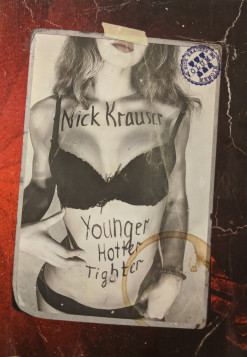
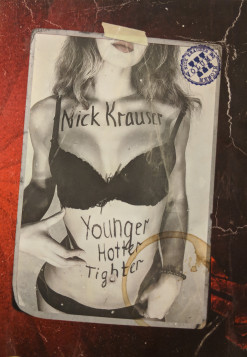
A week before announcing the release of my latest book, Younger Hotter Tighter, I sent a copy to a friend and asked him to give me a review for the blog. Here it is:
I was very fortunate to be one of the first to get my hands on this book after seeing Nick in Warsaw. I’ve been waiting for this for quite some time, especially as volume 4 has been available for ages. Hopes were very high especially off the back of the master level quality I had just seen in Daygame Infinite [buy this now – it’s the definitive book on the subject, its great]. Younger, Hotter, Tighter did not disappoint, its been fantastically put together and is in glorious colour which adds to the first class reading experience.
So to the actual book.
Nicks memoirs are page turners, you don’t want to put them down. This latest volume is no different. As a writer Nick has grown, this is still characteristically a Krauser work, but its some of his best most developed writing to date. Its frequently laugh out loud funny, brutally honest, self-deprecating, and provides a jaw dropping insight into the life of a successful pickup artist.
There are lot of great jewels throughout the book if you are learning these skills yourself. You will likely want to read this book a few times; its engaging and a pleasure to read as a novel the first time, but worth a second and third slower read.
Its 540 pages and packed with photos from the trips and great illustrations of each of the girls Nick conquered. Younger, Hotter, Tighter only covers one year – but this one year is probably equal to what the ‘average man’ would experience in the course of three lifetimes.
Highly recommended A+ work, after reading many of the community’s memoirs – this is head and shoulders the best one yet. Thankfully I can now read volume 4 as soon as Lulu get around to sending it.
There is a big difference between show and tell. Much of old-school game advice is based on the latter. For example, a DHV story does not – ironically – demonstrate any higher value. That would be showing. You are literally telling a story. You are telling the girl about your high value [1]
Game that involves showing is more effective. Lots of that comes under subcommunication but banter, teasing, challenging and passing congruence tests are all cases in which your behaviour is showing you possess attractive character traits rather than merely assuring the girl you possess them.
Good writing will also prioritise show over tell. Rather than simply tell the reader that a character is angry it is better to have that emotion expressed through their actions or dialogue so the reader can infer the anger that produced it. Effective writing invites the reader to paint the picture themselves. Donald Hamilton is rather good at that and it was only when reading The Removers, the third in his Matt Helm series, that I could finally conceptualise why I enjoy his writing.
I dare say this vibe has something to do with it too
Let’s give an example, beginning with the context. In book one, Helm was a retired government assassin who married a woman, Beth, who knew nothing of his past. After fifteen years of married life as a civilian he was dragged back into Cold War espionage, culminating in his wife walking in on him just as he tortured a Soviet female spy to death. She divorced him, on the grounds that she couldn’t bear his savagery and he wasn’t the man she thought she’d married etc [2]. Book two is all overseas and she doesn’t feature. This third book brings her in as a main character.
She sends him a letter asking for help, as her new family is in danger and his skills are now in need. This is the first bit of show. Hamilton doesn’t make a big deal of Helm ruminating on Beth’s chutzpah in divorcing him over his savagery and then not two years later asking him back precisely because he’s a hard man. The reader makes the connection. “Cheeky bitch, tell her to fuck right off” was my instinctive reaction.
She’s married a British ex-pat called Logan and runs a ranch in the Nevada mountains. Helm shows up and his introduction to Logan is more show-not-tell. Logan asks Beth to give them some privacy then leads Helm into the study, pours him a drink, and politely explains his help isn’t needed.
I’d picked up my drink. As I turned from the bar, I brushed against it, and the camera in my hip pocket struck wood with a solid, quite audible thump. I reached back instinctively to check on its welfare. He was still speaking in his polite way; but at the sound, and my motion, his voice stopped and his hand moved, very fast, towards the lapels of the khaki bush jacket he was wearing.
It was a gesture that called for some violent response on my part. Fortunately, my encounter with the boy, earlier, had put a guard on my reflexes. I merely stood still and waited. His hand stopped. I drew a long, slow breath and continued reaching back without haste, drew the Leica from my pocket, and laid it on the bar.
“I thought I’d get some pictures of the kids before I left,” I said.
His face was quite wooden. HIs hand rose to straighten the knot of his necktie. “Quite so,” he said.
Then there was silence in the big room. I wanted to laugh, or to cry. I had him taped now. The practised, instinctive gesture had told me everything I needed to know about him. That’s the trouble with holsters. They give you away too badly, shoulder-holsters in particular.
That’s excellent subtle writing, as it’s the first real sign that Logan isn’t just a regular guy. What did you take away from the scene? What missing pieces did your brain insert to make sense of it. To me, all of the following spring from the page:
Logan has a background in gun-play and violence
The family is in a state of high alert and acting jumpy
Beth wasn’t honest with either Matt or herself about disliking men of violence as she appears to have married another one
If Beth thinks Logan isn’t enough to handle the problem, it must be serious
Logan telling Matt he doesn’t need help isn’t an empty boast
Matt probably shouldn’t turn his back on Logan
There is a lot going on in that scene that Donald Hamilton doesn’t need to spell out for you. He doesn’t need to tell you “Logan was a hard man, scars etched on his face and psych after a career as bodyguard to a local mobster. Though he’d tried to put his past behind him, the emergent threat to his new family had caused the old skills to reawaken inside him.”
That would be lame. Hamilton’s version is far superior.
If you want it in-your-face try this kind of thing
As an aside, I find instinctive gestures tell you a lot in daygame. I find a girl’s first reaction, in literally microseconds from when she realises you are opening her, tells you a lot about how it’ll go. If her immediate unthinking reaction is to light up with pleasure, you’re onto a winner.
Helm comes to learn that a local mobster is pressurising Helm’s ex-wife and children so that Logan will come out of retirement to fix a smuggling problem in Mexico. At the same time, that mobster’s chief henchman is a Soviet assassin – Martell – hiding under the criminal front and Helm’s superior, Mac, has tasked him with trying to figure out why such a high-level operative would be messing around as a mob henchman. Towards the end of the book, Helm and Beth are held captive by the Russian in a forest cabin, with Logan semi-conscious and incapacitated on the bed there.
Hamilton uses show masterfully to leave the reader thinking Beth is a vile cunt. He’s dropped little hints that Beth has been manipulating both ex- and current- husbands, that she’s hypocritically jealous of a young woman Helm has started banging, and that for all her sanctimony over the moral turpitude of Helm’s profession, she herself has conspired with Logan to send thugs to kidnap that young woman as leverage over the mobster (she’s the estranged daughter).
Despite this, Helm is helping. Hamilton doesn’t spell out his motives too obviously but we are led to suppose it’s more because his own two children are involved rather than any chivalrous instinct towards the ex-wife. Helm is a hard man, not a sap.
They are captured because Helm is exhausted and needs to sleep. He gives a shotgun to Beth and precise instructions that if she hears any noise at all she’s to fire the gun into the wall immediately, so that the potential assailant pauses and gives Helm time to wake up. The assailant – Martell – comes, Beth doesn’t fire, and both are captured.
Beth moved forward as awkwardly as if she were trying out her first pair of high heels. She stopped by the sofa and looked down at me.
“I, I’m sorry, Matt.”
“Sure,” I said.
There were no signs of a struggle. They’d just walked in, probably through the open study door near the fireplace – there was an outside door in the other room, I recalled – and taken the loaded gun from her before she could bring herself to shoot. I should have known that was what would happen, if the occasion should arise. I’d asked too much of her, although it hadn’t seemed like much at the time.
She had that strange aversion to making a mess, or a loud noise – to making a fool of herself – that seems to afflict all respectable people. The idea of discharging a great big destructive firearm, or even a little one, in her own living room, perhaps for nothing, had seemed just too outlandish. She’d waited until she was absolutely sure it was necessary, and then, of course, it had been too late.
Read out of context like that, you may have the impression Helm is forgiving her. No, he’s not. Partly it’s in the “sure” he replies, a somewhat understated version of “I don’t believe you and now you’ve fucked us royally you silly bitch”. In context, it is more support for Helm’s low opinion of sanctimonious civilians. Throughout the book Beth is painted as a useless hypocrite who wants to talk from both sides of her mouth. She hates violent men until she wants their help. She’s a horse-riding sassy gal who can handle herself, until she wants to play frail doll to be excused for not doing her job. She thinks a soft word and fingertips gently on a man’s forearm are enough to atone for a disgusting irresponsibility that will now get her ex-husband tortured to death after she dragged him into the problem and then obstructed him from solving it.
Frankly, I was hoping the Soviet assassin would just rape and murder her [3]
A theme throughout the Helm books is that civilians don’t appreciate the seriousness of real violence, and through their own wilful ignorance they end up making that violence far worse than it needs to be. Beth is poison for everyone around her, getting herself into scrapes that get noble men killed trying to extricate her, yet she never loses her sense of entitlement and her gratitude is false.
Hamilton doesn’t tell you she’s a cunt, he shows you. It surprises me to know he was married to the same woman throughout his writing career. He knows women like only a bachelor or divorcee should know them.
[1] A DHV story is just one type of DHV. There are others which involve showing, such as preselection or a display of competence in something.
[2] She took the house and kids too.
[3] He does rape her later, and she manages to fuck that up too, squandering a glorious chance for them to escape
Totally off topic… this is hilarious. The fact you have to stop and think before you realise it’s parody is a good tell for what a complete fucking moron Jordan Peterson is:
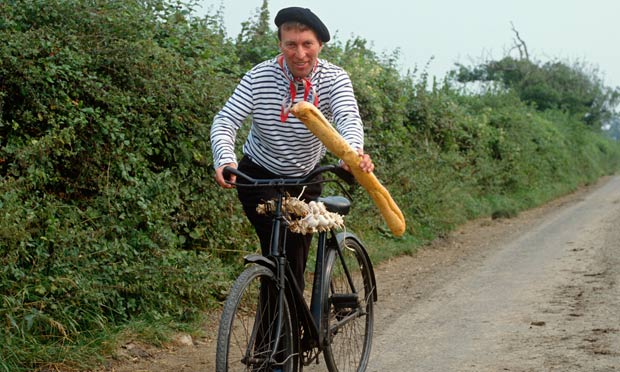
Have you ever wondered why the French are such faggots?
I have. Why is it they spend all day chomping on onions, riding rickety old bicycles, and surrendering their entire country to Muslim immigration? There was a time when the French were proper hard bastards. Napoleon would sit his generals around a large table [1] and say, “right lads, which major military power will we start a war with today?”
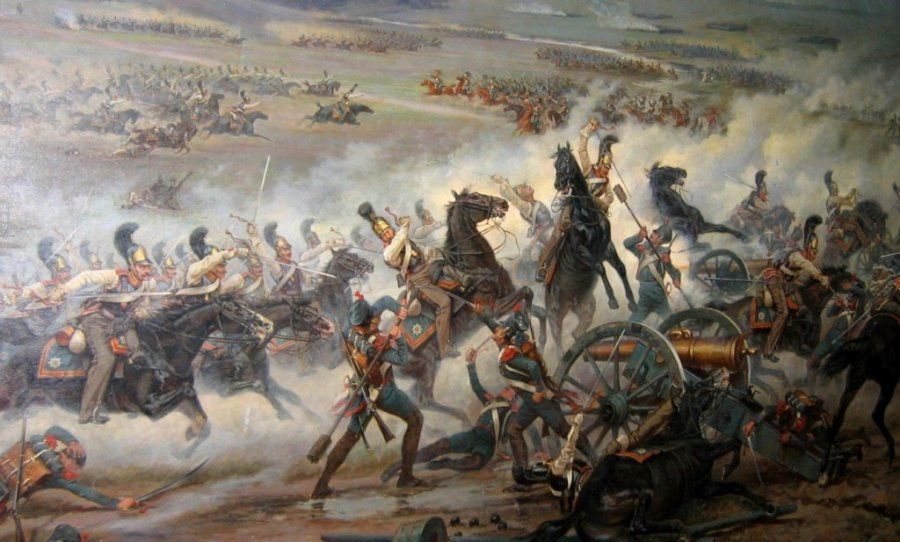
I’m pretty sure Napoleon picked a fight with pretty much the entire proper [2]world. And that, according to Clausewitz, is a big part of France’s modern day faggotry.
France, yesterday
Prior to the little Corsican’s military rise, European wars were fought mostly by expensive professional armies in the service of a monarch, such as Frederick The Great of Prussia. Frederick had, after the Seven Years War, reverted his army back to being led by the aristocracy and sent the middle class officers back into the regular economy. This had the effect of distancing them from emotional engagement in war.
“As a result there developed in the Prussian middle classes the impression that the king’s wars were nothing to do with them; and from that it was a small step to the belief that, if it were not for the king and the nobility who fought his wars, those wars need never happen at all.”
But then came the French Revolution [3] and a complete change in how the French people organised war. It was now a war for the masses. The technology of the day (unrifled, muzzle-loading guns effective to only fifty yards) dictated a strategy of long lines of soldiers firing off broadsides in mutual up-close slaughter. This was attrition warfare and very costly to victor and vanquished alike. Especially costly when you have professional highly-trained soldiers.
This led to military strategy of the day being mostly concerned with manoeuvre rather than fighting. Nobody really wanted to fight. Theoreticians would even profess that wars could be won by the enemy conceding through being out-manoeuvred rather than beaten on the field of battle.
Napoleon crushed that idea.
Napoleon’s armies had been rag-tag skirmishers who overwhelmed such small professional armies with long unstoppable columns that wore down and then overwhelmed the long thin lines, and chaotic scattered skirmishers.
Is that the Bastille, or just a Muslim celebration after winning the World Cup?
That set Clausewitz thinking. He wanted to analyse war not through abstract principles to tell generals what to do, but rather to look at successful generals such as Frederick and Napoleon and then figure out and theorise what they’d already shown to work. Central to this was the observation that France’s unique political situation opened up new avenues for military strategy.
“The French armies were able successfully to break all the military rules because the politicians discarded all the normal political and economic constraints. For manpower they depended not on highly trained and expensive regular troops but on patriotic volunteers and, later, conscripts in apparently unlimited quantities whose services were virtually free. The French troops foraged for themselves, and if they deserted there were plenty more to take their place.”
The French could overwhelm the opposition because the entire country was militarised and the people supported the war objectives. It wasn’t just a “king’s war” for them. This would lead Clausewitz to focus upon morale and political conditions in the homeland as critical components of the war. Lenin and Trotsky would later bring that into the USSR and Stalin learned that lesson in The Great Patriotic War beginning when the squareheads gave the russkies a bloody nose in Operation Barbarossa.
The problem here is that Napoleon mortgaged the entire future of France to win temporary supremacy in Europe. He burned through his entire male population, throwing them into the meat grinder. Worse still, as any keen student of r/K selection will tell you, total war has a horribly adverse-selection effect on the population. The sly rabbits find ways to escape military service and the brave wolves volunteer for the front. Winning rabbits rape all the women when sacking cities. The net effect is total war turns you from a population of hardy warriors into a country of cheese-eating surrender monkeys.
The French Revolution ruined France and it has never recovered.
Clausewitz was at Borodino, fighting for the Russians
But Nick, what did Clausewitz have to say about daygame? Well, sonny Jim, I’m glad you asked. There is a lot of On War that addresses the strategy and tactics of chasing skirt. First lets hear him criticise earlier prescriptive theories:
“They aim at fixed values; but in war everything is uncertain, and calculations have to be made with variable quantities.
They direct the inquiry exclusively towards physical quantities, whereas all military action is intertwined with psychological forces and effects. They consider only unilateral actions, whereas war consists of a continuous interaction of opposites.”
So, routine and lines are out. Game is about recognising interactions as an ebb-and-flow. A man must take account of these interconnected elements – the uncertainty of information, the importance of moral factors, and, lending emphasis to both of these, the unpredictable reactions of the adversary. “Everyone has a plan until they get hit,” said Mike Tyson.
The best generals are successful gamblers who had the nerve to back their judgement.
Clausewitz developed the concept of friction to explain why plans rarely work as intended. “With uncertainty in one scale, courage and self-confidence must be thrown into the other to correct the balance”. War is dangerous and that leads to elevated tensions. It involves suffering, confusion, exhaustion, and fear.
“Everything in war is very simple, but the simplest thing is very difficult.. Countless minor incidents – the kind you can never really foresee – combine to lower the general level of performance, so that one always falls far short of the intended goal… The military machine.. is basically very simple and very easy to manage. But we should bear in mind that none of its components is of one piece: each part is composed of individuals, every one of whom retains his potential of friction.
Fog can prevent the enemy from being seen in time, a gun from firing when it should, a report reaching the commanding officer. Rain can prevent a battalion from arriving, make another late by keeping it not three but eight hours on the march, ruin a cavalry charge by bogging the horses down in the mud.”
This friction is what distinguishes real war from war on paper. Any seducer will know this from dating. Chasing skirt is rife with friction. Phones run out of charge, mobile signals drop for hours, and trains are late. A girl can get bogged down in a rain shower and not show up, or go to the wrong McDonald’s as a meeting point. Even opening is fraught with difficulty when you spot a girl outside the mall but drag your heels too long and she’s disappeared into a store or hugged a friend who just showed up.
Daygaming in the Clausewitz era
Clausewitz thus focuses a lot on the ‘moral’ forces – of the ability of the commanders, the army, and the people to endure friction and push forward. In daygame we all know this, the stubborn determination to do “one more set” and to just push that girl to “one more escalation attempt”. It is the daygamer’s ability to push through friction that will improve his results [4]
You go on a date even though you’re knackered. You rack your brain for the recovery text. You take the chances.
What are the characteristics of a good player? Clausewitz suggested two.
“The first was intuitive, the quality labelled by the French coup d’oeil: the almost instinctive capacity to discern through the fog of war what was happening and what needed to be done; [5] a flair for essentials that enabled the commander to select the right course almost without thinking, and certainly without going through the elaborate process of calculations of possibilities and probabilities that would paralyse the decisions of a lesser man [6].
The second requisite, said Clausewitz, was the capacity, having taken a decision, to stick to it: determination. Everything would conspire to convince the general that his decision had been wrong.”
There is much in Clausewitz to direct the aspiring player but I’ll leave it to the reader to pursue this further. If you’d like to read Krauser On Game, get yourself Daygame Infinite.
[1] While chomping on high-class onions
[2] That is to say, European
[3] I’ve read so much about the Revolution from so many different angles that I’m starting to wonder if it wasn’t the worst event in the history of the human race.
[4] Likely why I got laid far more when I was really into chasing skirt than now, when I barely care.
[5] That’s calibration to you, pal
[6] Say, a Deepak Wayne or a Lithuanian rapist PUA
For most of 2018 this has not been a daygame blog. The reasons are not hard to fathom to my regular readers: I’m sick of daygame and don’t want to talk about it. Is this a periodic revulsion or a sign that I’m finished with it and wish to move on in life? Probably the latter, but I don’t know yet as there are some confounding variables.
I feel a little like my war is over. I’d like to settle into comfortable regular life. Wear a suit, attend some dinner parties, and perhaps drink an aperitif. There’s only so much I can enjoy about flying overseas, lodging in small apartments, and hunting down girls with the help of cold-blooded wingmen.
Clearly, my main passions are reading and writing and that expresses itself in what I talk about on the blog. But, I wondered, is there someway to twist these threads – daygame and reading – into one single rope with which to scale the tower of regular blog content?
In yesterday’s review of the Dark Soul’s companion book You Died I could easily draw parallels between its content and daygame, and thus tease out themes that interest those of you who visit my ‘umble blog just for the skirt-chasing talk. When I get round to reviewing Taleb’s Skin In The Game (which I read three weeks ago) I can easily do so for that book too.
But what about today’s book, Donald Hamilton’s Death Of A Citizen? It’s a 1960 spy novel about a former WWII agent of the OSS who is dragged back onto the job to protect a nuclear scientist under threat of assassination by a rival SMERSH team of Russians. Let’s try, shall we?
The movie adaptations added in lots of utterly unnecessary light-heartedness
I found this book by searching Google for “ten best spy novels ever” and then ticking off all the ones I’ve already read. I love the John Le Carre “Smiley” novels and read a few in Zagreb in 2017 while visiting Lee and John. Equally I like Len Deighton’s “Game Set Match” trilogy of MI6 potboilers even though each novel is just 400 pages of a people talking in cafes and restaurants while the main character tries to suss them out like a poker player reading tells. I also loved Robert Ludlum’s “Bourne” novels and that guy Ian Fleming wrote about, I forget the name.
Donald Hamilton’s “Matt Helm” books were new to me, and there are tonnes of them. Imagine you’ve only ever watched RSD Max or RSD Todd videos, or Johnny Berba, or Deepak Wayne and then you suddenly discover Sigma Wolf and it’s Daygame Nitro, Mastery, and Infinite. That’s how this felt [1]
Imagine
The title of Death Of A Citizen refers to the process of Matt Helm being pulled back into the grimy murderous world of Cold War spying. As an OSS operative on a tiny team run by a super-spy coordinator called Mac, Helm was a machine. His assignments took him deep into enemy territory as part of a small murder-squad to assassinate high value targets. It was off-the-book, kept plausibly deniable to the US government. Each “touch” (their term for hit) was a short operation of a couple of weeks, inserted behind enemy lines with a couple of other operatives. They were instructed not to get pally with each other as operational security might require them to leave compromised or injured team members behind.
Kind of like a euro jaunt.
The war changed Matt Helm and he became a killing machine. Always on edge, always scanning for threat, and always reading the angles that people give him. He inhabited a world of deceit, betrayal and ruthless takedowns.
A little bit like a euro jaunt.
My last euro jaunt – actual photo
When the war ended he wanted out so he got married to a girl ignorant of his past and tried his best to fit in on Civvy Street. He attended cocktail parties, chatted about theatre, and drank aperitifs. The whole time he was denying, to himself, the man he’d become during the war. Was he permanently changed? An outcast forever? Was he now a man only fit for war and unable to adjust to normality? Would he only be comfortable in the company of killers like himself?
I ask myself that about the Player’s Journey. You could liken Matt Helm’s war to a player’s red pill and womanizing career. Is it something you just leave behind? Even if you could smoothly transition back to a world of Netflix, John Grisham novels, and David Guerta songs would you actually want to? Once you see the world as it is, you can’t simply choose to go back to believing the delusions.
Once you’ve experienced the thrill of chasing, and clacking, skirt you can’t really go back to normal dating.
Death Of A Citizen opens with Helm at such a cocktail party in New Mexico, ruminating on his nagging dissatisfaction with civilian life but determined to shake off the echoes of his past. And then a women walks into the room, a former partner in his assassination squad of fifteen years earlier. He experiences a chill, a flash of an earlier life, not unlike I do when a greyhound struts past me and gives a sidelong glance that I log as an IOI. It becomes increasingly clear to him that he isn’t done with the spy’s life.
Matt Helm is about to revert to his real character, the assassin. Comfortable only when on the hunt and outwitting his enemies.
This book was highly successful and spawned a series. Aside from being well-told, it is remarkable for how hard-boiled (or, cold-blooded) it is. Most classic spy novels refuse to look into the abyss and thus although people are murdered in LeCarre or Deighton novels, it happens “off camera”. In Helm books, the callousness is front and centre. By the end of Death Of A Citizen Helm has hunted down a spy who has kidnapped his baby. He tortures her to death to uncover the safe house she’s stashed the kid in, then has the inconvenience of his wife walking in on him as he’s standing over a mutilated corpse with a bloody razor in his hand. Unlike modern novels, it manages to write these scenes without revelling in the bloodshed.
The wife doesn’t like that much, breaking Helm’s last link to his civilian life. He calls up Mac and reenters the service.
I really enjoyed this book and promptly bought #2 in the series. It does to spying what Mack Bolan books do to special forces, but is even more cold-blooded. It has none of the Remo Williams humour or mysticism. This stuff is bleak. In short, it was exactly what I was looking for. I expect to read a lot of them.
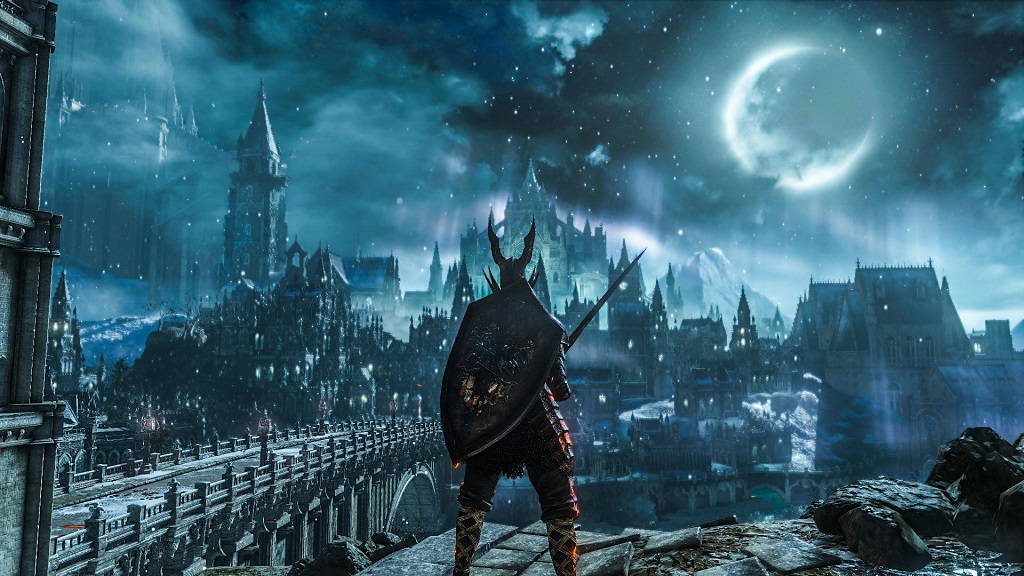
You lot haven’t heard me bang on about Dark Souls in quite some time have you? For those unfamiliar, it’s a series of five video games from Japanese developer FROM Software, a tiny outfit previously known for their mecha Armoured Core games. It’s quite an enchanting underdog-done-good story in a video game industry generally throttled by the grip of twice-voted Worst Company In The USA Electronic Arts and the OCD-collectathon every-game-is-the-same Ubisoft [1]
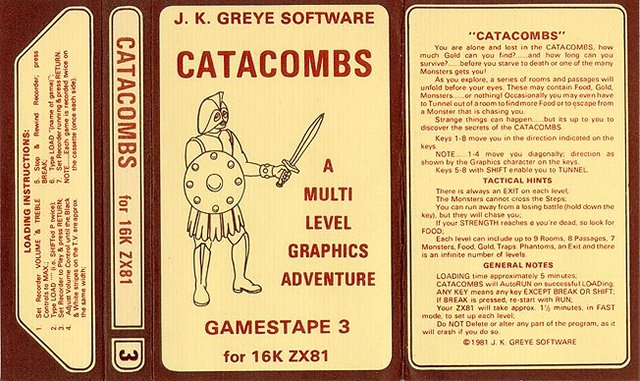
Video games are very expensive to make and, like movies, most are not commercially successful. Back in the 1980s budgets were so small that I could go into WHSmith’s magazine shop and they’d have their own line of ZX81 games on cassette tape. I remember buying one called Catacombs, a fantasy dungeon crawler in which a lone swordsman wanders dark labyrinths while terrifying monsters stalk him.
The original Souls
Kinda like Dark Souls.
Many great games were designed and programmed by a single man, such as the golden age of the Commodore 64 home computer with men like Andrew Braybrook creating Gribbly’s Day Out, Paradroid, and Uridium. Now a major release will employ a team of hundreds and cost an average of $50m and need to sell 2.5 million copies just to recoup development cost (not to mention marketing and then profit).
Unsurprisingly, with a studio’s entire future dependent on the success of a single game, they tend to be risk averse. Thus games follow trends. In 2009, the trend was to make games that handhold the player through a linear story with almost no risk of failure. It was the era of Call Of Duty.
The competing platforms at the time were the Microsoft Xbox 360 and the Sony Playstation 3. Pretty much nobody in Japan buys Microsoft consoles so when Sony Japan were signing deals for the next round of platform-exclusive titles one such project was to get FROM Software doing a mid-budget Japan-only title based on Tolkien style fantasy. Knights, castles, dragons, that sort of thing.
Project lead Hidetaka Miyazaki had plans. To cut a long story short, he colluded with his manager in Sony Japan to hide to staggeringly original (and staggeringly difficult) nature of the Demons’ Souls project from management until it was quietly released onto Japanese store shelves, lest it get cancelled or dumbed down. It barely sold and was considered a flop. It needed to sell 75,000 but only managed about 10,000 on initial release.
Somehow, it was released in China and Korea with an optional English translation and suddenly the game-importer crowd in the USA and Europe started hunting it down [2]. Word of mouth spread about a fantastic, compelling, original fantasy game. That secured it a Worldwide release and Demons’ Souls went on to be a cult hit, and Gamespot famously gave it a solid 9/10 rating.
Three sequels followed, Dark Souls 1, 2 & 3 and the spiritual sequel Bloodborne. Of these, it is the original Dark Souls that has drawn most praise. I’ve completed all five. I tell you all this because Dark Souls has a fanatical fanbase. One expression of this is today’s book You Died. Penned by two Japanophile journalists who were on the Demons’ Souls bandwagon before the worldwide release, it is part creator interview, part exegesis, and part oral history of the game’s creation and suffusion into the wider global consciousness.
As an obsessive fan myself, I rather enjoyed it. If you haven’t played the games, you won’t like this book at all. It pretty much requires you’ve finished at least the first Dark Souls in order to make any kind of connection to the book’s content.
I often compare Dark Souls to daygame so I’ll do a bit of that now, highlighting themes from the book. For example, in the chapter Why We Play Keza MacDonald outlines the Bartle Test of Gamer Psychology, “which is essentially a Myers-Briggs test for gamers.” Through a series of questions it assess your motivations for playing games.
“Do you like competition? Achievement? Finding things out? Making friends? Every person has a different combination of four characteristics: Explorer, Achiever, Killer and Socialiser.”
That intrigued me because you can likely submit a daygamer to the same test. Why do you chase skirt? I’ve noticed that different wings I’ve had seem to have different motivations. Dark Souls is unusual in that it has ways of satisfying every kind of player, as does daygame.
“Is there no-one else?”
Explorers take pleasure in seeking out hidden spots in their towns or boarding flights to second-tier European cities to scope the place out. They’ll wander, often alone, seeking to discern footfall patterns or find a good cafe, or find that city’s linguistic university. They can get impatient with the same old streets. For them, the adventure is at least as big a part of it as the girls.
Achievers want something to brag about online or in WhatsApp groups. They want to tick checklists like a catwalk model, or an 18 yr old, or a threesome [3]. They want to score themselves against the wider community and argue about it. Each likely has his own personal ranking for every daygamer he knows. You can bet he can tell you his exact notch count, flags, and average age of girl he’s banged this year. When he talks about girls, he’s proud of the achievement and the best date in the world is a bit shit if it ended as a near miss.
Killers need to compete, and taking down the girls is the core of it. They like the scent of the trail, the thrill of the chase, and the win of the notch. They see the women as prey and killers have long involved lay reports describing in detail every element of the hunt. In contrast, the socialisers want to be out with a group of mates having a good time so the winging, the coffee breaks, and the after-daygame drinking is at least as important. They enjoy the connection with girls even in social-not-sexual chats that ultimately go nowhere [4].
Another chapter, Tough Love, considers the notorious difficulty of Dark Souls and the apparent paradox that players find that rewarding rather than frustrating.
“If a game is punishingly hard, people tend to just give up on it; we’ve all been there, throwing the controller at the floor after the 12th attempt at some badly-checkpointed level or irritating boss. What is it about Dark Souls that makes us persevere? Is there something essentially masochistic in the makeup of a Souls fanatic?”
You could ask yourself the same about daygame. Let’s try some word substitution on that.
“Most Daygamers can name the moment that they broke through ‘the wall’; you need one big, hard-won victory to cement the cycle of effort, frustration, reward and release that drives people through the streets. That first big victory, where you’ve faced something that seemed impossible at first and conquered it after hours of failure and death and learning, is also necessary before you come to understand the core idea at the heart of daygame: failure as education.”
Yep, sounds about right. Was yours your first number off an eight? Your first idate? Your first SDL? Lets continue the word substitution game in another quote from the chapter:
“Understanding the psychology of daygame and what it does to our brains is the key to understanding why its version of difficulty is so rewarding and absorbing, where difficulty in other activities is just frustrating and off-putting. One of the key psychological models behind human motivation is something called self-determination theory, which posits that for a person to persist and feel motivated by an activity, it has to satisfy three different needs: mastery, autonomy, and relatedness.
Daygame offers mastery in spades [5], in that you always feel like you are getting better. Autonomy is the feeling that you are free to make choices, and that those choices are meaningful, which daygame also accommodates. And finally, there’s relatedness: the feeling of connectedness to people. That’s one of the things that prevents daygame’s difficulty from being too demoralising: it had a sense of community. You know that you’re going through it with thousands of other people, too, and seeing their messages and ghostly presences in your own game helps you feel like you’re not alone.”
Writing that out makes me wonder whether I should play Dark Souls again, or go hit the streets. Hmmmm.
You should probably buy my products. They are great and, best of all, they give me money.
[1] I actually like many of these companies’ games, just a shame about their effect on the industry.
[2] Gammas can occasionally be useful in their attempts to out-do each other
[3] Or pissing on a girl, I guess. Not for me.
[4] Not many of these in the daygame community, mind, seeing as it attracts introverts.
[5] Literally. You can have yours for just £79 in full colour from here.
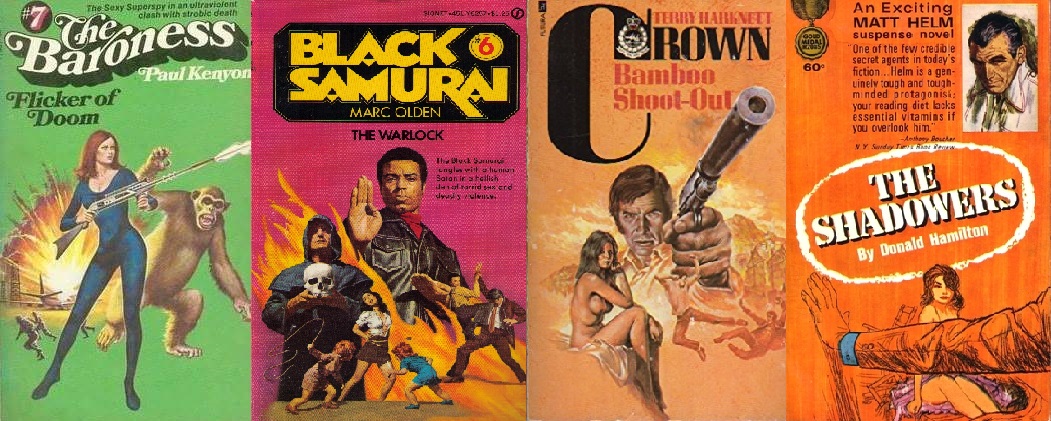
I have been very interested in the new-to-me discovery of many long-running schlock adventure / spy paperback series from the 1960s onwards. I’m talking about Mack Bolan The Executioner, Remo Willians The Destroyer, Matt Helm The Remover[1] So far I’ve been choosing them almost entirely based on the lurid covers. I mean, it’s an established fact that books are best judged by their covers.
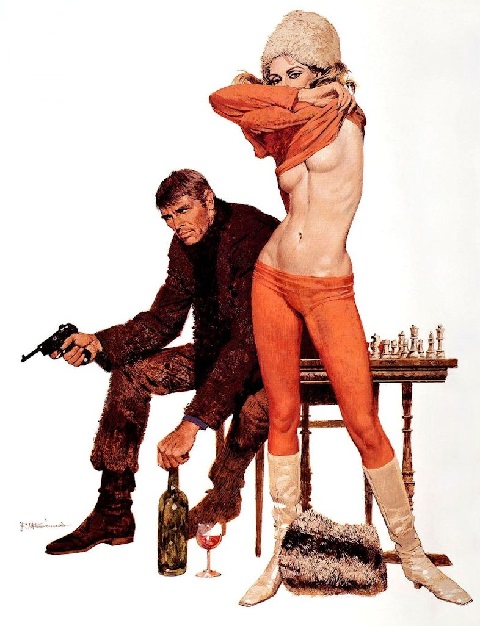
If you didn’t gasp “Coooooool!” you need your testosterone checked
Paul Kenyon’s Baroness stories didn’t run very long but they’ve chalked up a fair following to judge by the paperback prices on Amazon [2] and they are at least as preposterous as the Remo stories. The set-up is that the Baroness Penelope St. John-Orsini is the boss and top model of an international supermodel agency, and it’s the cover for her real job as a ultra-highly trained killing machine working for the NSA. James Bond with tits. To give you an idea of just how silly it is, consider the back cover blurb:
“Penelope St John-Orsini, NSA’s crack double agent, is sent on a secret mission across the Russian steppes into the desolate wastes of Easter Siberia. Her objective: to track and destroy a Red Chinese scientist who has invented a formidable laser death ray.
Masquerading as Mongolians, Penelope and her team of professionals have to face hostile Tartar warriors, and the savagery of the Kinghan mountains before they reach the shores of the mighty River of the Black Dragon – the threshold to Red China, and the second round in the game of death.”
So, we’re talking about Fox Force Five. Charlies Angels ramped up to level 20.
The book was written in 1974, so you have to expect this kind of thing. This was the era of disco, Bruce Lee, and muscle cars. As a work of genre fiction it fits the bill. The story makes sense, it’s clearly written, and the colourful cast of characters keep it lively. I enjoyed it. One thing really stood out though: the mismatch between the child-like imagination and accessibility of the writing (suggesting a teen or young adult audience of marginal IQ) and the lurid, brutal and highly sexualised violence. Let me give examples.
Penelope’s team link up with a Russian GRU team to do a joint infiltration of the Chinese base in snowy mountains. Their guides, Mongols, turn on them and Penelope is cold-cocked with a rifle butt. She wakes up in their yurt:
“She hurt. Her whole body felt sore. She had a crashing headache. The air was smoky, with an overpowering smell of grease and sweat. She opened her eyes.
Her arms were tied behind her. She was naked, lying on a pile of greasy furs. She was inside the yurt. It was hot, stifling. She was dizzy for a moment, and the felt dome reeled. She was surrounded by leering Mongol faces that bobbed like tennis balls until she shook her head to clear it.
There were finger marks on her breasts and thighs. There was a burning sensation in her vagina. She’d been raped. She wondered how many times.”
That strikes me as a bit salacious. Fear not, she escapes her bonds and violently murders almost every Mongol. Her Russian-US team come to her aid just as she runs from the yurt, which is now burning down after she kicked over a brazier to blind an attacking Mongol.
“There were two sprawled bodies at his feet, rifles lying beside them in the snow. Those were her two pursuers. Their bodies were stitched with slugs from the AR-10. A third body lay closer to the smoking ruins of the yurt.
The Russians stood around in a little knot, silent. Penelope took a step forward. A blackened body lay within the charred framework: the man she’d knifed in the belly.
Something was writhing weakly at the Russians’ feet. The man she’d treated to a faceful of hot coals. He must have managed to crawl, blinded, outside. She started toward him. If he could talk, perhaps she could get a clue to the plot to take over the expedition.
Before she could get there, she saw Alexey turn to speak to Tania. The blond girl nodded eagerly, and with unholy anticipation on her face knelt beside the blinded Yakut and sliced his throat with a knife.”
That’s what really jumps out in this book. It is chock full of sex, violence, and sadism in addition to the high adventure and tally-ho courage. The Baroness herself bangs two different Soviet spies, one in the beginning in her swimming pool and then that Alexey character in the mountains. Both scenes take about ten pages each and my fingers refuse to type sample paragraphs. It’s like reading a soccer mom’s kindle porn. I literally skipped those pages [3]. The violence is described as if those creepy pervs who directed the Hostel and Saw movies were writing it.
Dunno, man. I didn’t like that aspect. Revelling in sexual sadism just doesn’t sit right with me. I get that it’s written for the titillation of young lads, but I’d rather it played the action straight like in the Bolan and Helm books. I’d like something more like Fox Force Five.
Or if the Spice Girls were actually hot.
Anyhow, salaciousness aside this was a fun read of the kind of hi-jinks that never get made into TV shows or books. About the closet thing to it is the beginning of that crappy Zak Snyder movie about the tarts. What was it called? Ah yes, this one….
Nowhere near as good as it looks here
If you’d like to read an equally silly adventure in Russia with lots of salacious sex scenes, consider buying my memoir Adventure Sex. Or any of my many fantastic products here.
[1] and also The Silencer, The Ambusher, The Shadower, The Ravager, The Devastator and pretty much every other bad-ass sounding verb one could use as a code-name.
[2] Sadly, no Kindle unlike the £0.99 Destroyer volumes.
[3] And I never skip or skim-read pages. I consider it an unholy sacrilege against books.
Daygame enthusiasts are well aware of many “player’s journey” blogs in our corner of the internet. They log the author’s lay reports, theoretical musings, and travel stories. If this is news to you, click here for a list of many such blogs.
One of them is written by my buddy and sometime Euro Jaunt wing Mr White. He’s just put up a review of my latest memoir Younger Hotter Tighter. Go read the full thing here[1]. A couple of selected quotes:
“On first examination, the book feels much higher quality than the others with Nick deciding to go for a matte cover rather than gloss as well as the whole book being in full colour which adds a nice touch”
“The writing style is also similar to the previous book in that technical advice is thrown in throughout so the reader is learning while following the narrative.”
[1] Anyone commenting “but he’s your buddy and wing and therefore not objective” is not the sharp-eyed sceptic they think they are. Yes, it’s blindingly obvious it’s not objective and nobody is pretending otherwise so don’t embarrass yourself trying on the posture.
There was a time when men made tough decisions and didn’t flinch when disappointing people. Now, of course, everyone is a faggot [1]. Regular readers will know of my project to read lots and lots [2] of Dennis Wheatley, a former best-selling UK author. He was one of the pioneers of genre fiction and created several long-running series featuring some dashing debonair heroes.
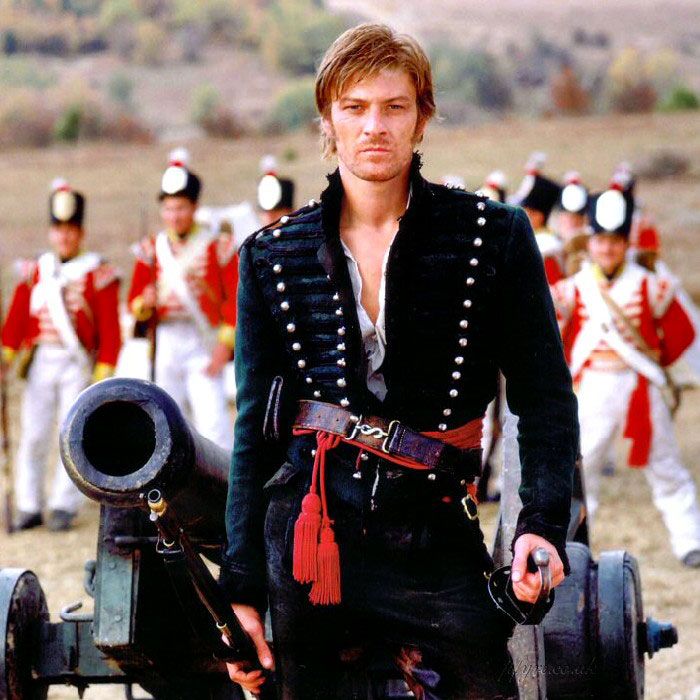
One such hero is Roger Brook, secret agent in the employ of Prime Minister William Pitt. Roger gets sent into Europe to scuttle the plans of rival Great Powers for the glory of Britain. It’s rip-roaring, sabre-rattling, timber-shivering good adventure.
It is also bodice-ripping.You see, Roger Brook is a cad. A damnable cad.
The Sultan’s Daughter is the eighth in a series of twelve books covering the period from 1783 right up to 1815 when Wellington finally put paid to that nasty Corsican atheist Napoleon at the battle of Waterloo. While Bernard Cornwell’s Sharpe was quite effectively winning every major battle single-handed as a rank’n’file soldier, Brook was equally single-handedly winning the espionage war. Each book is epic in its own right, and The Sultan’s Daughter weighs in at a hefty 511 pages. Those are proper pages too, with lots of words on ’em.
I want
As an aside, I tried reading this one in a single day but my mother threw an epic tantrum and shouted at me for an hour so that scuttled my plans more effectively than Brook himself could’ve managed. I retired to bed at 4am stuck on page 464, floundering like Napoleon’s army in Egypt. The thing is, Wheatley writes such page-turners that smashing through 464 pages in one day wasn’t at all boring.
The Sultan’s Daughter begins with Brook already tight with Napoleon, who has made him an aide-de-camp. The little Corsican’s star is rising fast as the French Republic’s premier soldier but he hasn’t yet taken supreme power by coup d’etat. Pitt sends Brook off from the south coast and almost immediately he’s hunted by a French frigate in the Channel, captured on his landing, and comes within a whisker of summary execution. From there, the pace never lets up. Napoleon is sent to invade Egypt and push on through Syria to India so Brook tags along.
So far, so much spying. What about him being a cad? He’s got a long-running on-off love affair with an English girl Georgina but they’ve agreed not to marry in order to keep their affair more exciting. So he starts the book banging her.
“After a moment Georgina shrugged her fine shoulders, smiled and said, ‘Dear Roger, that no two lovers could have had more joy of one another I’d ne’er deny; but marriage is another thing. We agreed long since that did we enter on wedlock the permanent tie would bring ruin to our love. ‘Tis because I have been your mistress for only brief periods between long intervals that the flame of our desire for one another has never died.'”
So, he’s got his English plate spinning without needing to promise commitment. A firm foundation. His moral fibre is really tested during the French sacking of Cairo. While out late at night Roger surprises six infantrymen who have kidnapped two local women. Brook gets a glimpse of one as her veil falls and she’s the most beautiful woman he’s ever seen. He decides to try a rescue through negotiation, as he doesn’t fancy his chances when so outnumbered. A barter ensues.
“Roger decided that a gold piece per man with something extra for the Sergeant should do the trick, so he said, ‘Ten louis.’
The Sergeant spat. ‘Then your luck’s out. She’s worth twenty times that. Just look at her, and think what she’ll be like when you’ve got her clothes off.’
‘All right. Twenty-five, then.’
‘You’re wasting my time, Colonel. When we’ve had our fill of her we’ll bring the other lads along. Plenty of them will cough up ten francs a go to put her on her back. She’ll earn us twice that in a week, and more.’
Eventually they settle a price and Roger takes her to his logistically-convenient Airbnb apartment. The girl, Zanthe, asks he also rescue her maid but she’s not a looker so he passes. A cad you say? How about this exchange:
‘So you mean to force me!’ she flared.
‘I trust not. Must I remind you that barely an hour ago I saved you from a most terrible ordeal at the hands of six ruffians, who would later have hired you out to scores of their comrades. Since you are a fully experienced woman, I should have thought you would be happy to reward me.’
They argue a bit more then Roger continues:
‘But all this is irrelevant to our situation. I give not a damn how you feel on such matters. The night grows old and I have no mind to parley with you further. Under the age-old usages of war you are now mine, to do with as I will, and I have made clear my intentions. Oblige me by getting yourself undressed.’
He battles some serious LMR, rapes her, and naturally she ends up enjoying it. Unfortunately for Brook he’s then sent away on urgent business by Napoleon and finds Zanthe gone on his return. Apparently she wasn’t so enthused about his rape game. Anyway, I shan’t spoil the story but note she is The Sultan’s Daughter of the title and appears quite a bit later. Towards the end of the book, Brook finds himself desperate to return home to Georgina but enjoying Zanthe too much. Zanthe has twice saved his life – once from impalement by a fat Turkish sultan [3]and once from plague – and is now living with him in Alexandria as they plan a future together. Brook is riding near the sea when he spots an English vessel sending sailors ashore for water. Finally, a chance to return home!
“Right lads, you all go that way where the Turks are and I’ll just stay back here”
“As Roger thought of those months ahead during which, if he remained in Egypt, he must continue to suffer from the sweltering heat, myriads of flies, possibility of being killed by an Arab or stung by a poisonous reptile, and living all this time among companions growing daily more desperate with fear about their future, he had never before so greatly longed to be back in the green fields of England.
Only the thought of Zanthe deterred him from galloping back over the crest, pulling out his white handkerchief and waving it aloft to the little party of seamen who meant home and safety to him. She had given him intense pleasure. She loved and needed him. She had twice saved his life and had nursed him back to health. Could he possibly desert her? Sill worse, could he simply disappear without a word, leaving her to months of misery, wondering whether he were dead or alive and what had happened to him? She was very beautiful and he would soon be strong enough to become again her lover in the fullest sense. But there were other women as beautiful, even if in a different way, and as passionate in England. In a few years she would look middle-aged and have become fat and unwieldy. Why should he sacrifice every other thing for which he craved to saddle himself with a half-Asiatic girl whom he would have to take with him as his wife wherever they went, whether they actually married or not?”
Brook ends up ditching her the next day and barely looks back. All’s fair in love and war [4]. I’m sure the more successful players among you know the dilemma. Nobody wants his bird getting fat and old.
If you’d like to see how I deal with all the hot birds I meet while adventuring overseas, why not try my new memoir Younger Hotter Tighter which is full of this stuff. And I don’t like the French either.
Brooks finds himself in the Battle Of The Nile too
I’m not sure words can express how relieved I feel at this moment. For the past four years I’ve had the mother of all open loops. “Nick, write a memoir of your entire skirt-chasing daygame journey. That’ll be fun,” I’d told myself in mid-2014. That single-volume project soon ballooned and I committed myself to four – yes FOUR – big volumes.
I don’t do things by halves, it would seem.
Anyway, that loop now snaps shut with a satisfying click. The final book is finished and I hereby announce it’s release. I’ll say more about it over the coming few weeks. Till then, I’m pretty sure anyone who has read volumes one and two already knows what they are getting in for by ordering this one.
There is one big difference this time: the order process.
I was so happy with Ingram’s printing of Daygame Infinite that I decided to do all my new releases with them. Their versions feel so much nicer in the hands, plus they are in colour, and more important of all Ingram can handle more complex page designs without blowing up their conversion software. So, Younger Hotter Tighter is only available the following way:
STEP ONE: Calculate the price. This is £30 UK, $45 US, $50 AUS, e40 EU, £50 Rest Of World [1] This includes shipping.
STEP TWO: Paypal me at krauser@rocksolidgame.co.uk Be sure to include your name, postal address, the words “Younger Hotter Tighter” and a telephone number for the UPS delivery man. See this example. You need to provide all of the information requested with the red stars * on the right side.
Please note that the difference in price between locations is entirely due to varied print and postage costs. My own margin is exactly the same each time. Canada is now Rest Of World because it must be shipped from the US.
[1] Postage is the big killer on this book. If you want it MUCH cheaper, order it with one or more of my other books. Email me with which books you want and which country to deliver to and I’ll quote you a price. Titles available in this way are: Daygame Infinite, Daygame Mastery, Younger Hotter Tighter, and Daygame Infinite Pocket (more on that very soon). All are full colour.
I’m hoping to update my Sigma Wolf website to make this all automated but God knows how long that will take. I’m a lazy man.
We are led to believe, in this modern politically correct age, that noticing patterns is ‘prejudice’ and facts are ‘hateful’. I think both the Left and Right would agree that discrimination is everywhere, but they disagree on what the word means.
To the Left, discrimination is a bad thing. It means you are treating people unfairly according to some correlation you’ve noticed that one thing tends to go with another: scheming Jew, cheating Turk, gay Arab, goat-fucking Muslim, depraved Leftist, child-molesting Faggot and so on.
Depraved leftist
To the Right, discrimination is a good thing. It means you can capably discern patterns in the world and then form predictions and modes of action which will tend to lead to favourable outcomes. Don’t let Jews run your banks or they’ll swindle you. Don’t trust a Turk vendor to give you a fair price, and certainly don’t let your kids anywhere near faggots.
Discrimination is risk-assessment. It’s good judgement. It’s why Poland hasn’t had any Muslim terror attacks whereas London is second only to Karachi as the acid-throwing capital of the world.
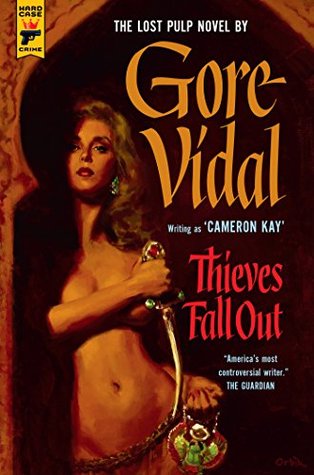
I mention this because Gore Vidal’s Thieves Fall Out, written in 1953 and based in Egypt around the time of revolution the prior year, is chock full of stereotypes and associations that seem an awful lot like common sense to me but would shock a spaghetti-armed soyboy. It reminded me of one of my first client jobs in 1998 when I was an apprentice at a big London financial company.
The client ran huge public works projects in North Africa, such as building hydro-electric dams and hundreds of miles of pipelines. They’d contract with such governments then assemble teams, plans, and supervise on-site work. Quite a big business. Two things were particularly notable when I was looking through the expense account of a couple of projects in Egypt. I went in to a project managers office to ask him about it:
“These are two lines that seem abnormally large: hotel penalties, and sundry regulatory fees. Can you explain them?”
The manager, a big Ghanian who looked like Ike Ibeabuchi and laughed heartily like Brian Blessed did indeed explain. “It is always the same with Egyptians. They come to London for business trips and then smash the hotel rooms, so we pay for the repair. The other thing is bribes to local government and police.”
Just missing the knife in the ribs
Thieves Fall Out presents Cairo, and later Luxor, as disgusting shitholes boiling under a scorching sun while the filth-strewn streets are thronged by beggars and murderers. Every white man has a target on his back. The story opens when an American sailor – admittedly a chancer – called Peter Wells wakes up in a brothel having been drugged and robbed the night before [1]. Broke and alone, he stumbles to a local ex-pat’s hotel bar and tries to scare up a hustle. He falls in with smugglers who hire him to convey a valuable relic out of the country for an illicit art sale. From there it’s a standard hard-boiled story where everyone is on the make, nobody tells the truth, and every broad is a sassy gal who knows how to shuck her hips to make a grown man whimper.
So much, so typical of the genre.
What stands out is the setting. It’s common to read hardboiled stories set in the back alleys of Los Angeles and long drives in a Cadillac out to the Hollywood hills or the vineyards and alfalfa fields in the north. Equally popular a setting are the tenements of New York with their tough Irish bartenders and wise-cracking Harlem pimps. It’s quite refreshing to have a cast of the aforementioned scheming Jews, cheating Turks, and gay Arabs (literally this story has all three).
“He walked about the streets until eight o’clock, staring at the crowds. He was propositioned a hundred times. Boys tried to sell him their sisters, their aunts, themselves: men offered to arrange erotic exhibitions for him, to sell him dope, stolen jewels, Persian rugs. He got very tired of them, but they were a part of this strange world and he was determined to make the best of it.”
Mind you, the white ex-pats he falls in with are a gang of rogues too. Still, at least when he’s in their hotels he’s quite safe. Later when he crosses the Nile outside Luxor with a guide they are set upon by three Arab bandits who try to castrate him just because. Once the uprising in Cairo hits full swing he witnesses a mob surround and decapitate four unarmed soldiers.
It’s not like the fist-fights and occasional knifing in LA and NYC stories.
This one is more one-sided than usual
Aside from the themes, the other point of note in this book is how short and simple Vidal’s sentences are. His prose isn’t at all flowery and the simplicity of it, his discipline in not putting on any literary airs and graces, is refreshing. Here’s an early example:
“A flood of abuse made him dizzy. Her hands opened and shut convulsively as she shouted at him, her black eyes large and brilliant. He edged towards the door. She put herself between him and the door, her hands clutching now at his clothes. He shoved her away. This was a mistake, for she immediately yelled for help. Help came in the form of five women of different age, weight, and beauty, but all sharing the same profession and dressed in similar loose robes, all shouting as they crowded about him on the rickety stairs outside the room.”
Actually, now that I write that I realise why this book appealed to me so much. It reminded me of my recent holiday in Thailand.
If you’d like to know just what I got up to in Thailand and how it makes Peter Wells’ adventures seem dull in comparison, keep your peepers glued to this site as I will make an announcement sometime soon.
[1] Remarkably similar to Alan Caillou’s book I reviewed here which starts the same way and is also set in the same Egyptian uprising. Funny that.















 Krauser PUA