#111 – Violence In Velvet, Michael Avallone BOOK REVIEW

November 29, 2018
krauserpua

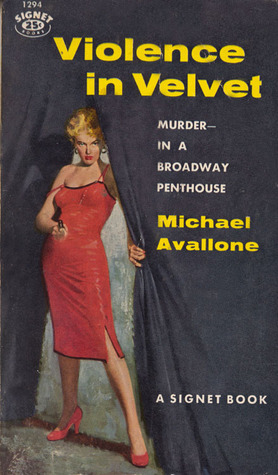
Violence in velvet

Compared to the tightly convoluted plotting and extensive theorising of Perry Mason novels, the Ed Noon stuff is far more straightforward and action oriented. Mason is very rarely endangered and almost never physically assaulted. His jeopardy always comes from cutting a corner – usually tampering with evidence or manipulating a client – so as to frustrate the police and risk his disbarment for obstructing justice. He doesn’t pull a gun, or have one pulled on him. He’s never sapped on the back of the head, tied up in a basement, or threatened by mob bosses.

That stuff happens all the time to Noon. He’s been knocked cold more times than Amir Khan.

The Mason books also clearly involve the reader in theorising through the case. There are always mid-story scenes of Mason sitting in his office picking at the evidence with his secretary Della Street or his private eye Paul Drake. These scenes are to summarise the evidence for the reader and highlight key components of the puzzle. Agatha Christie does the same thing. Michael Avallone prefer the Sherlock Holmes method of storytelling, in which the detective keeps his cards close to his chest until the big final reveal.

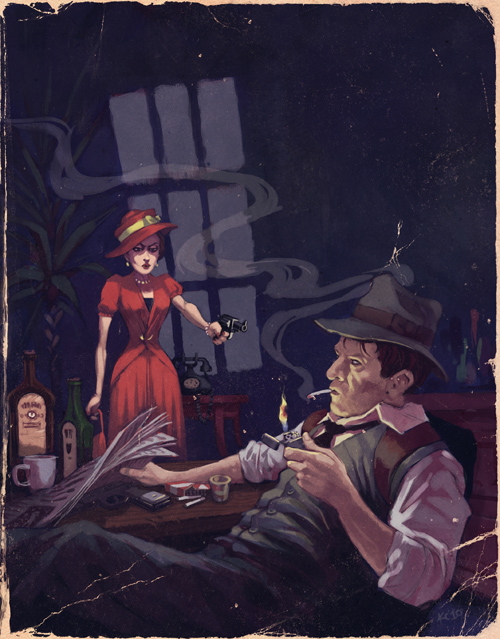
This fourth Noon novel, Violence In Velvet, does not begin with a dame in this office, a violent man bursting in, and then a third unseen character shooting said man dead (you’d be surprised how often that happens in Noon stories). If I remember correctly, there are no corpses in Noon’s office at all, which is a rarity. Instead, Noon is sitting in the bar across from his office when a ten-year old kid – Lucille – comes in and offers to pay her pocket money to hire Noon. She claims her dad wants to kill her mum.

Noon takes the kid back to her parent’s apartment, and stumbles onto mummy’s corpse. She’s been shot in the face with a .45. The shaken kid picks up the gun and fires it at Noon, missing. Then a dame bursts in – the dad’s secretary and mistress – and also pulls a gun.
33

“You call me a squirrel one more time!”

Now, that probably sounds really odd but believe me as the book progresses this seemingly irrational behaviour from the big dame and little dame starts to make sense. This is a tale in which Daddy is a Broadway star and there’s a love triangle afoot. Having a murder occur live during a baseball game in the third book, Dead Game, it seems Avallone wanted to up the ante by having a murder during a stage performance in Violence In Velvet.

Aside from that, it’s a typical Noon book. It has the usual cheesy dialogue too:

“His name is Noon, Miss Tucker, ” Lucille piped up, obviously enjoying herself immensely. “You know. Like twelve o’clock.”
“Now you know,” I told Helen Tucker. “So dry up or I’ll strike you twelve times.”

There’s the usual action too, of the sort you never get in a Perry Mason. The husband, Guy Prentice, shows up at the murder scene while the police are still there and Noon is in a bad mood – having had two guns fired at him by Lucille and Helen respectively. Prentice is a primadonna and Noon suspects his show of grief is an act. So he needles him.

“You dirty, filthy swine,” he murmured. “Who do you think you are – God?”
“Not God,” I said coldly. “Just a guy who doesn’t go around murdering women.”
It just wasn’t my day. I tried to wriggle off the hook but I couldn’t. And there was more to come.
Because Lucille leaped forward like a little tigress, locked my legs with her wiry, slender arms and sank every tooth that was in her mouth into the fleshy part of my upper thigh. I howled and tried to shake her off, and it took all of my attention off things.
Which cost me. Guy Prentice seemed to bounce off the floor at me like a released spring with a fist at the end of it. I’d never been punched by a famous man before. But speaking for all of the men punched by famous men the world over, mine was a special four-star performance.
His fist whooshed up to my chin, exploded like the A-bomb, and the detonation roared around my skull. I went down into a mushrooming darkness with the sound of the doorbell for musical accompaniment.

Your reaction to that excerpt will tell you if Ed Noon books are for you. I like that type of facetious bumbling high-action style and don’t find it at all low brow. It’s straightforward, without pretence, and doesn’t let fancy language get in the way of telling the story.

If low brow is your thing, you can’t get lower brow than a memoir about a middle-aged man flying budget airlines, staying in cheap AirBnB apartments, and banging young women of questionable chastity. Or you could buy my textbooks to learn how to live the dream yourself. Get ’em here.

#110 – The Case Of The Drowning Duck, Erle Stanley Gardner BOOK REVIEW

November 29, 2018
krauserpua

Drowning Duck

There are many reasons to like Erle Stanley Gardner’s writing: his distinctive characters, the suave interplay between Perry Mason and his faithful secretary Della Street, the investigative insight from Paul Drake, or the convoluted but carefully-intertwined plot threads. But of all things, it’s the way Gardner has his protagonist Perry Mason think which I like most of all. He has admirable logic that pulls you in just as Arthur Conan Doyle did with Sherlock Holmes.

In chapter thirteen, there’s a very nice example of it. Let’s have a look, shall we?

The central conceit of The Case Of The Drowning Duck is that an insufferably proud rich dude asks Mason to re-open an old murder case from eighteen years previously. One Horace Adams was convicted and executed for murdering his business partner out East, in 1924, and now Adams’ son is about to marry the client (Witherspoon)’s daughter. Adams’ mother told her son a cockamamie [1] story about him having been kidnapped aged 3, to cover up the murder charge. Witherspoon will not permit his daughter to marry a boy with the mark of Cain, but has hired Mason just on the off-chance Horace Adams was wrongly convicted.

When you write as many detective mysteries as Gardner – and this was number twenty in the Mason series – you get creative. He does a masterful job hopping between the old murder case and modern-day peril. Once the dust is kicked up there’s a tale of blackmail, shakedowns, and new murders. So, halfway through the book, Mason sits down with his regular private eye Drake and discusses the case. Specifically, his methodology of attacking the case.

Mason said, “Let’s look at this thing logically. The big trouble is we get hypnotised by facts and start placing a false interpretation upon those facts because of the sheer weight of circumstances.”

This is somewhat opposed to Sherlock Holmes who, in Scandal In Bohemia, advised:

It is a capital mistake to theorize before one has data. Insensibly one begins to twist facts to suit theories, instead of theories to suit facts.

Now, I think this comes down to whether the detective is reasoning within an open or a closed system. The Holmes stories are known as “locked room puzzles” meaning they usually involve a sealed crime scene and small suspect list. Doyle sets up a small amount of solid evidence from which a tight chain of deductive reasoning can be made: the footprints near the body are size ten, with a certain distance of stride, and deeper impressions on the right foot, and there is a particular cigar ash. Thus Holmes can walk into the only two tobacconists in London that sell that cigar and ask if a man over 6’3″ with a bad left leg came in to buy some. Holmes will carefully observe a scene to collect facts and then stir the pot to uncover more. However, his stories usually involve close reasoning. Once you’re sure of the key facts, the conclusion is elementary.

Mason never has things so clear cut. His facts are more like Miss Marple‘s: witness testimony and gradually uncovered relationships between characters. When reading Holmes you get the feeling that the crime is a static target that must be gradually uncovered. Mason stories are a blurred moving target as the lawyer tries to keep up with a shifting reality. Thus where Holmes must decide where to look and then observe carefully until he has uncovered sufficient key facts, Mason must manage the psychologies, set traps, and fool witnesses into revealing their secrets. To do that, Mason requires a big picture early. Facts can change it, but he needs to constantly reason out the big picture and try fitting the facts.

Mason said, “When you once get the correct master pattern, every single event fits into that pattern. It dovetails with every other event which impinges upon it. When you get a master pattern which seems to accomodate all of the events except one, and you can’t make that event fit in, it’s pretty apt to mean that your master pattern is wrong.”

It’s this logic which makes me increasingly confident of The Storm, QAnon, and Pizzagate. What are those, you ask? Briefly, The Storm is a theory that Trump is weeding out all the corruption and racketeering from the US Government which will entail taking down the key crime families: Clintons and Obamas. QAnon theorises that the entire world is run by a secret Cabal who pilfer taxpayers money and they attempt to betray the West but the good guys (Team Trump) are fighting a secret war to take them down. Pizzagate theorises that the world is run by a network of Satanic paedophiles of which the Vatican and Hillary’s campaign managers are key nodes.

Whew!

As it happens, I’m 100% convinced of The Storm because all of the evidence is publicly available and the actions are out in the open too – testimony under oath before Congress and Senate, Trump’s appointments and executive orders, indictments, FISA applications, firings and retirings and so on. The Storm doesn’t rely upon anonymous sources or rumour. You can see all the information in official documents, transcripts, announcements and so on. Much of it involves Government employees or Congressmen acting in their official capacities. The key is how to fit the facts together: having the correct Master Pattern. It’s all hidden in plain sight. I’m rather less convinced of QAnon and Pizzagate because those theories actually require that it’s based on anonymous sources, rumour, and clandestine meetings. Call me wary.

This is why I took great interest in the recent Miami Herald story on convicted paedophile Jeffrey Epstein. Who is Epstein, you ask?

Epstein

At least he has taste

He was raping under-age girls in Palm Beach, Florida and was cut the sweetest of all possible plea deals in which he was sentence to one year in prison, but let out six days a week for “work release”. Basically, he got off scot-free. Read the Herald story to be brought up to date. Now, given that this happened over ten years ago, why is it a big story now? Why is the biggest newspaper in Florida forcing Epstein and child sex-abuse rings onto the front page. Ignore the Trump reference, this story hits the Clintons hardest of all. Why now?

Now, more than a decade later, two unrelated civil lawsuits — one set for trial on Dec. 4 — could reveal more about Epstein’s crimes. The Dec. 4 case, in Palm Beach County state court, involves Epstein and Edwards, whom Epstein had accused of legal misdeeds in representing several victims. The case is noteworthy because it will mark the first time that Epstein’s victims will have their day in court, and several of them are scheduled to testify.

But why is that going to court now? Could it be related to Trump finally having a 53-47 Senate, and Jeff Sessions handing over the Department of Justice to AG Whitaker?

This represents one of the many “single events” that fit into the Pizzagate “master pattern”. We already know Bill Clinton travelled to Epstein’s “lolita island” in the US Virgin Islands 27 times, including many without his Secret Service detail – that’s all in the publicly available flight manifests filed with the FAA. We already know Trump suddenly banned Epstein from his properties for propositioning an underage girl. We also heard Trump clearly allude to Hillary’s NGO child-trafficking in Haiti following the earthquake (skip to 12:30).

These are all single events fitting into the Pizzagate master pattern. If you want a good breakdown, go check out this blog for a Pizzagate summary.

I doubt Mason would conclude from the currently-available evidence that Pizzagate is the correct master pattern, but I dare say he wouldn’t be able to come up with a better working hypothesis. As each of these single events emerges to reinforce the theory – and none at all to discredit it – I grow increasingly confident that Pizzagate is real. How confident? Currently, about 40%. It’s still a long-shot.

No duck was drowned in the book, by the way.

If you prefer your girls to be of legal age, consider my memoir. If you’d like a master pattern for how to get ’em, check out my textbooks. All available here.

[1] I always wanted to use that word in a blog post.

#109 – The Stainless Steel Rat, Harry Harrison BOOK REVIEW

November 28, 2018
krauserpua

220px-Stainless_Steel_Rat

I’m not a good listener. From an early age, I always knew best and I’d be quite stubborn about it. That’s not to say I was incapable of learning or of taking advice, just that I’d never take that advice at the time it was offered. It had to percolate in my mind until I’d weighed it up and fitted it into my world-view. Tied to this attitude is my general disposition as a contrarian. Whenever I see the herd moving in one direction, my instinct is to go the other. That’s why, for example, I stayed well clear of the Jordan Peterson faggot-band long before Vox Day exposed him as an evil globalist and cult leader. It’s not that I saw through Peterson before Vox – I didn’t – but rather that I saw the Peterson bandwagon pick up steam and that very fact disgusted me and encouraged me to keep my distance.

It’s a simple heuristic in life: If all the knackers and ‘tards are headed one way, you might want to head the other.

Recently I explored YouTube for what others are saying about the Sigma Male. I found considerably more videos than I’d expected (including a few quoting my own writings on sigma word-for-word, which was flattering). One of them was a listicle, something like Ten Ways To Know You’re A Sigma Male. The comments argued somewhat about whether a Sigma is born or made, and that got me thinking.

On the one hand, I’ve always wanted to stand aside from the herd, since I was little. That seems like an innate disposition of mine that trends sigma. On the other hand, I believe all sigmas have experienced a period of social exclusion that finally soured them on any desire to fit in with the herd. For me, it happened aged 12 when my best friend transferred to another school. So, nature or nurture, who knows?

stainlessteel-ratborn

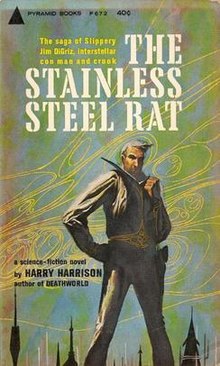
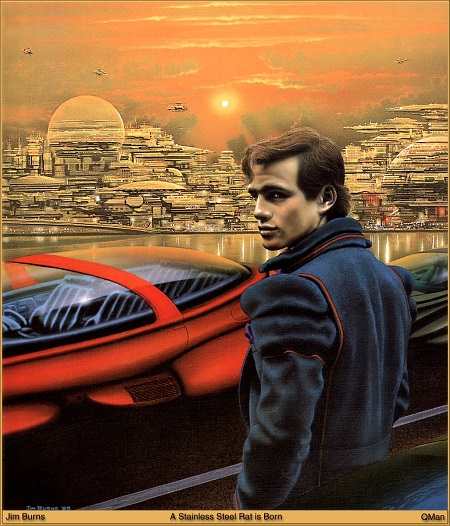
I bring this up because Harry Harrison‘s The Stainless Steel Rat is a portrait of sigma in a 1961 science fiction novel. It was recommended by a blog reader and the premise intrigued me. In the future, the Federation (like Star Trek) has colonised much of the universe and imposed its own monolithic utopia. Every Federation planet [1] has its place in the grand scheme of things and a central organising authority carefully manages the technology, law and order. Obviously war is banned – it always is in these Utopian sci-fi novels.

Harrison throws a spanner in the works by making his protagonist an outsider, a compulsive criminal called James Bolivar diGriz. Chapter one opens with diGriz making a hasty escape from his warehouse, base of a black market business reselling food stolen from government stores. He high-tails it from the planet and sets up in a new place, thinking up a new scam. He’s an experienced hustler, living by a series of mottos:

It had been a good operation – and could have gone on for quite a while. I stifled the train of thought before it started. One lesson that has to be remembered in my line of business is that when an operation is over it is OVER! The temptation to stay just one more day or to cash just one more check can be almost overwhelming, ah how well I know. I also know that it is also the best way to get better acquainted with the police.

Chapter one shows diGriz is a criminal who takes real pride in his work. His scam was well thought out and he set up very carefully rehearsed exit protocols to ensure a clean getaway. There is now so little crime in the Federation that all the police have to do is chase down people like diGriz, a tiny minority compared to law-abiding citizens. The sheer uphill struggle of eking out a dishonest dollar forces him to be very careful in his risk-management.

So, why does he even bother? Harrison explains in chapter two:

At a certain stage the realisation strikes through that one must either live outside of society’s bonds or die of absolute boredom. There is no future or freedom in the circumscribed life and the only other life is complete rejection of the rules. There is no longer room for the solider of fortune or the gentleman adventurer who can live both within and outside of society. Today it is all or nothing. To save my own sanity I chose the nothing.

Faggotry

“Look, we found someone who isn’t a faggot like all of us!”

Harrison’s protagonist has turned to crime for philosophical reasons, as a rejection of the cloying uniformity of the Federation’s fake Utopia. He needs to screw with the system as much as he needs oxygen. For example, while still on the run, he does this:

When I paid the cab I short-changed the driver right under his nose, palming one of the credit notes in the act of handing it to him. He was blind as a riveted bulkhead, his gullibility had me humming with delight. The tip I gave him more than made up the loss since I only do this sort of petty business to break the monotony.

This exchange shows diGliz isn’t mean-spirited or avaricious. He’s criminal because of its spiritual rewards. Interestingly, diGliz figured this out all on his own. He’s soon arrested in an elaborate entrapment by The Special Corps, an elite group of expert detectives, because he can’t resist the urge to rob a bank on his new planet. While interviewed by the head of the Corps, it becomes clear than diGliz did not learn his trade through contact with other criminals – “You’ve never met another crook in your life and you know it!” says the Head, and diGliz doesn’t disagree.

Nature or nurture? How did this sigma male get made?

It turns out that The Special Corps is a unit composed mostly of former vagabonds like diGliz so it has a dual purpose of hunting down criminals and providing a safe avenue for them to harness their creative urges. diGliz takes the job and soon uncovers a plot of a fellow criminal to have a powerful battle-cruiser built and stolen so as to engage in space piracy. The boss sends him off on a mission to investigate and diGliz soon deserts the Corps (that’s the sigma unwillingness to be in a team) but continues the mission on his own steam (the sigma sense of moral purpose).

As diGliz investigates he becomes increasingly impressed with the unknown mastermind behind the plot and finally manages to run her to earth. It’s a hot bird, Angelina. She escapes and a cat-and-mouse game ensues. diGliz must manage conflicting urges, at times feeling a sense of kinship with a rare fellow vagabond, while also disgusted at her being an actual mass murdering psychopath (at this point, diGliz has never killed anyone). He also obviously wants to bang her.

I really enjoyed this book. It has the same methodical hero as the Matt Helm books and the same careful pre-planning and double/triple bluffing Helm always uses. It also has exceptionally lean and clear prose so the story doesn’t half rush forwards. After the relatively turgid prose of yesterday’s Crusader book, it was really notable how this one zips forwards like a scout-class ship hitting a warp gate [2]. It does this without skimping on depth. Judged only on plot, it’s a pot-boiler with a few nice twists. Judged on character, there’s that interesting sigma deal going on. The Federation regimentation leads to passivity and mediocrity, which diGliz rebelled against instinctively.

If you like reading about an inter-stellar sigma rascal who feels compelled to step outside the herd and make mischief, you’ll probably enjoy my memoirs and my how-to daygame textbooks all explained here.

[1] I think Harrison calls it The League, but it’s The Federation.
[2] I can do sci-fi metaphors

Demolition Lovers Out Now

November 28, 2018
krauserpua

Use the coupon code FWD15 for 15% off this and my Lulu books

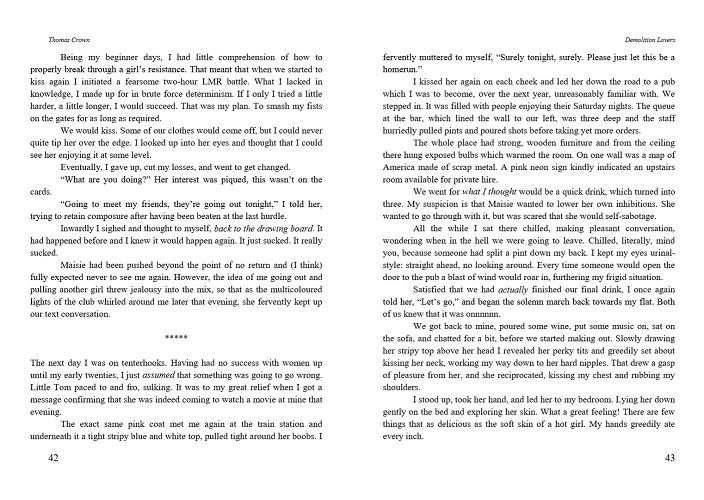
Regular readers who are not suffering from pre-senile dementia will remember around this time last year when I announced my Winter Memoir Challenge. Not to put too fine a point on it, I wanted some daygame memoirs to read and thus tried to cajole people into writing them. I’m very pleased to say that four worthies stepped up to the plate and completed serious first drafts that I test-read.

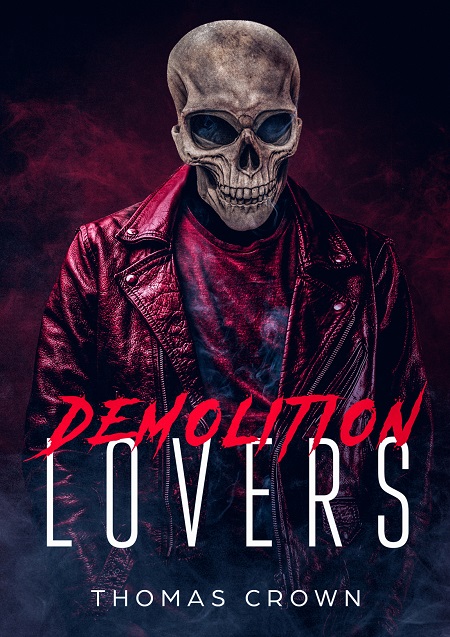
The first of them, after twelve months of polishing and editing, is now officially released, and by golly it looks rather good doesn’t it?

demolition-lovers-front-cover

Yes, rising star in the London Daygame world [1] Thomas Crown has just released Demolition Lovers, a memoir of his 2016/17 period of daygame carnage. Those of you who read his rather excellent blog [2] will know he’s a capable writer and good communicator [3]. I can personally vouch for the extreme care Thomas has lavished on this book, having read three different drafts as the memoir took shape over the past twelve months. It’s not a rush job at all.

I’ll review it properly at a later date, but I want to get a paper copy to read at my leisure when I’m back in Newcastle for Christmas. For now, I’m just fulfilling my promise of announcing its existence to my readership.

Go here to purchase your own copy. If you’d like to leave your thoughts on the book in the comments here, please do. Let’s try and get a little buzz around the book. In our little daygame corner of the internet, there are very few good books released. Let’s celebrate when one comes out [4]

I shall forgo the usual opportunity to pimp my own memoirs in italics, so go have a look at Demolition Lovers before an irate boyfriend murders the author in revenge for shagging his bird.

Interior

The interior, yesterday

[1] That’s five pounds you owe me, Tom.
[2] Make it a tenner.
[3] Fifteen.
[4] Call it a round twenty.

#108 -The Knights of Dark Renown, Graham Shelby BOOK REVIEW

November 26, 2018
krauserpua

Knights of dark renown

“Take that and fuck off back to Bradford!”

I think we are all agreed that the Crusades were fucking awesome and really need to happen again. So, with that settled, let’s move on to things more specific with The Knights of Dark Renown. I found this book by DuckDuckGoing [1] “best crusader knight series” to see if I could find a medieval equivalent to Matt Helm, Mack Bolan, or Ed Noon. Sadly, if there are any long-running crusader novel series from the pre-faggot era, I am as yet unaware of them. What I did find was that Graham Shelby began this series in 1969 and wrote six in total.

That’s a good start. There’s a good chance that a crusader story written in 1969 won’t have any of the horrible anachronisms modern historical fiction features. Only the night before, I’d been horribly scarred by season two of Penny Dreadful on Netflix.

Scarred how, you ask?

penny_dreadful_cast_h_2016

Only lefties could fuck this up

On the face of it, Penny Dreadful should be fucking awesome. It’s a lavishly-budgeted all-star cast series set in Victorian London in which all the major monsters of the time are running wild. There’s Frankenstein’s monster (and Bride Of), the wolf-man, a coven of witches, plus a bit of Satan and his lackeys. Unfortunately, there’s also Dorian Gray, he of arch-faggot Oscar Wilde’s Picture Of Dorian Gray. Showtime insist on having Gray get picked up by a vile transgender freako and lay on a scene where the two mentally-ill degenerates are flaunting their evil in front of stuffy Victorian prudes. There’s an on-screen fag-kiss and then an actual bumming sex scene that had me pushing my hands out to block the screen as I wailed “make it go away! somebody slaughter the fags!”

I’m sure there was plenty of faggotry in Victorian London – it’s full of soft southern shites, is it not – but this was a wildly anachronistic shoe-horning of freak tranny-rights into a horror show. And the producers seemed oblivious to the fact that having a faggot and a tranny bumming each other is far more Satanic than a mere mauling by a wolf-man.

I think I just popped a blood vessel in my brain. Right, calm down Nick! Reduce your murderous rage towards faggots and trannies.

Whew! Right then, the crusaders…. The Kindle reissue of this book begins with the following warning:

This book contains views and language on nationality, sexual politics, ethnicity, and society which are a product of the time in which the book is set. The publishers do not endorse or support these views. They have been retained in order to preserve the integrity of the text.

Does that disclaimer not contain everything that is wrong with modern society? For a start, the publisher either (i) considered butchering a good book to appease traitorous Marxists, or (ii) felt they had to at least pay lip service to the ideological insanity of those traitorous Marxists.

Still, I got excited. With a warning like that I could look forward to a book that’s full of hard-eyed Christian knights killing the fuck out of hook-nosed shifty-bearded Muslims. All the women would be safely tucked into the kitchen or bedroom, and anyone caught faggoting in public would surely be burned at the stake. It gets off to a good start too, opening with Reynald of Chatillon adrift in a war galley after barely escaping ambush by Saladin’s fleet. Reynald had taken a small fleet into the Red Sea to harry the Arabian coast and take a chance on sacking Mecca [2]. This is how Shelby introduces Reynald:

He had fought ferociously, not only during the past hours, but almost without respite since early February. He had personally killed more than seventy Moslems, men, women and, on five occasions, children. So, whenever he slept, he enjoyed the tranquillity of mind that comes to a man who has done his work well.

Their galley chances upon a large ship full of pilgrims bound for Mecca so he boards that and slaughters all three hundred aboard. Naturally, I considered this a great way of introducing your novel’s hero….

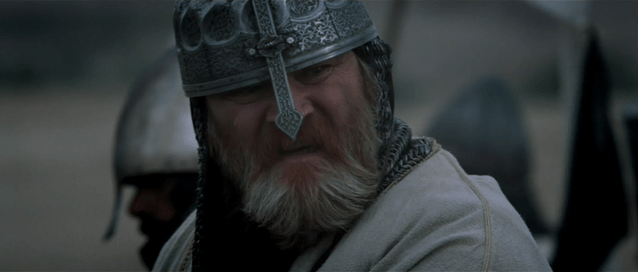
Raynald_of_Châtillon_2

Well, he’s my hero. Even if he is ginger.

… except he’s not the hero! This bravery in service of the cross is supposed to make him the baddie! For fuck’s sake! Where can a man find a red-blooded infidel-crushing series of novels about the crusades? Anyway, that massacre causes Saladin to tear up his truce with the Franks, and then the story kicks off. What follows is a Game Of Thrones-lite as different factions in the Holy Land squabble, mostly between the Reynald-led faction itching to tweak the hook-noses of the Moslems, and the dovish faction led by Raymond of Tripoli who wants peace. Fortunately for the book, Reynald gets his way.

It’s all based on historical events, culminating in a famous battle of 1187 which doesn’t go to well for the Franks. I enjoyed it, though some of the political wrangling got a bit turgid at times. From a literary perspective, I was interested how Shelby apportioned responsibility for the war. He presents Saladin’s army as monolithic outsiders and never has a scene involving them as perspective characters – they only appear when witnessed by Christians. The various catastrophes befalling the Franks arise from stupidly aggressive knights who can’t bear to wait around when there are Moslems to be smited [3]. At all times in the book, it seems like the Franks could comfortably hold onto the Holy Lands but the hotheads stir up trouble for no reason and then the king in particular, Guy of Lusignan, makes a series of disastrous blunders. The final battle goes awry because the crusaders deliberately march away from an impregnable position to a shit one that has no water, walking right into Saladin’s obvious trap.

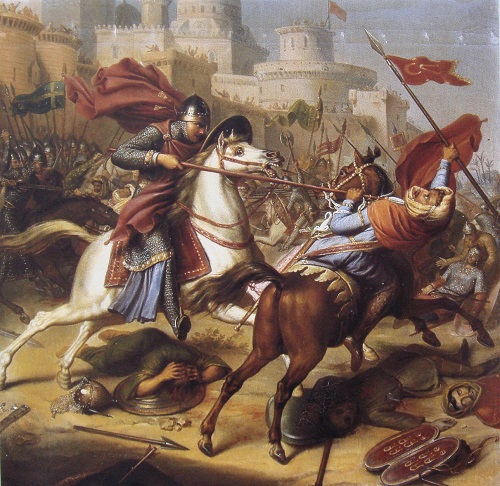
Robert_de_Normandie_at_the_Siege_of_Antioch_1097-1098

“Fucking take THAT, you goat-fucking sand-nigger”

Now, I do remember reading in my history books that they really were this stupid. But… well… I don’t like it in fiction. If the goodies are going to lose, it should be because the baddies are a formidable force. I don’t like any fiction that relies on rank stupidity or cupidity within Team Goodies in order to create tension.

Anyway, I did enjoy this book and intend to read the next in the series. You’ll be pleased to know there wasn’t any bumming at all – not even amongst the Arabs – and no trannies.

If you like the idea of anal sex but only involving women, then you might find what you’re looking for in my own memoirs. And if you wish to seek out bumming – again, only with women, I stress – try my textbooks. All available here.

[1] Not Googling. I don’t support the enemies of the people.
[2] It’s not too late to try again, imo.
[3] I know, ridiculous isn’t it, painting these people as the baddies.

#107 – Sanders Of The River, Edgar Wallace BOOK REVIEW

November 24, 2018
krauserpua

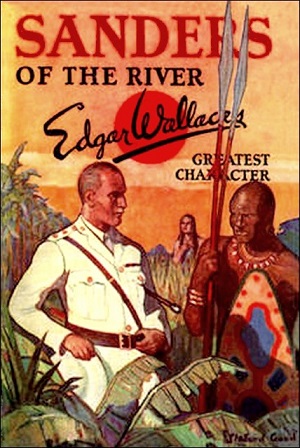
Sanders of the river

Bad ju-ju, yesterday

I would hazard a guess that one of the most well-documented and blindingly obvious conclusions in the social world is this: don’t let Africans into your country. Look at what it did to the United States. I’m pretty sure if Americans [1] realised just how much damage Africans would do to their country, they’d have picked their own cotton [2]. Britain was severely undermined by the Commonwealth immigration of the 1950s onward, and need I go into the raping/murdering/genital-mutilating recent wave of African savagery to sweep Europe?

So, keep the cunts out.

Don’t let the above tirade be misconstrued as some kind of anti-African sentiment. I’m very much in favour of letting Africans have Africa to themselves without any European meddling, and I think all those doctors, brain surgeons and engineers that the Soros NGOs tell us are in the migrant boats should stay home and Make Africa Great Again.

Anyway, this lead-in brings me to a debate currently raging inside my own head, that of the White Man’s Burden. To what extent does the white man owe his black fellow the benefit of his superior intellect, technology, long time-preference, high-trust organisation, and lack of cannibalism? To wit, civilisation. Is it a good or bad thing that Europe colonised Africa and severely meddled with their customs, law, economy, and borders?

I think we can immediately rule that in the case of Belgium and Germany, the European colonisation of Africa was a very bad thing for the natives. The Huns ran brutal concentration camps, tried to genocide Namibia, and were generally total cunts [3]. The Belgians ran the rubber trade out of Congo and committed the worst atrocities of the lot. I’m not much versed on how the French did in Africa. My guess is they just sat around eating onions and going “ohey ohey ohn”.

Britain did a really good job civilising the Caribbean and India, leaving both areas with a good infrastructure, rule of law, and a quashing of murderous ethnic conflicts. If you are to believe Edgar Wallace’s Sanders Of The River, we did much the same in Africa. So, the obvious question is are we to believe Edgar Wallace?

Well, this gets us into a rather deeper question of epistemology. Who are we to believe? How to we obtain our knowledge of the world?

Ayn Rand fans will immediately jump in and screech [4], “as first-handers!”, to mean we should strive to acquire our knowledge of the world through a direct personal experience of it. I’m inclined to agree. But sitting on my arse in a Macedonian restaurant in 2018 is not a firm base from which to directly experience Africa of the nineteenth century, is it? No, it is not. I must rely on other people’s experience. So, whose?

Lets ask ourselves first, what is the general consensus opinion of Britain’s colonisation of Africa? It’s mostly negative. The standard narrative is that the British Empire was a very bad thing both for its subjects in shithole countries the third world and for the poor working class lads sent overseas to enforce it. We brutalised the natives, plundered their resources, and set them up for misery such that we now thoroughly deserve their descendants invading Europe and raping all our white women. Or something.

That sounds awfully Marxist to me. Wherever you smell the foul odour of Marxism, you know it’s built on a foundation of lies. The popular narrative is pushed by the BBC, academia, and the mainstream media. Therefore we can safely conclude that whatever the truth of the British Empire is, it’s not that.

But who do we believe?

Edgar Wallace was sent out to Africa as an 18yr old reporter on the Second Boer War. He spend considerable time in the Belgian Congo reporting on King Leopold’s atrocities there, and then upon his return to Britain became a novelist. In this sense, Wallace was a first-hander of the British Empire in Africa. He didn’t learn about it from The Morning Star newspaper, or KGB-funded Oxford academics, or the BBC. He was there. He saw it.

Heroes should be tall and handsome, with flashing eyes; Sanders was not so tall, was yellow of face, moreover had grey hair. Heroes should also be of gentle address, full of soft phrases, for such tender women who come over their horizon; Sanders was a dispassionate man who swore on the slightest provocation, and had no use for women anyway.

That’s why Sanders Of The River is so fascinating. It’s a collection of fifteen anecdotes centred around a British administrator in West Africa as he deals with various palavers created by the simple-minded and nefariously mischievous savages under his dominion. He rules an area of 17 tribes of which most stories concern the wickedly warlike Akasava and the comically pacifist Ochori. Some game will be afoot in the jungle and then Sanders heads out in his steamboat (with two maxim guns and an escort of hussar riflemen) to sought it out through craft, force, and deep understanding of local cultures. It’s a surprisingly subtle work which could only have been written by a man with a deep personal experience of Africa.

Sanders is under orders to diffuse war between tribes and suppress tribal practices of murder, sacrifice, and cannibalism. He mostly succeeds, though a few tribal chiefs need to have their necks stretched on nearby trees to ensure this [5].

True to his prearranged scheme, the chief began the inevitable bargaining over terms. The presents offered were too small. The girl was worth a hundred thousand rods – nay, a thousand bags of salt.
“You were mad,” said Sanders calmly; “no woman is worth a thousand bags of salt.”

The stories are all told as if the author was a correspondent relaying each anecdote back to a central authority, such as Wallace himself reporting to his wire service about Sander’s exploits. Tales include a rascal conman Bosambo of Monrovia who lies and schemes his way into becoming king of the Ochori, and Sanders tolerates it in return for Bosambo putting fighting spirit into the previously enfaggoted tribe. There’s a white doctor who goes rogue, running a witch-doctor service to help angry wives poison their husbands. Plus there’s the usual inter-tribal raids for goat- and women-stealing. It’s a colourful cast of characters and considerable variety between the stories.

Considering it was written in 1911, there’s not the slightest political correctness. See here:

Chiefest of the restrictions placed upon the black man by his white protector is that which prevents him, when his angry passions rise, from taking his enemy by the throat and carving him with a broad, curved blade of native make. Naturally, even the best behaved of the tribes chafe under this prohibition the British have made.

There’s lots of paternalism in that quote. But, then again, I used to live by Elephant & Castle so I know what Sanders had to deal with. I thoroughly enjoyed Sanders Of The River and will likely read the next of the eleven Sanders books. It’s so much more believable than all that noble savage nonsense.

If you haven’t yet reported me to the police for hate speech, you’re probably the type who will very much enjoy my memoir series and my daygame textbooks available here.

Sigma Wolf store

[1] And by that I mean actual Americans, i.e. the British, who created the country and everything good about it. Not the Fake Americans of questionable skin colour who carry papers declaring themselves American.
[2] Although the Atlantic slave trade was mostly a Jewish-run scam, so it baffles me why white people feel guilty about it. Or at least I think so. I haven’t bothered looking too deeply into it.
[3] Nothing new there, then.
[4] autistically
[5] A policy I strongly suggest we implement in migrant centres until we have deported them all.

How To Write A Biography – GUEST POST

November 23, 2018
krauserpua

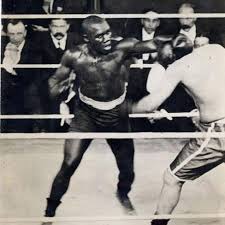
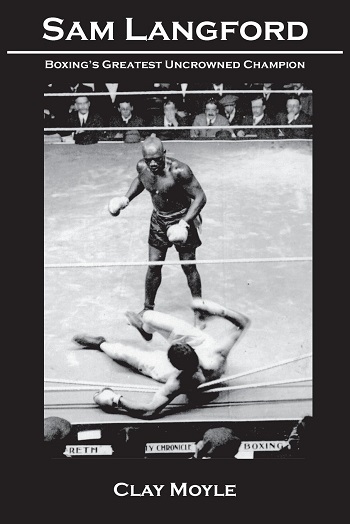
I’ll present this guest post without any pre-amble, as Clay already gives the backstory to why it’s here. You can find Clay’s excellent biography on Sam Langford on Amazon here, and my review of it here. He also runs a website selling used boxing books and memorabilia here: Prizefightingbooks. Take it away, Clay….

Every so often, I perform a Google search to see if there might be any new reviews or information on-line concerning any one of the three boxing biographies I’ve written. As a result, I recently came across a review of my book concerning the life and career of Sam Langford on Nick’s blog. In the review, Nick speculated on the subject of the many fascinating unwritten and deserving stories waiting to be written. He suggested that in this current day and age when so many newspaper archives are available on-line it may be easier to accomplish than it’s ever been. I agree.

Sam Langford

He went on to say that thanks to the internet, one can very easily find a notable subject of interest, Google search their name, and go into one of any number of newspaper archive databases to search for articles, organize them chronologically in clusters around key events in their life, and then begin to put together a narrative. He suspected that may more or less be the approach I’d taken to write Langford’s story. That led to an email exchange between us and an invitation to write this piece on the methodology that I applied when writing the book.

For over 25 years now, I’ve been a serious collector of boxing books and have amassed a personal library of over 4,300 different boxing titles.

As I began to read more about boxing in the early 1900’s in my books and other boxing periodicals, I continually came across more details concerning Sam Langford, a.k.a., ‘The Boston Tar Baby.” The many accolades he received from his contemporaries, including fellow boxers, managers, trainers, promoters, and sportswriters convinced me of his greatness. Time and again, I came across references to him as one of the greatest boxers of all-time and the stories of his exploits convinced me he was one of boxing’s most colorful characters as well. I wondered why nobody had ever written a book about this legendary, now largely forgotten sports figure.

At the same time, I’d often thought about attempting to write a book myself one day. So somewhere around the year 2003, I decided I’d try and write one about Sam. Never having written a book before, I wasn’t sure where to start. But I knew I was going to have to do a lot of research, and compile it in an organized manner of some sort.

So the first thing I did was create a Word document listing of all of Sam’s professional fights in chronological order from a website named Boxrec.com. My next step was to begin searching for written accounts of each and every one of those fights. Now Sam was no ordinary professional fighter. He fought over 300 officially documented professional fights! So that’s an awful lot of fights to research. And in the course of my research, I uncovered a few more unrecorded fights. And while I did everything I could to try and identify all of his professional bouts, I’m sure there are more to be found.

So I spent a lot more time conducting research than I ever imagined I would. And at some point, I remember thinking that both the length of his professional career (24 years) and the hundreds of bouts he fought may have had a little to do with the reason nobody had written a book about him.

In any case, I used Newspaperarchives.com to find as many newspaper accounts of Sam’s fights that I could. But that site didn’t have accounts of all of his fights, and in many cases they didn’t have local newspaper accounts of his fights. I knew that whenever possible, it was important to obtain local newspaper accounts of a fight to ensure the accuracy of the information.

So that meant that I regularly had to order microfilm of the desired newspaper accounts through a local library and spend hours reviewing the microfilm for the desired fight results and events leading up to and after the event itself. I printed these articles and took them home with me before returning the microfilm. In some cases, I ordered microfilm of newspapers from England, Australia, Canada and Mexico in search of details concerning his life experiences and/or fights in those countries. Since he also fought in France, I also obtained specific accounts of his fights and time in that country and enlisted the help of a cousin who was proficient in the French language to translate those materials for me.

Taking advantage of the fact that I owned an extensive boxing library, and a large number of boxing magazines, I also used those sources to search for any additional details concerning specific details of Sam’s fights and life outside the ring.

Now being an anal sort, I not only grouped all of these materials in chronological order as much as possible, I typed every single word I could find concerning his life and career from newspaper articles, magazines, other books, and from my own recorded interviews with parties, chronologically in what would become a very large Word document over the course of the next 5-6 years.

Finally, once I’d put all that research together, I was ready to begin writing the story. I began by creating an outline of the chapters I would write, or as Nick correctly surmised, essentially arranged all of that information around key events in Sam’s life. Then, I went about writing each of the chapters, while continuing to try and fill in any missing details with additional research. Inevitably, there were many chapters that had to be rewritten as I gained more details, and resolved numerous mysteries.

By the time I completed drafts of all the chapters, I found that I’d written a book comprised of over 150,000 words. It was only then, as I began to learn more about the process of submitting a book proposal to publishers that I learned that in terms of biographies most publishers are looking for something more in the range of no more than 80,000 – 110,000 words. So I shared my draft with a friend who is a voracious reader and asked him if he’d do me a favor and cross out anything that he thought wasn’t really of interest or vital to the story. Ultimately, I couldn’t bear to delete everything he suggested I remove, but I was able to edit it down to approximately 113,000 total words.

To the best of my recollection, that’s the approach I took. In hindsight, I’d have to say retyping all the information I collected chronologically was certainly very time consuming and the most questionable thing I did.

I undoubtedly would have accomplished the work much quicker and easier had I foregone that part, but I’d like to believe it helped me absorb the information to a greater degree, and enabled me to do a better job of identifying inconsistencies and putting the story together.

Thanks Clay. That gives an interesting insight into, and how-to guide, for writing the biography of a semi-famous figure. Those of you who’d like to read Clay’s biography of Sam Langford can find it on Amazon here. Readers interested in Nick’s books can find them here.

Sam Langford

#106 – Forgotten Victory, Gary Sheffield BOOK REVIEW

November 23, 2018
krauserpua

Forgotten Victory.jpg

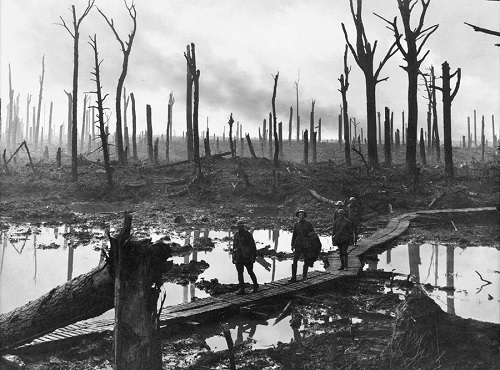
What images come to your mind when thinking of World War I? Aside from the obvious – that Battlefield 1 is a load of shite – it’s likely a series of ghoulish black and white images of battered moonscapes, lines of parading soldiers with rifles over the shoulder, and artillery-blasted towns. The Great War was rather horrific.

I’ve always been fascinated with it because it occurred in an era before photography and video was common-place. What few movie reels and photos exist are all grainy and in B/W, which can’t help but colour [1] my view of events. It seems so alien to modern life, despite ending only 100 years ago.

Gary Sheffield’s Forgotten Victory was a 2001 attempt to replace what he considered myths of WWI with the results of modern scholarship, aimed at the general public. He thus begins with a long chapter surveying the general public attitude to WWI and how it got that way. The war is generally considered futile, sparked by the little incident in Sarajevo of Serb anarchists assassinating heir to the Austro-Hungarian throne Archduke Franz Ferdinand. Various treaty obligations cascaded into mutual declarations of war until the entire continent was aflame. Many millions of needless deaths later, the war ended for equally spurious reasons. The whole thing was a massive waste of time, a sick spectacle of the British ruling class sacrificing the flower of British youth into the meat-grinder of the Western Front.

The kind of attitude seen in Blackadder Goes Forth.

Well, as any red pill reader is aware, the fact that comedy was made by the Bolshevik Broadcasting Corporation should be a big red flag. As should be any consensus view emerging from the Socialist indoctrination centres we now call public schooling. There’s a foul odour of Marxism that reeks from the consensus view, of “lions led by donkeys”, and the imagery of Field Marshalls in luxurious castles behind the lines, while infantry men live in dirty flooded trenches.

Sheffield argues persuasively that this negative nihilistic view of WWI was constructed long after the war ended, and didn’t really surface at all until the 1930s. Much of the anti-war narrative was crafted by scholars of English literature not History (or military history in particular) who relied upon the same tiny selection of anti-war poems and memoirs written by upper-class literati such as Wilfred Owen or Robert Graves. During the war, spirits were high and the British public supported war aims. The first two decades of post-war writing and performance were pro-war or at least ambivalent.

The idea that Britain should be ashamed of its involvement in WWI is a construction of historical engineers.

So, what are some of the myths that Sheffield wishes to bust? Now, I’m no scholar of WWI so I can’t give an informed opinion on whether he has successfully debunked them, but the evidence he presents is certainly coherent in doing so, with what is presented.

main_900

It’s a long way from Warsaw Modlin airport to the city centre

Myth #1 – Germany was unfairly blamed for starting the war.
Kaiser Wilhelm II was literally insane and surrounded himself with yes men. The German constitution gave him unlimited power and no real opposition from a toothless Reichstag. Given grand ambition, he set about undoing the careful neutrality established by Bismarck, aiming to establish Germany hegemony over Europe. High in his priorities was creation of a large modern navy intended to rival Britain’s. This completely upset the balance of power and forced Britain to respond.

When Franz Ferdinand was assassinated that didn’t need to lead to war, but German egged on the Austro-Hungarian empire to attack Serbia. It was also the Germans who kicked off war on the Western Front by invading Belgium.

Myth #2 – The Versaille Treaty was unfair, and led to WWII
Considering that Germany started the war and was spectacularly brutal in the occupied lands, it’s no surprise there was a victor’s peace. Much UK and French commentary in 1919 was that the Germans had been let off too lightly by the treaty. Their army never officially surrendered and was allowed to march back to Germany territory in full battle order and even march through German towns in a victory parade. The country – which was only united in 1871 – was never broken back up into its principalities. Foreign troops never occupied it.

By the time Hitler began rising to power, most of the conditions of the treaty had been eliminated or resolved in Germany’s favour as Britain, France, and USA constantly back-tracked and failed to enforce it. France never received the majority of the $600m in war reparations demanded by the treaty.

Tank-Mark_I_Lusitania_1917

Ghoulish and fascinating, imo

Myth #3 – Britain should have never sent a land army to the Western Front
Germany made straight for the ports of Belgium which, since Elizabeth 1st’s time, have always been the outer line of Britain’s defence. Seizure of ports on the channel would directly threaten the British mainland and substantially weaken control of the Channel. It was in the north that the British Expeditionary Force fought, holding the Germans back long enough for France to regroup, and holding down German divisions to stop them being sent to the Eastern Front where Russia was close to an early collapse.

According to Sheffield, in the desperate first year of war, Germany would’ve won if the BEF hadn’t become directly involved in the land war and then German occupation of channel ports would’ve put Britain under serious threat from an aggressively expansionist Germany that would’ve almost certainly used them to begin a war with Britain anyway (had we stayed out of the land war). It was a case of fight them now, or fight them later when they are even stronger.

Myth #4 – The generals were dummies, carelessly wasting soldier’s lives.
This gets a very detailed treatment in the book. One surprise for me was learning about command and control problems. The reason Douglas Haig stayed in his chateau was due to the nature of the telephone lines – he was more use there, as he could get an overall battle picture far faster than if he was close to the front lines. WWI was before radios were useful in battle. He often did go close to battle when opportunity allowed, including setting up his control centre in a railway carriage for one campaign.

Sheffield argues that the generals did a reasonable job but were faced with a formidable learning curve fighting a war of a scale and type that had no precedent. 1914-15 was a period of mistakes which were learned from and tactics changed considerably until by 1917 the BEF was a highly skilled fighting force with effective techniques of breaking German lines. Many of the “futile” battles in common lore were actually successes.

I’m only dipping into Sheffield’s claims here but it was fascinating to me. There were so many elements to the war that I’d never considered until now. It’s also an object lesson to never believe what the Marxists tell you. They’d made a huge effort to rewrite WWI into the standard bourgeoisie vs proletariat class warfare narrative.

I have never dressed in uniform and took a rifle into Europe to fight the Bosch, but I have dressed like a rocknrolla and took my daygame there to clack birds. Read all about it here.

Sigma Wolf store

[1] Excuse the pun

#105 – First Came A Murder, John Creasey BOOK REVIEW

November 23, 2018
krauserpua

NOTE: This is my 1,000th post on the blog. Fancy that!

First Came A Murder

Regular readers know that I’ve set myself a little reading challenge, to wit, that I will attempt to plow through speed-writer John Creasey’s Department Z series in order. Easy enough, you may think, until you see how ham-fisted his early writing is. You see, Creasey was determined to be a novelist even when the whole publishing world was against him. He endured 743 rejection slips as a young man until he finally won a newspaper writing competition and was kick-started. His 562 books [1] went on to sell more than 80 million copies. Creasey eventually got good.

I dunno, 743 rejections before finally achieving success…. there’s something about that which strikes a chord in me. I wonder if it in some way relates to any task I committed myself to…..

Creasey was asked, in 1967, to revise First Came A Murder for its paperback reissue and he writes, “the astounding (to me) changes in my own style almost made me decide to close the book and forget it. Perhaps I should have done just this.” That’s not the kind of thing a reader wants to see when he’s about to begin a book – that even the author thinks it’s a bit crap. First Came A Murder was Creasey’s fifth novel, so he was still learning.

Though it was 32 years between hardback and paperback editions, I do somewhat relate to Creasey’s surprise at re-reading his old work. I have spent the last few months revisiting my own first memoir, Balls Deep, with a view to reissuing it in hardback. It’s been educational to see how badly my original writing aged in the four years since first publication. I was ever so proud of it at the time. Since then I’ve written four memoirs [2] and two textbooks. I’ve learned a lot about writing and also finally settled on how I wanted my memoir to be. So, I felt compelled to go back to volume one and do a final definitive edition.

How has it changed? Well, sonny Jim, I’m so glad you asked.

Balls Deep Draft Cover

The original Balls Deep was 135k words and didn’t waste any time in pre-amble. My entire pre-game life was dismissed within a couple of pages and I moved straight to the ‘learning game’ phase. I figured that’s what the reader wanted, and it let me dive straight into the skirt-chasing. Now that I settled on doing a six-volume memoir, the focus has shifted from interesting anecdotes to an attempt to genuinely parse who I am, how I’ve lived, and what I learned – for good or ill – from my ten years in the Game. So, I wrote an extra thirteen pre-game chapters of interesting stories from childhood and early-adulthood that bring out character traits and motivations that place the Game years into context. I’ve also considerably fleshed out some of the existing lay reports to make them more detailed and interesting.

What else? I spent more time on developing other characters who reappear throughout the series, rewrote many summaries to be actual scenes with dialogue and action, reinterpreted events with superior hindsight, and restructured the story to fit a chronological path [3]. The new version currently stands at 207k words, the longest I’ve yet written. It’s basically a completely new book.

So, bringing it back to Creasey, I can appreciate how it feels to revisit an early work and cringe a little at the quality.

One thing I can state with confidence is First Came A Murder continues the rapid improvement in Creasey’s style. As before, it’s a completely new cast of characters with the sole exception of Department Z boss Gordon Craigie. This time around strapping young lad Hugh Devenish is tasked to solve a murder at the upmarket Carilon Club, when floundering gambler and get-rich-quick investor Anthony Barr Carruthers has been murdered with a hypodermic syringe in the neck in order to shut him up over a failed scheme to buy crypto-currency South American tin mine stocks. The killer is the club secretary, a Mr Ricketts, and that’s not a spoiler because he’s revealed in the opening chapter. Devenish investigates and finds himself set against a shadowy money-laundering organisation run by City financier Marcus Riordon.

What follows is fast-paced thriller action that doesn’t make a lick of sense. Creasey was still just 26 years old when he wrote it and it shows. The story is less believable than a JMULV lay report. Seeing as I don’t recommend the book, I think I will spoil the plot after-all [4].

Riordon has set up a “long firm” scam to buy up all the gold and precious jewels of Europe in one frenetic day of secret trading in the City. It’s all to be loaded up on a battered old cargo ship that was secretly refitted to have super fast engines. Riordon will then murder most of his co-conspirators and sail off to a safe haven with five million pounds of loot [5]. That’s the master plan.

In order to get enough ready cash to place the orders, Riordon has allied himself with a handful of shifty financiers and a few dozen ex-con heavies. For a few months they set up a web of shell companies to do fraudulent penny-stock schemes not unlike the IPO scams of the movie Boiler Room (or modern crypto currencies and tokens). One of these is the aforementioned Marritaba Tin mining stock and that’s the loose thread that causes the whole plan to eventually unravel, by alerting Hugh Devenish.

Riordon then finds himself busy fighting fires. Devenish survives two murder attempts on the first day, being almost run down outside the Carilon Club and then shot at outside his home. Later they try to kill him outside a pub, then lure him to a country manor to burn him alive, and then gas him on a yacht. It’s quite remarkable how many murder attempts he survives without ever thinking to take more precautions before rushing around like a headless chicken.

You see, this is what betrays the age of Creasey when writing. Devenish is an absolute fool who trusts his resolution of every perilous situation to his fast reactions and solid right cross. It’s the antithesis of Matt Helm’s careful planning and astute reading of his antagonists’ likely stratagems. Devenish blunders around constantly. Also, he meets a woman, doesn’t kiss her, and within two days he’s ready to risk life and limb to rescue her. It’s astonishing how gallant the heroes of the early Department Z novels are. Only a silly young man could possibly put a virtual stranger at the centre of all his plans after just a few flutters of her eyelashes.

I dare say Creasey has failed in his attempts to scare me off the series. I shall move onwards with episode four pretty soon. Tally ho!

I haven’t yet written 562 books, but the ones I have published are considerably more realistic than Creasey’s in showing how an earnest young man can bag himself a hot women. Go here for an overview of my products and links to buying them.

Sigma Wolf store

[1] Yes, really. That’s how prolific he was.
[2] One of them scheduled for publication after this Balls Deep rewrite.
[3] The original told each girl’s story in a self-contained chapter, which many readers found disruptive to the overall flow.
[4] I know I hinted earlier I didn’t want to, but like Creasey, I too can just make it up as I go along.
[5] In 1935, I imagine that’s rather a lot.

#104 – Dead Game, Michael Avallone BOOK REVIEW

November 18, 2018
krauserpua

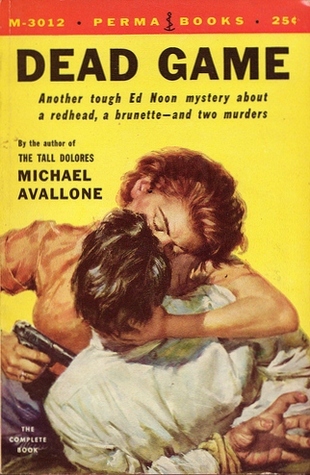
Dead Game

My man-crush with hack writer Michael Avallone continues with the third in his thirty-book Ed Noon series, Dead Game. This one has quite an audacious set-up. Noon gets the case when a dame, Mrs Arongio, walks into his office and sets him to shadow her husband who she suspects of cheating. “Mrs Arongio had her doubts that all of Mr Arongio’s daily chores kept him busy with antiques. For fifty bucks, I had all of Mrs Arongio’s doubts. And some of my own.”

The man in question owns both an antique shop and a passionate interest in Edgar Allan Poe memorabilia (which becomes relevant later). Noon follows him and it’s quickly apparent he’s a queer old bird, “he was as big and as wide as Broadway with a nose like the pistol grip of an old Western shooting iron”. Noon follows him from his shop to a swanky hotel where visiting baseball teams stay [1]. Arongio storms out in a rage, all the way to the Polo Grounds where the Giants are at home for a pre-season exhibition against minor-league out-of-towners, the Ravens. It’s here that Avallone’s flair for the spectacular arises.

At the bottom of the ninth, the Giants hit a game-winning triple and as the crowd roars with the runners, an out-fielder drops in a faint. Arongio vaults the rail and seems to rifle his pockets before running off. Chaos ensues and Noon finds the baseball player is dead, stabbed in the back with a stiletto. A man-hunt ensues.

Noon once more gets on the wrong side of NYPD, this time because while chasing down a lead with a young uniformed cop, they bust in on Arongio who lets rip with his pistol, gunning down the cop and making good his escape. NYPD blames Noon for getting their fellow into such a scrape and pull his detective license. I won’t spoil any of the plot (all this happens in the first three of 24 chapters) but it’s the usual fare of shifty dames, illicit under-the-table gambling, shakedowns, and everyone working an angle.

Given that I’m not writing spoilers, what on earth can I say in reviewing a third Ed Noon story that I didn’t cover with The Tall Dolores and Spitting Image? Not a lot really. So, here’s a photo of a hot bird with her tits almost hanging out.

Tits

Feel better?

I like Avallone’s short punchy sentences and lean attitude to scene dressing. He cuts a fine jib with his cheesy phraseology, such as in this case upon discovering Arongio has beaten the living shit out of his wife and ransacked her room.

“Give me a break, Noon. I’d die if anybody saw me like this. I’ve got to go away. Take a few weeks to fix myself up…”
“It’s going to take more than that to fix me up, lady. I need information bad.”
“Okay.” She shrugged and stood up. “Put that thing away. I’ll spill it. But give me another drink will you?”
I grinned at that and turned to the bottle. It was pure reflex. Simon pure. Simply Simon pure. Dames always get me off base anyway.
The bottle was empty and I’d known it. She’d known it too.
Before I could find where I’d left it, she brought it down on my head from behind with all the force and rage she could muster in her one-hundred-odd pounds. She mustered plenty. The bottle came down hard.
I took the floor the same way.”

You see, there’s a pattern to these Noon stories. Here’s a few story beats I can guarantee every single one of them will include: (i) a good-looking dame comes into his office and lies her ass off, assigning him a job which is really a feint for her real purpose, (ii) a corpse shows up and his NYPD buddies decide yet again to forget every time Noon has been right in the past, and suspect him of involvement and playing them false, (iii) somebody cracks him over the head and knocks him clean out, (iv) on a separate occasion, he’ll be on the wrong end of a gun held by the primary bad guy, or flunky thereof (v) one good-looking dame has a squeeze on him (vi) one good-looking dame, possibly the same one, absorbs the mother of all beatings or is simply murdered. Brutally.

If thirty times isn’t enough and you’d rather have essentially the same story told to you one hundred and sixty times, consider my memoir series here.

Sigma Wolf store

[1] This novel was written 1954 when baseball and boxing were the only US sports worth a lick. The NFL didn’t come on strong until 1960s and NBA until 1970s.