#86 – Fallen Angel, Michael Avallone BOOK REVIEW

October 7, 2018
krauserpua

I’ll admit that in my advancing age I’m starting to struggle with horror and gore. When I was a kid I really didn’t give a shit. Friday 13th, Nightmare On Elm Street…. fuck it, even vile slasher shit like Maniac… bring it on! In contrast, about ten years ago I was watching one of the SAW sequels [1] and I found it all so pointlessly bloodthirsty.

Maniac movie

It might scare YOU, but I wasn’t the slightest bit worried

Who can enjoy this sadistic filth? I asked myself. Evidently large numbers did, as the eight movies made a combined worldwide gross of almost $1 billion, on a combined budget of just $77m, with not one of them grossing less than six times its budget. Consider the similarly-sadistic Hostel series was also a smash hit and that makes a lot of very sick individuals going to the cinema.

But then again, when I was fifteen years old I was watching Cannibal Holocaust and The Beast In Heat, and I turned out to be a very stable genius didn’t I?

Thinking about my decreased appetite for horror and carnage over the years [2] I figured out the key: empathy. What is it that creates empathy and why do I have more of it now than thirty years ago? My pet theory involves mirror neurons and warfare. For the latter, I’ve noticed that all teenagers, deep down, consider themselves to be immortal. It’s well known that young men make the most fearless soldiers and I think this is why. Young men are needed to defend the tribe and thus take extraordinary risks that are illogical should they be concerned only with the safe transmission of their own DNA to the next generation. Thus nature has imbued young men with a delusional sense of immortality (to take risks) and a lack of empathy (to mercilessly destroy enemies). It seems to wear off over age, perhaps as we are meant to transition to raising children or watching over grand-kids.

If you thought that was pseudo-science you won’t like my next leap of logic.

Empathy comes from mirror neurons and most social mammals have them. Simply put, when you notice a fellow mammal experiencing an emotion, your own matching mirror neurons fire to recreate their emotion in your own brain. That’s what empathy is [3]. Mirror neurons are extremely adaptive to higher primates because they support a Theory Of Mind and better allow you to anticipate the actions of others. It’s my conjecture that sociopaths are simply lacking these mirror neurons and that’s why they feel disassociated from others. If you can’t feel another’s pain, you find it easier to attack them.

Fallen Angel

I’m working my way around to it

Now, assuming I’m right about this [4], it presents an additional question of why has my empathy increased as I aged? [5] Is it a natural part of the ageing process, or might it even be a side-effect of the Game and my increased calibration? Could it be that doing thousands of sets and working very hard on calibration has been some kind of neural exercise to strengthen my mirror neurons?

I was watching Better Call Saul last week and in it was a hospital scene that suggests a common therapy for stroke patients is to train up undamaged neurons to take up the tasks formerly done by neurons the stroke has damaged. Could it be Game is a similar therapy? [6] I don’t know. I’m just telling you what was on my mind as I read this book, Fallen Angel, the first in the short The Satan Sleuth series. The book is shit, and I don’t recommend it, therefore spoilers ahead.

I downloaded this onto my kindle based entirely on how retarded the cover is, how interesting the narrative hook (a man hunting down Satanists in revenge), and that it was free on Kindle Unlimited. That’s a powerful trifecta on a Sunday afternoon when I’m sitting in Plato cafe in 25C sunshine with a couple of hours to kill.

Plato-1

I’m behind the left-most pillar, with my feet up

This is the plot:

Phillip St George is a young heir to a billionaire’s fortune who used the opportunity to become a world-renowned explorer, the type of man who “wants to see what is behind the mountain”. He marries a Miss America hottie and she’s waiting at home in his upstate New York chateau while he’s down south investigating the Bermuda Triangle [7]. It’s the normal schlock fiction set-up where every man is devastatingly rich and handsome while every girl has shapely legs and big tits. Escapism.

Things pick up when four Satanists invade the chateau, catch Phillip’s wife, and then ritually sacrifice her. It’s extremely brutal stuff, on a par with SAW or Hostel. They rape her with a crucifix, slash her torso with a knife, saw her limbs off, then finally chop her head off with an axe and strew the body parts around different rooms. Then they run away and hide in a cave. They evade capture during the one-month manhunt. Phillip is none to happy about this so he decides to become The Satan Sleuth, dress as a monk, arm up, and seek revenge. The Count Of Monte Cristo this isn’t. The revenge takes a week to plot and the four Satanists have the good grace to return to the chateau (unwittingly) so Phillip doesn’t even need track them down. He kidnaps one at a time and sets out to break their minds before gruesomely murdering them.

Think of it like Wes Craven’s The Last House On The Left. It’s really rather similar: a quartet of low-life beatniks (three men and a woman) capture a woman, sadistically murder her, then inadvertently stumble into her family, who takes brutal revenge. My guess is the beatnik’s murder in Fallen Angel is inspired by the Charles Manson ‘family’ attack on Sharon Tate only a few years earlier. Everyone hated hippies back then [8]

The book isn’t well written. It gets the job done but the first third is particularly poor at drawing the reader in. I figured out why. The writer, Michael Avallone, uses the odd prose style of reporting everything long after the event and in mostly passive voice. Take this section as an example, the very first lines of Fallen Angel:

  The last letter from his wife, Dorothea, was one that Philip St. George was to carry with him for the rest of his life. It was only a fairly short summons, a romantic plea from a lonely wife eager to see her husband again.
As things turned out, the poignant love cry buried somewhere in the racing feminine script was to sound over and over again, like Ravel’s Bolero, in the soul of the man who was not with her when disaster and terror and horror struck.
There is little a man can do when something is taken away from him. When he does realise, finally, far too late, just how much that something means to him.

That’s not very engaging is it? It’s not even a scene. Surely it would’ve made more sense to locate the reader into a scene as Philip reads the letter? “Philip dropped the telephone receiver and sat heavily in his smoking chair. He fumbled at the whiskey decanter on the table. ‘It’s your wife, she’s been murdered’. The sergeant’s words echoed in his ears and he was only now aware the policeman was still speaking, through the dropped receiver.”

Or something.

Everything about this story is overblown titillation. Here’s the beginning of the murder scene, the chapter helpfully titled “Overture To Slaughter” just in case you weren’t sure of it’s principal theme.

  She had lost the precious ability to scream.
To run, to hide, to vocally escape from the nightmare madness of it all. If she hadn’t been so terrified, so paralysed with fright, she might have been able to fight back. To at least halt the horror, block out the ugly reality.
But it was too late, now.
The hideous scene had engulfed her.
For all time.
Forever.
They were holding her down, trapping her, doing obscene, awful things to her.
Tall, monstrous, distorted shadows surrounded her, blotting out the light, the hope, the clear path toward sanity and reason.
She was overwhelmed, pinned everlasting in a scene from Hell. A poor player impaled between fantasy and commonplace normality

That’s a bit over-egged I think. It’s also extremely vague as this is how the chapter opens. We don’t yet know who she is, where she is, what’s going on. Its all abstract and nonsensical. Fortunately the book does pick up eventually and the latter half is written in the present tense and involves people saying and doing things in real time. Sadly, there’s no drama or reversal. Philip decides to hunt them down and does exactly that. He’s never in any kind of scrape, needs no ingenuity, and frankly doesn’t even expose himself to risk. I know that beating up a few spaghetti-armed progressives isn’t very challenging (as we see every day on Twitter nowadays) but they should at least put up a bit of a fight to keep the reader entertained.

The one part where the book surprised me was the ending. Having kidnapped all four hippes and tied them up he decides not to kill them. His cold hatred has burned out, he fears what he’ll become, so he instead calls the police. That’s actually an interesting way to do it. In a book that promises gore, violence and murder the only actual violence committed in the entire novel is (i) the initial murder and (ii) the hippy leader beating up his girlfriend with his fists. It’s amazing how little carnage is here after that early chapter quoted above.

Anyway, it’s shite and I don’t recommend it. I suppose the fact Michael Avallone wrote 223 books (officially, he claimed a total of 1,000 including those written under pseudonyms) means you can’t expect him to spend much time on each.
Sigma Wolf store

The USA site is online now

What I do recommend is my own series of books available here to readers in the USA and available here to everyone else.

[1] No idea which, as they are so samey as to have blurred into one that I can’t see which saw I saw and which scene I seen from a saw I didn’t see.
[2] Except for killing globalist traitors. I’d still very much like to see them tortured to death.
[3] I know, it’s hard to believe that increased sensitivity to other people’s misfortunes may result from excessively active mirror neurons rather than simply “increased faggotry”.
[4] I always assume I’m right even when I’m not.
[5] I stress again that, “because you’re more of a faggot now” is an unscientific retort and you should know better than to think it.
[6] Unless you’re a spammer and thus not training calibration at all, or one of those “circling the drain” black sheep YouTube players who very specifically tries to prevent ever developing empathy.
[7] Basically, he’s me but in the 1970s.
[8] Nothing has changed.

#85 – The Shadowers, Donald Hamilton BOOK REVIEW

October 6, 2018
krauserpua

Matt Helm

Not lacking essential vitamins

Another bloody Matt Helm book. I think I could start writing them myself at this point, so familiar am I with the formula. Surprisingly, I’ve started to realise they are more like murder mysteries than spy thrillers. Jason Bourne this isn’t. Whereas the latter is all about double-crosses, triple-crosses, chase scenes and whatnot, these Helm books nearly always come down to a small cast of suspicious characters, one of whom is the Soviet agent doing all the mischief. Helm’s primary exertions are always based on smoking out the opposition so as to identify them. Once he does so, killing them is the easy part.

I guess that’s the advantage of operating on home ground. He hasn’t yet been asked to go behind the Iron Curtain.

Helm doesn’t get any rest, I’ll tell you that much. I just finished my thirtieth day of residential daygame coaching yesterday and I’m a bit tired by it. It’s intensive stuff because I spend all week with a guy [1] as we go through a high-pressure activity. The client is fully committed and ready to work hard, as am I, so we get a lot done. At the end of each in-field day our legs ache and our brains have melted.

I’ve done it six times this year and don’t for a moment think I’m complaining about being overworked or something. However, six bursts of frantic high pressure activity is rather draining, and that’s just chasing skirt. Imagine doing the same six jobs but the subject was Cold War espionage and you were up against highly-trained merciless assassins. That’s rather more stressful than having a silly tart give you an eye-roll blowout.

The Shadowers is the seventh Matt Helm book and he’s getting all this done in less than four years. I think he should have a word with his shop steward or the ACLU. He might have a case for compensation due to unsafe working environment and excessive hours.

This story begins with Helm on a well-deserved holiday in Florida and it’s obvious that if he’s paying his hotel room monthly then he’s wildly optimistic. His girlfriend has a high-speed night-time car accident, running her coupe off a corner and tumbling down a hill. It looks like an accident [2]. Distraught, Helm asks if there are any jobs going around that could take his mind off the grief. Yes, there is. His boss Mac sends him off on a counter-intel op. Word is out that a nasty old Jew [3] – famous for running effective spy networks for the Soviets – has set up a new ring in the USA. The plan is to shadow key employees of the US Government and armed forces so that they can all be murdered in one small window of opportunity, preventing them defending the USA from Soviet attack.

Think of it like this scene in Breaking Bad, but with world domination at stake.

So Helm is given a cover identity to marry a key female scientist and he must then spot her Soviet shadows, capture one alive, and get information leading to the current identity and location of this nasty old Jewish spymaster [4].

As you’d expect, the story proceeds with misdirection, dark manoeuvres, and Helm trying to ascertain just who among a short list of suspects is the Soviet agent. He displays his usual trade craft in second-guessing everyone, setting clever traps, and playing possum when threatened. I really like seeing it. Donald Hamilton has a way of making it all feel real and blindsiding you without cheating. You always get the feeling Helm wins because he’s more experienced than the opposition and can out-think them. It’s never like The Destroyer or The Executioner who simply rely upon being faster on the trigger.

It’s fair to say that if you’ve read one Matt Helm book you’ve read them all. I’ve done seven in a row now and they are each of about the same quality and same structure. Yet I’m still not tired of them. As soon as I closed this I wanted to move onto number eight in the series. I think I’ve found my favourite spy series.

If you live in the USA and would like a cheap, no-fuss way of buying my books in full colour you should have a look at my new sales site here. Sadly, the company cannot yet fulfil orders sent outside the USA. For that, consult my usual products page.

bernie-sanders-tax-returns-hypocrisy

“Matt, there’s a Jewish agent who has infiltrated the USA and set up a network of young traitors who are working tirelessly to seize control of the US Government to turn it against Americans.”

[1] Who has paid me an obscene amount of money that I have to justify by the quality of my coaching.
[2] What, you suspect foul play? Damn, you’re good at this espionage racket! Nothing gets past you, buster.
[3] Not Diane Feinstein, or Paul Krugman, or Bernie Sanders. That trio of traitors are much too high-level threats to the USA for a man of Matt Helm’s paygrade. Helm assassinates mid-level traitors such as a Ben Shapiro or a Jordan Peterson.
[4] I know, he’s better off just posting something on Twitter and then seeing who reports him to the Safety Council.

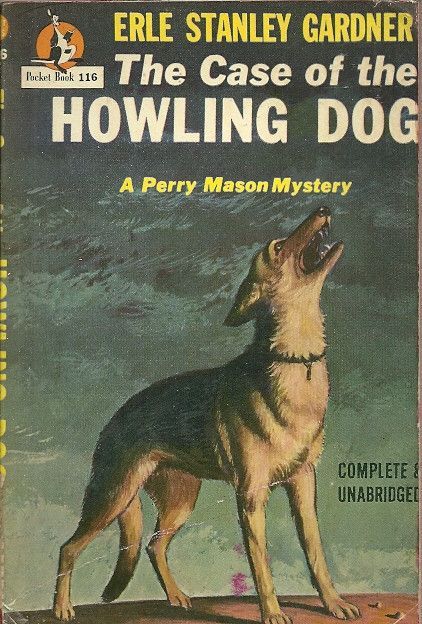
#84 – The Case Of The Howling Dog, Erle Stanley Gardner BOOK REVIEW

October 6, 2018
krauserpua

Howlling Dog

Fans of Sherlock Holmes [1] are well aware of the dog that didn’t bark. It comes in The Adventure Of The Silver Blaze, in which a rapscallion stable-lad tries to nobble a race horse before a big event only for the horse to kick him in the face, killing him deader than Hillary [2]. Nobody knows this at first, thinking the lad was attacked by a man, so there’s a manhunt on and Sherlock Holmes is called in. There’s a key exchange treasured by all us fans in which Holmes explains to us the fact the stable-dog didn’t bark during the night of the attack was the key fact. It meant the murderer was known to the dog, and thus likely part of the household.

Erle Stanley Gardner has written this entire book, The Case Of The Howling Dog, in homage to that exercise in deductive logic. It starts simply enough. An agitated millionaire, Arthur Cartwright, comes into Perry Mason’s office wishing to make a will giving away everything to the wife of the millionaire living next door to him, Clinton Foley, even though he hates him. He swears that Foley has taught his police dog pet to howl in order to drive Cartwright mad. The dog had begun howling the previous night.

I won’t spoil the story. It’s a really good mystery. It’s enough to say that whether the dog howled (or not) is the crux of the matter.

Case Of The Howling Dog

There’s both a 1934 movie, and a more recent TV adaptation

The reason Perry Mason is such a good character is how he breaks the usual hard-boiled mode. Make no bones about it, he is of that genre. He isn’t solving locked-room puzzles like Hercule Poirot nor is he a cop chasing down serial killers like Alex Cross. Mason’s role in these stories is equivalent to a private eye at odds with the cops, only he’s a defence attorney in fact (if not in style). Whereas a Continental Op or a Philip Marlowe will play fast and loose with the law, Mason does not. It adds a crispness to his manoeuvres.

For example, Mason has his private eye helper Paul Drake put two men on stakeout at Clinton Foley’s house as he expects something fishy to happen. Turns out there’s a murder and Mason discovers the body when showing up for an pre-arranged appointment. So, there’s the question of what Mason should do.

  • Call the police immediately?
  • Have a look around the murder scene first?
  • Slip away and pretend he was never there?
  • Confer with the two stakeout men on his man’s team?
  • Blur the victim’s face and claim it as a Same Day Lay on YouTube?

I’m not sure what Philip Marlowe would do [3] but I’m guessing it would involve breaking the law to cut a break for his client. Mason think a minute then calls Paul Drake to have his two men return to the office and go into hiding. He checks the scene but doesn’t tamper with it at all, then after summoning the police he confers with Drake and the men.

Does he discuss it with them? You’d expect so but no he does not. He pumps them for factual information (who came to the house, when, in what taxi etc) and very pointedly does not share any of his thoughts with them and shuts them down when they attempt to pontificate. You see, Mason is thinking like a trial lawyer not a private detective. He knows he’s under no legal obligation to let the cops (and eventually prosecution) know his men were witnesses, and because he doesn’t tell either men any of what he found inside the house, the men don’t even know there was a crime committed to which they could be witnesses (he doesn’t mention the dead body). Additionally, in the unlikely event the men are found and testify under oath they can tell the absolute truth without incriminating themselves, Mason, or his client.

It’s rather clever how he operates, and a delight to read.

Regular readers are aware I’m trying to become a good writer [4] and what fascinates me most about Erle Stanley Gardner is the quality of his plotting. It’s oh-so-tight, fantastically complicated, and yet Gardner never gets his threads tangled. His prose is whip-sharp and there’s no messing around. Every chapter advances the story and he never needs a sleight of hand to get out of trouble. I read it and think, “I could never invent a plot that good”.

Fortunately, I don’t need to. The thing about memoirs is that life provides the plot. For now I can polish my skills in prose, dialogue, characterisation, action, scene-setting, pacing and all those other elements of writing. If I ever get good at that stuff, I’ll look towards plotting and fiction.

Murder She Wrote

Do not – under ANY circumstances – cultivate an acquaintance with this woman.

One other observation concerns the hard-boiled genre in general. You know those Murder, She Wrote TV shows featuring Angela Lansbury? No matter where she goes – a cruise, a ski slope, a village fete – you can guarantee someone is getting murdered. She’s a murder magnet and frankly if I ever crossed paths with her I’d run as fast as possible in the opposite direction. Well, I’ve noticed that in hard-boiled fiction that if you walk into a private eye’s office and start telling lies, you’re fucked. Someone is gonna bump you off. It’s an even more certain route to death than having sex in a horror movie or being close to retirement in a cop movie.

I absolutely recommend this book. Erle Stanley Gardner is always good and this is one of his best.

If you live in the USA and would like a cheap, no-fuss way of buying my books in full colour you should have a look at my new sales site here. Sadly, the company cannot yet fulfil orders sent outside the USA. For that, consult my usual products page.

[1] The original stories, and perhaps the 1980s TV adaptation starring Jeremy Brett. Not fans of the gay soyboy global-homo version starring Benedict Clusterfluck and the hobbit.
[2] I expect people to read this post two years from now, so I’m future-proofing it.
[3] I bet you know which Deepak would do from that list.
[4] You could claim I’m more writer than player nowadays.

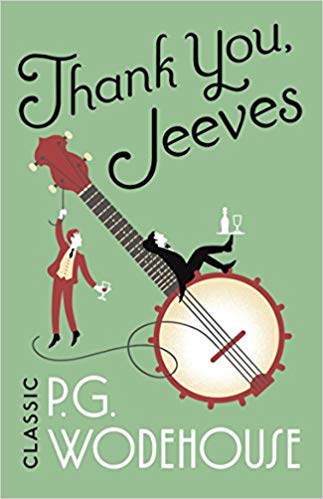
#83 – Thank You Jeeves, P.G. Wodehouse BOOK REVIEW

October 3, 2018
krauserpua

Thank You Jeeves

I’ve been watching more of the Masterclass video seminar series of late, with a focus on the writing courses. The first, Aaron Sorkin’s, was really good and then David Mamet’s was helpful too. They were all about screenwriting but now I’ve finished James Patterson’s on how to write popular genre fiction. He’s the guy who did all the Alex Cross detective stories that have since become terrible movies. What all three writers had in common was their advice:

Raise the stakes.

All drama involves intention-plus-obstacle, meaning the protagonist has something he needs/wants and drama ensues when he encounters and attempts to overcome the barriers in his way. This is the engine driving the plot [1]. However, the intention cannot be “I want a Mars Bar from the local Paki shop” and the obstacle can’t be “but a dropped my last pound coin down the toilet.” Sure, there is some drama here – do you put your hand into the bowl of piss to grab the coin, or do you flush first and risk the water sweeping the pound coin away for ever – but the stakes are not high.

What’s the worst that could happen?

So, you’re supposed to raise the stakes. Perhaps the Mars Bar purchase is just a feint and actually you’re part of the English Defence League and the Pakistani store owner may be the only link to a shadowy underage grooming gang who has kidnapped Tommy Robinson’s daughter [2]. The stakes are now much higher and the story should be more compelling. What if you can’t fish that pound coin out of the toilet and you need to find a different way into the shopkeeper’s confidence? Perhaps you decide to confront him directly.

What’s the worst that could happen? Well, you could be called racist. The stakes don’t come any higher than that, do they?

Anyway, I digress. The point is that it’s standard practice in modern genre fiction to raise the stakes. If there’s spies, you can bet there’s a nuclear bomb about to go off. If it’s detectives, the crime will be murder rather than loitering. If it’s soldiers, it’s war rather than a drinking competition in a Berlin bar. This is why P.G. Wodehouse’s famous Jeeves & Wooster series is quaintly charming – the stakes are always very low.

In the case of the first Jeeves novel, Thank You Jeeves [3], it’s all about whether his buddy Chuffy can successfully propose to an American girl without getting a reputation for being awfully forward. Those are the stakes. It takes some polished writing chops to form a compelling novel from that, what?

Wodehouse achieves this primarily through farce. The book is narrated by Bertie Wooster himself, a dim-witted but soft-hearted young aristocrat who pompously clings to etiquette and Eton-style relationships but isn’t above bending the rules to help a chum. Wodehouse builds his character subtly through Wooster’s odd choices of metaphor, frequent lapses into digression, and his inner monologue identifying what he finds important in any situation. His efforts to aid his friend Chuffy always makes things worse, and his efficient butler Jeeves operates in the background – not unlike a benign Mr Moto – to straighten things out and prevent disaster.

fry_Laurie_2223235b

Pretty good TV adaptation

It’s a lot of fun and it’s easy to become embroiled in the silly concerns of the young aristocrat, such as when he blacks up like a negro minstrel to effect escape from a yacht but can’t find the butter needed to wipe off the shoe polish and thus must hide from the local village police who are beating the bushes for him. The dialogue is also great, amply describing the relationship between aristocrat and butler without needing to spell it out. Consider this, the very first conversation in chapter one:

‘Jeeves,” I said, “do you know what?”
“No, sir.”
“Do you know whom I saw last night?”
“No, sir.”
“J. Washburn Stoker and his daughter, Pauline.”
“Indeed, sir?”
“They must be over here.”
“It would seem so, sir.”
“Awkward, what?”
“I can conceive that after what occured in New York it might be distressing for you to encounter Miss Stoker, sir. But I fancy the contingency need scarcely arise.”

Also funny is how Wodehouse has Wooster describe his new butler Brinkley. Early in the book Jeeves resigns because he cannot bear Wooster’s new habit of playing the banjolele and thus the latter has the agency send a new man, who turns out to be a Leftist [4]. Wodehouse peppers the book with cheerful references to the man’s class-opposition to Wooster and how the latter doesn’t grasp how serious a revolution may be.

Like a sheep wandering back to the fold, this blighted Bolshevik had rolled home, twenty-four hours later, plainly stewed to the gills. All the householder awoke in me. I forgot that it was injudicious of me to allow myself to be seen [he’s still blacked up]. All I could think of was that this bally Fiver-Year-Planner was smashing up the Wooster home.

Or earlier in the book:

Outwardly he was all respectfulness, but inwardly you could see that he was a man who was musing on the coming Social Revolution and looked on Bertram as a tyrant and oppressor.
‘Yes, Brinkley, I shall dine out.’
He said nothing, merely looking at me as if he were measuring me for my lamp-post.

Wooster wasn’t to be knocked from his peace of mind by a blighted Marxist so he persists in giving his instructions to his butler.

He sighed slightly. All this talk of my going to shows was distressing him. What he really wanted was to see me sprinting down Park Lane with the mob after me with dripping knives.
‘I shall take the car and drive over there. You can have the evening off.’
‘Very good, sir,’ he moaned.
I gave it up. The man annoyed me. I hadn’t the slightest objection to his spending his time planning massacres for the bourgeoisie, but I was dashed if I could see why he couldn’t do it with a bright and cheerful smile. Dismissing him with a gesture, I went round to the garage and got the car out.

I will say that with such low stakes powering the drama this book got a little boring at times, hence I can see what Sorkin, Mamet, and Patterson were getting at. Shifting to accommodate this reduced urgency in plotting, I figured the best way to read a book such as Thank You, Jeeves is to read it on a sunny day, sitting in a chair overlooking a pleasant park, and with a tequila sunrise cocktail by the side. Which is what I did.

garden

One seeks a little solace from the blasted proles, what?

If you’d like to read books about a dim-witted hero and his competent man-servant you may enjoy the interplay between Nick Krauser and Jimmy Jambone in my series of memoirs available here (USA readers) and here (everyone else).

[1] And why Leo Tolstoy’s War And Peace is so bloody boring. There’s no intention-plus-obstacle. It just meanders along.
[2] Does he have a daughter?
[3] Thank You Mr Moto does indeed deal with war and murder. A different world.
[4] In the pre-War sense of supporting trades unions, socialism and Marx, as opposed to the modern sense of being a mentally-ill transexual liar.

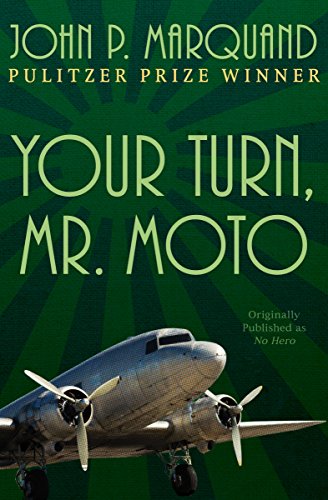
#82 – Your Turn Mr Moto, John P Marquand BOOK REVIEW

October 3, 2018
krauserpua

Mr Moto

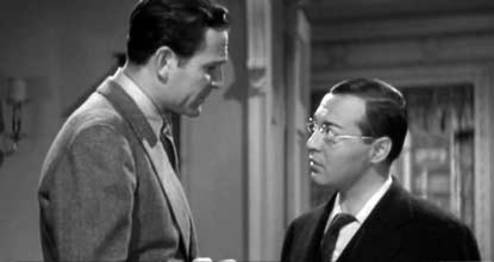
James Bond before James Bond. Doesn’t that sound like a good book? Well, sonny Jim, if you’ve already been following my reviews of Dennis Wheatley you’ll be aware he had a lock on the whole dashing English secret agent racket long before Ian Flemming‘s golden eye turned towards the genre. But what about if the secret agent wasn’t on our side? What if he was an adversary, seen only from the outside? That’s what we’ve got with the dastardly Japanese agent Mr Moto. Actually, I’ve been a bit unfair. He’s actually a rather honorable man, this Jap. I’m very, very sorry, Mr Moto. I do hope we can be friends, yes?

Your Turn, Mr. Moto is the first of the long-running series and you can tell that John P Marquand wasn’t necessarily banking on it ever getting that far, based on the original title: No Hero. That refers not to Mr Moto but to the narrator, one Kenneth C. Lee – K.C. – who is a washed up former flying ace kicking his heels in Tokyo, drinking the bar dry at the Imperial Hotel [1], until he can begin a trans-Pacific flight sponsored by a tobacco company. The company welshes on him and in a fit of dejected anger, poor Casey decides he’s through with America and wants everyone at the bar to know it.

That attracts the attention of Mr Moto, who makes an approach. Casey is hired to take a ship to Shanghai and ascertain if his old buddy Commander James Driscoll has possession of a missing blueprint. Thus is set up a tale of international intrigue as the US, China, Japan and Russia all attempt to locate and take possession of a secret formula to double the efficiency of gasoline, and thus redraw the world’s spheres of influence based upon battleship / cruiser’s patrol range.

Mr Moto movie

“So very sorry, Mr Moto”

Aside from being a damn good book, this one interested me because it’s written in 1935 and thus four years after Japan’s invasion of Manchuria and six years before Pearl Harbor. Marquand makes it clear what the international tensions are. Japan is a crowded island with few natural resources, and an eye on expansion into China. The US Admiralty worries whether Japan will attack Hawaii, which the USA had only invaded forty years earlier and still hadn’t entirely consolidated. Stuck out in the middle of the Pacific, Hawaii was a permanent aircraft carrier and necessary hopping-off point should Japan wish to attack East, or the US do so to the West. Naturally, we now know how that turned out.

Few things are a surprise in world affairs, so it’s nice to see Marquand lay out the geo-political tensions and history has only confirmed the conjectures he makes. There are also frequent references to the Tokyo 1923 earthquake and the Japanese attempts to experiment with quake-resistant concrete structures. In the meantime all major Japanese cities are tightly-packed wooden structures that everyone knows damn well are vulnerable to firebombs [2] and thus Japan isn’t happy about China’s growing air force. It sets the scene plausibly for why the missing blueprint is so vital.

721975-tokyo-5

How vulnerable? This vulnerable

The narration begins with Casey’s last push into nihilism and rootless cosmopolitanism [3] with the fall-through of the trans-Pacific flight he was banking on for redemption. After agreeing to turn traitor, he has second thoughts and Mr Moto attempts to have him assassinated during his passage to China (he’s so very, very sorry about that, you understand). Casey rediscovers his Americanism, goes full-MAGA, and then foils the plans of both China and Japan. It’s nicely done.

I enjoyed how Marquand painted 1930s Tokyo because, while not living there myself until 70 years later, it felt just how I’d pictured it – a hybrid between old-Edo and new European fashion. Shanghai is presented as a bustling seething mass of ant-like people and not unlike the Chinatowns of Fu Manchu stories. Unlike a James Bond story, Casey is a rank amateur relying on gut instinct and unaware how many pros are protecting him behind the scenes. Mr Moto himself is a savvy agent and a strict professional and the concluding scenes make clear he hold no enmity to the agents in rival powers.

I’ve read four Mr Moto books now and can absolutely recommend them. They’ll especially appeal to ex-pats in Asia who have suffered bouts of anomie and the pull of globalism.

If you’re a proud American and also like skirt, check out my new Sigma Wolf bookshop where you can buy full colour editions of all my books, in both soft or hardcover, without having to fuck around with sending me PayPal payments. Sadly, the site cannot yet sell to territories outside the USA.

697200869-612x612

Looking forward to reading this entry in the series.

[1] Something I once did on a business trip in my pre-game life, as it happens. A lovely hotel.
[2] The USA would confirm this in the 1945 firebombing of Tokyo that killed vastly more civilians than the two atomic bombs did.
[3] Don’t worry, he’s not a Jew.

Ask Jimmy #3

September 22, 2018
krauserpua

This new series seems to have gone down well so I have endeavoured to squeeze more blood from the stone that is Jimmy. The text is all his, and the footnotes are mine.

Qu. Where is the line between working a girl’s attraction switches and losing the frame and being a needy pleaser?

This is a question I really like that I saw in the comments of that last post. It’s also a debate I had with a coaching client I had a few weekends ago. He really pushed me well on it and I wasn’t convinced I had answered well enough to suit him, so seeing this in the comments was like a second chance for me to make my case.

The argument I am getting goes something like this: ‘You say you adapted your game depending on the girl’s preferences, but aren’t you supposed to be a man who is on the path to his true self and not simply trying to please the girl?’

Again, I am no authority, nor am I trying to sell myself as one [1]. I’m just an old dog with a lot of data under my belt and you might be half my age. So, just in my opinion and from what I have experienced I’d say yes to both. Yes you are a man who follows his path, sticks to his guns and knows his own mind and this will be attractive. Faltering from this in front of a target is more often than not going to be seen as a stumble. Changing to suit her (certainly in the early/attraction stages of the courtship) is probably going to be seen as rapport-seeking and possibly even as a show stopper.

But this is more about lying or subduing your true self and misrepresenting your path or important core beliefs. I don’t advocate you do that.


R selected

I’ll hazard a guess this girl is r-selected

I remember once being on a date, I can’t remember where or who with, but I remember the moment, that at some point we got into that discussion about girls taking adequate steps to make sure they don’t get attacked or raped. The old analogy ‘if you leave your watch on a park bench unguarded for a day, of course it’s not right that someone stole it, but you also need to learn to protect yourself more adequately in future’.

Now this idea that a girl ‘should be able’ to walk in a short skirt through Finsbury Park at midnight on her own and not get attacked is adolescent to the point of dangerous [2]. We should all be able to do a lot of things, but we can’t because there are bad people in the world. We need to protect ourselves like responsible adults, not talk like 12 year olds. Of course, you all know this.

And so I made this exact case. And the girl got very angry. She shouted at me about how that was a disgusting attitude and then she claimed her friend got raped and it is never the victim’s fault, blah blah blah.

So what did I do? I immediately consulted my copy of Daygame Mastery (I take it with me everywhere, especially on dates and job interviews) and I simply stuck to my guns. I don’t cow to skirt. I looked her right in the eye and told her sternly (in a Geordie accent I’d picked up from studying Daygame Overkill) that I was sorry to hear about her friend but that I don’t choose best practices based on highly emotional, subjectively preferential situations. If anyone ever encouraged my daughter or my niece to behave recklessly, they’d be getting a boot up their arse for the danger they would be putting her in. I was of course 100% happy for her to storm off.

Bringing highly emotive personal experiences into political discussions is also one of my core dislikes. I’m not going to bow to it. We’ve all been in situations where we’re desperate and we expect the world to stop turning and come to our aid. When my nephew was ill, my personal belief was that everyone in the country should stop what they were doing and focus 100% on helping him get better, until he got better. Was that doctor walking a bit too slowly? He should be threatened with dismissal. Was that nurse acting a little bit too relaxed? Get him his own personal physician immediately who will take it seriously, hang the expense, the taxpayer can afford it.

In the heat of personal fear and desperation that’s what we demand, but it’s delusional to think that any of this is in any way sustainable or possible and to ever bring into practice across a population.

I was never going to back down and try to appease her. I’d be betraying what I truly felt and in all honesty, I just didn’t want to. I’d rather burn the date than ever have to do that. I’ve walked away from dates in the past when girls have started hinting at feminist talking points. I’ve just gotten up and walked out. (It’s very satisfying. Try it. Life’s too short to try to manage damaged people). They’re doing me a favour by letting me know early on what I am getting myself into, so that I can walk away and save myself the hassle.

So anyway, in this particular situation, she calmed right down, looked thoughtful and said that I had a fair point. I guess I got lucky. It could have gone the other way and at times has been. The upside to this behaviour now though is that she knows that when I speak, I speak the truth. I kicked that door right down.

But when I talk about tailoring DHVs or working out who she is and acting accordingly, none of this is a perversion of our deep true selves or a bending of our core masculine beliefs in the face of a mere whimsical feminine shit test. It’s just about working out what parts of your complex personality and personal attributes are most appealing to her.

Imagine you’re the proprietor of a fish restaurant. You pride yourself on your fish. Meat is for Mop Heads. In fact, that’s the name of your restaurant. If a customer came in and demanded a pork chop, you’d throw him out. You’re a fish restaurant. It’s fish or it’s fuck off. What I am talking about is working out if someone is into a healthy eating or not, then when you work that out, you know whether you want to tell him about your fish salad menu, or instead about your deep fried fish menu.

3 (4)

A Mop-Head’s fish restaurant

I love my girlfriend and I would never have ended up with her if I’d led the set with a story about how I can’t ever return to a certain European country because when I was 20 I got prosecuted for breaking some guy’s nose at a party and my defence strategy in court was to simply not show up. Ha ha ha. Bad ass me, right? Yes she knows now, but there’s a time and a place for disclosing your flaws. [3]

No I worked out her values, I looked where our values matched and, amongst other things, I led with those.

Now you may disagree (and please feel free to in the comments below, let’s get a healthy debate going), but trying to smash down someone who is more ‘K’ with the same ‘r’ selected game time after time will, I think, will limit your results. You have to work out what is appealing to this particular girl. Is she attracted to the dark and mean or the silly and playful? Is she bored of the banker and dentists she always meets or does she crave stability? These aren’t your core values; it’s just some of the many facets of your complex personality, good and bad. Being K doesn’t necessarily mean ‘beta provider’ any more than being r doesn’t necessarily mean alpha. You can be a bad boy by smashing some teeth in but for some girls you can hit that switch by simply having a saucy sense of humour.

A few years ago I was dating two girls who were at the opposite sides of this r/K spectrum. One being very ‘r’ and the other very ‘K’. I listened to their attitudes to the same topics to work out their contrasting personal values. For example on the subject of their education:

‘I’ll stay out and drink more; it’s the stupid lectures tomorrow anyway, I never go on Fridays!’

‘My parents work hard to pay for me to go to school. To not turn up would be the most I could ever do to disrespect them. I would never do that’.

As you know ‘r’ means you’re probing for things like dysfunction, sloppiness, carelessness, tardiness, carefree, tumultuous family relationships, smoking, drinking, poor future planning, lack of appreciation of others and easy sexual talk. If you’re finding this, you’ve probably got an ‘r’.

K is all the opposite. Think of tidiness, clean living, respectfulness, future planning, family values, etc. [4]

Cute-Girl-Teddy-Bear-Wishes-Graphic-Share-On-Facebook

“Is this K?”

The point of all this isn’t that ‘K’s take a long time and ‘r’s take a short time to seduce. It’s that you should take the time you need to work out what you’re dealing with and thus choose your bonding conversations accordingly.

There’s a fine line between the rule ‘don’t lie’ and the balancing of your natural ‘r’ and ‘K’ tendencies. That’s another blog post, but for me maybe I was happy to be ‘r’ until I found the girl it was worth being ‘K’ for.

20 years ago I didn’t know what r/K was, but I had an idea. I used to refer to it in my head as ‘the slut spectrum’, which was simply r/K without the scientific understanding. Some girls were fast and loose, some went to church. These different types tended to respond to different behaviours. The fast and loose loved it when I acted like Keith Richards and caused a fuss in the student union, but the non-sluts would think I was a try hard tool if I did this and I would never hear from them again. They liked their bad boy served up to them a little more sophisticated. I’d observe girls, listen to them and ask about the things that would draw out these values. As I sussed them out I’d flick those switches accordingly.

Talk about her family, her father, her attitude to school, work and the future. It will tell you everything you need to know and then you choose your behaviour accordingly. I like to spar with my friends and play rough. I also like to make silly videos with my niece and put them on YouTube (don’t bother lads, you’ll never find them, I’m not that daft).

Here are two different responses you could choose to the same question. ‘What was your best moment this Christmas?’

‘I don’t know about best moment but definitely a really good one was when I went into an old bar I used to knock around when I was younger. Roughest bar in town…. back then. Once in there I saw this guy I used to know. Brendan Taylor. There were two of them, the Taylor twins. Proper bad eggs. When we were in our 20s we used to hate to hate each other me and Brendan. We’d knocked the shit out of each other. We had a feud going back to when I’d dated his cousin. One night we both fell through a window in a club and we nearly ended in court. He saw me and for a minute I thought we were going to end up falling out, but we just started laughing. We got talking. We ended up sitting there for an hour and having a laugh’.

‘Being in a traffic jam for 6 hours. No seriously, you wouldn’t believe it. It was the car journey on the motorway up to Manchester on the 23rd. I had a train ticket but at the last minute my dad told me he could give me a lift up from London. There was a traffic jam on the way and it took us 6 hours to get home but we just talked about stuff. We had a great talk. My dad’s getting older now and I don’t get to see him much these days so 5 hours is a pot of gold. We stopped off at the services and had dinner. It was really good.’

Both these are stories of things that have happened to me and my selecting one over the other isn’t in any way a betrayal of any of my core values, rapport seeking or even any kind of contradiction. But you could see how they would have different effects on different people. We are all complex characters. We can be tough, we can be cruel, we can be careless, we can be caring, we can be kind, we can be crazy. I want to know what she responds to best and show her those sides of my personality.

If you’d like to ask Jimmy a question, leave it in the comments below and perhaps he’ll answer. If you’d like to ask me a question I can be hired for the small sum of £1,000 per day, payable in two manageable instalments of £500, in advance. If that paltry fee is beyond you, consider my products here, which answer many questions you’d have never thought to even ask.

Jimmy Jambone

I’ll be collecting these posts into a paperback

[1] That’s what I do.
[2] And this is long before London became a shithole full of imbecile Africans and Arabs.
[3] What is a DHV to one girl may be a DLV to another.
[4] Contrary to the latest working definition of K as “a girl who I failed to shag on the first date.”

Cargo Cult Daygame

September 17, 2018
krauserpua

Back in the good old days of Empire, explorers from Europe would sail the high seas and discover savage tribes. Whether it was Columbus headed West or Captain Cook headed East, it was a surprise to both the civilised and uncivilised when the European ships showed up. Sometimes Pocahontas and South Sea sexual hi-jinks ensued. Other times, the poor explorer was chased down by headhunters and found himself in the cooking pot.

JacksonCook

I think the headhunters won this round

Happy days.

When civilisation reached the Melanesian islands off the North East coast of Australia, the local savages were rather impressed by the cargo of the white colonialists. Every few weeks a white voodoo man would put a metal piece to his ears and fiddle with dials on his special shaman-board that hissed, fuzzed, and through which he talked to the gods. Hours later a giant metal bird appeared in the sky with a low droning mating call. It would then glide onto the long flat stretch of land the natives had heard whites call an “air strip”. From the belly of this metal bird, the whites would cart off big wooden crates of cargo, a gift from the wind god. Breaking open these crates, the whites would have loads of cool shit to adorn their habitations.

“That’s cool juju” said one savage to another. “Methink me, um, want some cargo.”

So the savages huddled around and tried to figure out how to appease the gods and perhaps nudge them into sending some cargo their way.

“We could sacrifice white man, cut off his head, and offer the skull to the wind god,” suggested one hardy warrior.

“No no, that’s bad juju,” chastised the witch-doctor. “The white man is in favour with the gods, so we must not anger them. We can instead build our own shaman board and call down the cargo.”

So the tribe busied itself creating a replica short-wave radio from bamboo, palm leaves, and rabbit shit. They had a grand ceremony around the camp fire, cut the throat of a goat, and poured it’s blood on the bamboo “radio”. [1] The witch-doctor approached the radio and the whole tribe went silent, in tense anticipation. He grasped the dial, put a bamboo replica of the white-man’s headset to his ear and called on the gods.

mudman2

“Unga Bunga” he cried

“Unga bunga! unga bunga munga!” he cried over an over.

An hour passed and no metal bird appeared in the sky. Then a day, then a week. Still no metal bird bearing cargo from the gods. The tribe held another council. This time they determined to clear a landing strip. That didn’t work. So they built a bamboo “aeroplane” on it. Still nothing.

The cargo never came, but by now a strange religion had grown up around the practice. This was a cargo cult and every weekend they cried “unga bunga” into the bamboo radio, arranged candles in the bamboo aeroplane model, and sat waiting at their “airstrip”. The cargo never came, but the religion was self-propelling now [2]

Cargo Cult

JMULV launches his first instructional product

There are certain witch-doctor daygame coaches on YouTube whose videos look a lot like grunting “unga bunga” at girls and then waiting for the cargo to arrive in the form of numbers, dates and notches. The fact it never does seems not to dent their optimism. I call it Cargo Cult Daygame.

So, why this analogy?

The island savages made a reasoning error. The white man receiving his cargo from the sky was the result of a process based on science, engineering, and social organisation. The importance of the radio was that it transmitted messages by radio waves, and it worked because it was powered by electricity. The planes flew because of aerodynamics. The cargo was aboard because of a system of economic exchange using money, including abstract constructs such as credit and bank accounts. The goods were cool because they were made in factories.

All of this was unknown to the headhunters. All they saw was a radio operator who they took to be the white shaman, speaking a strange code into a mouthpiece that sounded a bit like “unga bunga.” So, the savages reasoned, the causal mechanism to get cool shit was to screech “unga bunga” into a box-shaped object.

They completely misunderstood the process, and thus completely missed the point.

Mystery Method

For God’s sake, just read this

Few daygamers have read Mystery Method. It never fails to astonish me. Mystery Method is the foundational book of Game. It explains what Attraction, Comfort and Seduction are and why they matter. Mystery gives example operationalisations of each, and though his examples are specific to a lunatic narcissist picking up broken women in ratty LA bars, the principles hold true everywhere in the world under every circumstance of pick-up. What we call the London Daygame Model is entirely consistent with Mystery Method, it’s simply tailored for a different social situation and different type of girl [3].

Yet how many daygamers actually understand that? Sure, the competent guys do but the legions of incompetent clowns don’t.

Game is an art form that rests upon the shoulders of science. Just like boxing, swimming, or many other competitive sports. There is a theory to it, from which you deduce principles, and then best-practice that you can drill. Yet in so many daygame infields I don’t see any game being done.

I see a man standing in front of a woman, talking. But there’s no game going on. He’s not doing Attraction, nor Comfort, nor Seduction. He’s just chanting “unga bunga” and hoping for cargo to drop out of the sky.

Drowning

“One more thing before you go….”

It’s like watching a man jump into deep water, thrash his arms around uncontrollably, and then shout “I’m swimming” before he drowns. Or a man step into a boxing ring wearing gloves and trunks, put his head down and windmill his arms. Sure, he might claim to be “boxing” but a real boxer drilled in the actual art and science of boxing will just spark him out quickly, like this:

No, that’s not a Natural Lifestyles infield but it might as well be.

Just because you’re standing in front of a girl chatting, it does not mean you’re doing game. Even if you somehow get the girl, why would you think it was “game” which got her? People get laid every day without having a trace of game because, ultimately, men and women are designed to mate so if they bounce around randomly in the world long enough something is going to happen.

Game is about achieving results above the stupid, the shy, the incompetent, or the deluded. It’s about outperforming what nature intended for you by the skilled application of the art form. Just as boxing lets you knock out men better than your natural level, and swimming lets you move through the water better than natural, so it is with game.

If you want to get good at Game you must learn the Game. That means studying the books and video instructional material created by people who actually know what they are talking about [4]. Otherwise you’re just running around shouting “unga bunga” and hoping for the best.

If you’d like to move away from Cargo Cult daygame and towards proper skills, start with The Mystery Method and then move on to my products listed here.

[1] Yes, I’m rather embellishing the details here.
[2] Unlike the metal plane.
[3] Though you could easily adapt it to better catch broken women if that’s your thing.
[4] Sadly, that discounts at least 90% of blogs and YouTube channels

#81 – The Island Of Adventure, Enid Blyton BOOK REVIEW

September 17, 2018
krauserpua

Enid Blyton

Long before J K Rowling wrote the execrable Harry Potter series there was a real queen of children’s fiction, Enid Blyton. Whereas JKR is a lunatic leftist who frequently lies on Twitter to further global-homo causes, Blyton was a traditionalist wolf who encouraged her readers to support charities [1]. It’s clear from reading her books that Blyton was a switched-on proper person, and the proof is that Wikipedia absolutely hates her. Check this out from her Wiki bio:

Blyton’s work became increasingly controversial among literary critics, teachers and parents from the 1950s onwards, because of the alleged unchallenging nature of her writing and the themes of her books, particularly the Noddy series. Some libraries and schools banned her works, which the BBC had refused to broadcast from the 1930s until the 1950s because they were perceived to lack literary merit. Her books have been criticised as being elitist, sexist, racist, xenophobic and at odds with the more liberal environment emerging in post-war Britain, but they have continued to be best-sellers since her death in 1968.

That’s the third paragraph of her entry. In contrast, the entry for JKR is all positive and you have to skip all the way to section five to find out she’s a leftist, donated £1m to the Labour Party, and wanted Obama and Hillary in the White House. She also campaigned against Brexit. She was also pro homo-sham-marriage. What a cunt.

Enid Portrait

Not a cunt, yesterday

Blyton has sold over 600 million copies of her books, slightly outdoing JKR’s 500 million. I guess just like in Blyton’s stories, good triumphs over evil.

I read lots of Enid Blyton when I was a young kid, starting with The Magic Faraway Tree. I never really got into her blockbuster Secret Seven and Famous Five series but I did love the Secret Of and the Adventure series. I decided to return to the latter and picked up this The Island Of Adventure, the first in the series.

The first thing that struck me was the simplicity of the language. Blyton was originally a teacher and you can see her clarity of word choice in speaking to children. Her sentences are short and vocabulary limited to everyday words. This is probably just as well because The Island Of Adventure is a full-length novel so would be rather daunting for the ten year olds its aimed at.

The story is straightforward kids stuff, written in 1944 after years of war privation. A brother and sister, Phillip and Dinah, have been send to cram school in the countryside after falling behind in term time through illness. They meet another brother and sister, Jack and Lucy-Ann [2], and become firm friends. As the cram school finishes, Phillip invites them down to his guardian Aunt Polly’s run-down coastal house Craggy Tops. After a few weeks exploring they find their way to the Island Of Gloom, an inhospitable and barely accessible little isle a mile or two off the coast. There are strange goings on that draws them into adventure.

You’ll already know how the story goes because it was Enid Blyton who created all the kid’s adventure story tropes we all saw in Scooby Doo, and Jack Black in Viz. In this case there’s the grumpy odd-job man mixed up with a criminal gang, trying to scare the kids away from the island with tales of ghosts. Scooby is replaced by Kiki the parrot who imitates a human voice at most opportune times to get the kids out of tight jams. Ultimately the cops come to the rescue and the criminals acknowledge they’d have gotten away with it if not for the pesky kids.

More Jack Black

Jack Black solves a case in Viz comic

So far, so predictable.

What did surprise me on this second reading, thirty or so years after my first reading, is how bleak a picture of English life it paints. Blyton’s later Secret Of series had a group of upper-middle class kids who had servants and holidays around the world. In the Adventure series the kids are depressingly working class. And I do mean depressing.

Jack is smart but failing in school because he’s obsessed with ornithology and creepy crawlies. His sister Lucy-Ann idolises him and traipses around after him everywhere. She describes her situation to Phillip as follows:

“Kiki just picked up those sayings of hers – picked them up from our old uncle, who is the crossest old man in the world, I should think. Our mother and father are dead, so Uncle Geoffrey has us in the hols, and doesn’t he just hate it! His housekeeper hates us too, so we don’t have much of a time, but so long as I have Jack, and so long as Jack has his beloved birds, we are happy enough.”

That’s pretty rough. No friends, no home, and guardians who hate them. It gets rougher:

“Our mother and father are both dead,” Jack said. “We don’t remember them. They were killed in an aeroplane crash. We were sent to live with our only relation, Uncle Geoffrey.”…..
…. Phillip said, “We don’t have too grand a time either – but it’s better than you and Lucy-Ann have.”
“Are your father and mother dead too?” asked Lucy-Ann, her green eyes staring at Phillip as unblinkingly as a cat’s.
“Our father’s dead – and he left no money,” said Phillip. “But we’ve got a mother. She doesn’t live with us, though.”
“Why not?” asked Lucy-Ann in surprise.
“Well, she has a job,” said Phillip. “She makes enough money at her job for our schooling and our keep in the hols… She’s a very good business woman but we don’t see much of her.”
“Is she nice?” asked Jack. Never having had a mother that he could remember, he was always interested in other people’s. Phillip nodded.

Things come to a head when Phillip receives a letter at school from Dinah, who is back at Aunt Polly’s house, hinting at money troubles. So he hatches a plan that the cheque sent by Jack’s mum to the cram school teacher Mr Roy to keep her two children there could be given to his Aunt Polly to take on the job. Mr Roy was looking to wriggle out from under the responsibility anyway. Aunt Polly is a sickly tired woman who is always presented in The Island Of Adventure as put-upon and about to keel over at any moment. When all four kids show up at Craggy Tops, Aunt Polly initially wants to send Jack and Lucy-Ann back. She calls Mr Roy who tries to fob the kids off onto her.

There was another pause after Mr Roy told her the sum of money that had been sent. It certainly was a very generous amount. Mrs Sullivan (Aunt Polly) thought quickly. The children would not cost much to keep. She could see that they kept out of (Uncle) Jocelyn’s way. That girl Lucy-Ann could help Dinah with the housework. And she would be able to pay off a few bills, which would be a great relief to her.
Mr Roy waited hopefully at the other end of the wire. He could not bear the thought of having the parrot back again. Jack was bearable. Lucy-Ann was nice – but Kiki was impossible.

So throughout this story the kids are presented as lonely, unwanted, and passed around like a hot potato. Aunt Polly only takes them on because she’s paid for it. The family grown-ups barely feature. Aunt Polly occasionally fusses and worries, while Uncle Jocelyn stays locked up in his study pouring over books and doesn’t talk to the kids at all. It’s a bleak, unloving environment. Naturally, the four kids bond and hang out together – always unsupervised – on a cliff side house with a roaring sea below.

I’m not surprised they go looking for adventure.

Island of Adventure

The adventure is at the bottom of those ladders

I enjoyed this book but, being kid’s stuff, nothing really happens. They discover two secret passages, run rings around the grumpy authority figure Joe, and get excited at a chance to steal a sail boat to visit the island. For kids, this is the adventure. For me, an adult, it’s the marking time before the adventure – that never comes. I remember my imagination running wild when I first read these as a kid, so I put it down to Blyton pitching to her intended audience well rather than any defect in the book. Still, I found it uneventful so I can’t recommend it.

If you’d like to read about a cold, bleak, unloving environment full of mercenary rascals, consider my tales of Chateau RSG in my memoir series. Check out my products here.

[1] Back in the era when charities were charitable and supporting good causes. Now they are evil Marxist agit prop supporting globalism, paedophilia, and mass immigration.
[2] It’s rather unrealistic they’d become friends, because Jack and Lucy-Ann are both ginger so I can’t see how normal people would have anything to do with them.

#80 – The Forty-Five Guardsmen, Alexandre Dumas BOOK REVIEW

September 16, 2018
krauserpua

Eighty books! I’m not fucking around am I? Some of them are proper big bastards too, like this one. My goal is to knock off a hundred books this year and, by God, I think I’ll do it!

The Forty-Five Guardsmen

Mayhem in Flanders in latter third of the book

There’s something satisfying about closing the final volume of an epic series, having read the whole thing. It feels like an achievement [1]. Alexandre Dumas has given us many reasons to be grateful because he’s supplied us with five different opportunities to experience the saga-ending book-closing bliss that I just felt.

Naturally, you’ll all be aware of the D’Artagnan Romances. That’s his famous five-volume series of which I reviewed two on this ‘umble blog in 2018. For those who missed it, it’s the saga that begins with The Three Musketeers and ends with The Man In The Iron Mask. As much as I also like the cartoon TV adaptation with dogs, the books are far superior. It’s among the best of what I’ve ever read. Everybody in the manosphere knows The Count Of Monte Cristo which is a two-volume series but runs very long indeed, considering. I have now just completed my third Dumas saga, The Last Valois trilogy, of which this book The Forty-Five Guardsmen is the concluding volume [2].

It’s good. It’s really really good.

GC193

Lots of galloping horses in Dumas stories

The centrepiece of the plot is King Henri’s adviser hiring forty-five swordsmen from Gascony and bringing them to the palace to give him a round-the-clock bodyguard (three shifts of fifteen men) of mercenaries who are outside of the Louvre beltway intrigue [3]. They do foil one assassination attempt but despite being granted the title of this volume, they don’t actually figure much in the plot.

That plot begins with the Gascons arriving at different gates of Paris incognito on the same morning that a prisoner and would-be assassin is publicly executed. It’s done by quartering, something Dumas doesn’t sugarcoat. Just before his death, it appears the prisoner will confess and thus implicate King Henri’s brother and rival Duc D’Guise but the sudden appearance of a mysterious woman tricks the prisoner, through signs, into remaining silent.

What follows is political manoeuvring between the rivals for the throne. Duc D’Guise and his clan look favoured to win, but the King’s other brother Duc D’Anjou is also jostling for succession. Down in the south, Henry of Navarre (lead character in volume one) is also plotting an uprising while feigning being sidetracked by mistresses and booze. Overlaid on this are the solo plans of Chicot the Jester (to protect the King) and his rival Father Borromee, a wise old soldier masquerading as a monk as he militarises the monastery in preparation for an assassination attempt.

The Forty Five

Revenge!

Chicot visits Henry Of Navarre as an ambassador of the King and is roped into witnessing Henry’s capture of a key fortified town. There is also a romantic subplot as Diana (the Dame of Monsoreau) is acting with her manservant Remy to assassinate Duc D’Anjou in revenge for his cold-blooded murder of Count Bussy in volume two. She is pursued by one of King Henri’s court favourites who pedestalises her hard but rescues her following a massive flood in Flanders (itself following a rousing battle scene).

There’s so much going on here and once more Dumas masterfully weaves together story threads that have been running wild since volume one. George R R Martin could learn a thing or two from that [4]. There are some really memorable scenes which I took for granted while reading (as I read the trilogy back-to-back without dipping into other books) but looking back they really were fantastic writing. For example:

  • Chicot visits his friend the monk Gorenflot at the monastery as he sniffs out a military subterfuge but the whole scene is played I-know-that-you-know-that-I-know as each side tries to ferret out what the other knows.
  • Henry of Navarre traps Chicot in his base town without ever breaking etiquette or formally calling him prisoner. Instead he has a comical series of attendants “helping” Chicot who never quite finds himself alone.
  • There’s a thrilling battle scene in Flanders following by an epic deluge, forcing Remy, Diana and the nobleman to flee. It plays out like a disaster movie of a tidal wave hitting the coastline.

Finally the book climaxes with a neat symmetry of vengeance fulfilled, told neatly through the eyes of a distant observer trying to guess the actions of the assassin and victim as the scene plays out subtly. Do you remember the end of Gladiator? After a bombastic movie full of battles, mass fights, and intrigue it all comes to a head one-to-one in the dirt of the Colosseum as Maximus slides a poniard into the throat of Commodus.

It’s personal, small-scale, as if they are the only two people in the world. It’s like listening to a lute player immediately after a stadium rock concert. The Forty-Five Guardsmen ends The Last Valois trilogy like that. It’s not quite as beautiful as the ending to The Count Of Monte Cristo [5] but it’s damn good.

This was an excellent series and thoroughly recommended. That said, any inquiring minds who are new to Dumas should begin with TCOMC. That’s still the best.

If you like to….. blah blah. Look, just give me your money. I’ll send you some really polished, high-quality products in return. You get awesome material, and I get to avoid having a real job. Sounds like a deal? Go here and peruse my products.

[1] Though writing the bloody thing is something more of an achievement.
[2] I still look forward to the three-volume Sainte-Hermine saga and the five-volume Marie Antoinette epic, but those can wait a while. I’ve had quite enough of the French court for now.
[3] Kind of like Trump bringing in military intelligence, Jeff Sessions, and John Huber as his own praetorian guard while he dismantles the Deep State.
[4] He preferred to disappear up his own arsehole and then let HBO’s incompetent writers turn Game Of Thrones into a childish cartoon.
[5] Literally the best climax to a story you’ll ever read [6]
[6] Not including volume six of D’Krauser Romances, to be released maybe this year.

#79 – Graveyard Rats, Robert E. Howard BOOK REVIEW

September 16, 2018
krauserpua

Graveyard Rats

I first discovered the writings of my favourite author, Robert E. Howard, by accident. I knew of Conan The Barbarian initially through the choose-your-own-adventure book Deathtrap Dungeon. I was just a kid and those Fighting Fantasy books fascinated me, building a character to venture through the city of thieves, the caverns of the snow witch, the house of hell and then best of all the Deathtrap Dungeon.

These were the days before Dark Souls, Tomb Raider, and Assassins Creed Origins. If you wanted to sneak through musty monster-filled dungeons with only your broadsword, provisions and wit to protect you, you had to read those Fighting Fantasy books. I loved ’em.

fighting fantasy

Before I took an arrow in the knee

One such character in Deathtrap Dungeon was a muscular barbarian who looked like Alice Cooper’s guitarist. Huge, square-jawed, and a thick black main. He carried a battleaxe and at towards the end of your adventure you had to fight him. I killed the cunt. Smashed the bastard. It wasn’t until watching the Conan The Barbarian movie a couple of years later (and also its Italian rip-offs such as Ator The Fighting Eagle) that I realised there was this original character. My early-teens years then soon turned to comics and the fantastic Savage Sword Of Conan, which is now reissued in graphic novel collections.

kane-2

You thought I just made that up, did you?

Fast forward to my late twenties and life in Tokyo, Japan. I found a couple of old Tor Conan paperbacks in an English language second-hand bookshop in Kichijoji. One written by Karl Edward Wagner and another by Wheel Of Time creator Robert Jordan. They were great and I read more. I soon realised these were attempts to recreate the original Conan stories on the 1930s that started it all.

These were, of course, written by Robert E. Howard. As good as the Tor paperbacks were, the REH stories actually pissed all over the imitations from a great height. We’re talking a Daygame-Mastery-to-Street-Hustle height. I quickly devoured all of REH’s stuff that I could get my hands on and when Wildside Press announced they would release all of REH’s Weird Tales stories in a ten-volume collection I started getting them [1]. Wildside also re-released several other collections, of which Graveyard Rats And Others is one. So, that brings up to this review.

Howard lived in Cross Plains, Texas and seems to have never left the state. However, he was a voracious reader with a keen imagination so his writings span the globe. He is as comfortable writing historical fiction in Samarkand and Syria as he is cowboy stories in the Western US or Lovercraftian Cthulhu mythos stories on the East coast. He wrote whatever would sell in the 1930s pulp monthlies, writing well over a hundred stories before he topped himself in 1936. [2]

Weird_Tales_1934-09_-_The_People_of_the_Black_Circle

One of my early escalation videos

What holds his writings together, despite the wide-ranging genres, is his unbridled masculinity and the crackling of energy as the stories charge forwards. No-one has ever complained his writing is slow. We see this in Graveyard Rats And Others, a collection of six short stories. Here Howard tries his hands at hardboiled detectives, the wild west, swamp-country negroes, and Chinatown masterminds…. all with a brooding dark menace. I enjoyed them all, but perhaps Names In The Black Book was my favourite. It answered a question that has no doubt been playing on my readers’ minds for years:

What would happen if the creator of Conan wrote a Fu Manchu story?

Sax Rohmer, creator of the epic rivalry between detective Denis Nayland Smith and the Chinese criminal mastermind Dr Fu Manchu, was a Brit. His Englishness oozes out of every page. So Smith is an honorable agent of His Majesty’s government who follows the law in tracking down the scheming mandarin. Many times Smith is aware of Fu Manchu’s plans but unable to act through want of evidence to justify arrests. The stories play out like Sherlock Holmes mysteries as the English cop plays cat and mouse with the nefarious slant. Fu Manchu, though deadly, is an honorable man who never breaks his word and thus frequently lets Smith slip from his grasp if it’s required to repay an earlier debt of honor. The stories are also laconic and dripping in atmosphere from the lapping waves of misty London waterfronts to the (also misty) back-alleys and opium dens of Chinatown.

Robert E Howard is having none of that bullshit. None at all.

Names In The Black Book begins with hardboiled detective Steve Harrison invited to a mysterious girl’s apartment in River Street, the Chinatown of this unnamed American city. Three immigrants have been murdered [3] and a note was pushed under the girl’s door with their names crossed out and her’s and Harrison’s next on the list. It would appear Erlik Khan is back.

He’s REH’s Fu Manchu. He’s Mongolian and rather more of a rogue than Rohmer’s Chinaman.

Yellow Peril

It’s a sub-genre of its own

The pair call up Khoda Khan, on Afghan assassin who rides the middle line between criminal and honorable man, to protect the dame in her rooms, while Harrison goes off to meet a stool pigeon to get the skinny on Erlik. Things rapidly spiral out of control with attempts to poison the frail’s cigarettes, a venomous scorpion introduced under her door, and then an all-out invasion by knife-wielding Mongols that Khoda Khan must repel.

That’s rather more action than in a Rohmer story. Just look at how Khoda makes his appearance:

In any costume it would have been equally evident that there was something wild and untamable about the man. His eyes blazed as no civilised man’s ever did, and his sinews were like coiled springs under his coat. Harrison felt much as he would have if a panther had padded into the room, for the moment placid but ready at an instant’s notice to go flying into flaming-eyed, red-taloned action.
“I thought you’d left the country,” he said.
The Afghan smiled, a glimmer of white amidst the dark tangle of his beard.
“Nay, sahib. That son of a dog I knifed did not die.”
“You’re lucky he didn’t,” commented Harrison. “If you kill him you’ll hang, sure.”
“Inshallah,” agreed Khoda Khan cheefully. “But it was a matter of izzat – honor. The dog fed me swine’s flesh. But no matter. The mensahib called me and I came.” [4]

No doubt reading that, you’d rather not mess with him. After a dozen cloven skulls and severed limbs, the Mongols learn that lesson too.

Meanwhile, Harrison has showed up at Shan Yang’s opium den for a rendezvous with his informant Johnny Kleck. He’s led through a scene reminiscent of Sax Rohmer’s descriptions of Chinatown:

A characteristic smell pervaded the dense atmosphere, in spite of the reek of dope and unwashed bodies – the dank odor of the river, which hangs over River Street dives or wells up from their floors like the black intangible spirit of the quarter itself. Shan Yang’s dive, like many others, was built on the very bank of the river. The back room projected out over the water on rotting piles, at which the black river lapped hungrily.

Lest you think such evocative dark description will give way to Sax Rohmer’s patient and peaceful investigations, REH turns it grisly. It’s a trap.

Harrison’s big blue pistol jumped into his hand. Johnny Kleck was dead, that grin was a contortion of horror and agony. He was crucified to the wall by skewer-like dagger blades through his wrists and ankle, his ears spiked to the wall to keep his head upright. But that was not what had killed him. The bosom of Johnny’s shirt was charred, and there was a round, blackened hole.

Erlik Khan had lured Harrison into an ambush and after a short violent fight, his thugs take the American detective prisoner and carry him off to his lair in a run-down house on a nearby island. Khan enters his prison cell to gloat, monologuing over his plan to assassinate city leaders and replace them with his own bought-off front men. He walks off to attend a ritual sacrifice of the captured girl, but Khoda rescues Harrison and they plan to gatecrash the ceremony. They arrive just as Erlik Khan is gloating over his bound victim:

“Why?” the girl whimpered bewilderedly.
“Because I did not wish you to die like a candle blown out in the dark, my beautiful white orchid. I wish you to be fully sane so as to taste to the last dregs the shame and agony of death, subtle and prolonged. For the exquisite, and exquisite death. For the coarse-fibered, the death of an ox, such as I have decreed for your friend Harrison.”

Fu Manchu doesn’t gloat. He wishes to control the world with the tentacles of his hidden society but he is far from a sadist and seeks no notoriety, nor sexual kicks. By contrast, Erlik Khan is a hot-blooded scumbag who will deserve an equally hot-blooded death. The intrepid pair, Harrison and Khoda burst in and sow mayhem, plunging a knife deep into Erlik’s breast. His mongol lackeys then pursue the (now) trio as they escape the building.

Would you get this pulse-pounding action in a Sax Rohmer story? I don’t think so:

The Mongols came on as if they too, were blood-mad. They jammed the door with square snarling faces and squat silk-clad bodies before he could slam it shut. Knives licked at him, and gripping the mace with both hands he wielded it like a flail, working awful havoc among the shapes that strove in the doorway, wedged by the pressure from behind. The lights, the upturned snarling faces that dissolved into crimson ruin beneath his flailing, all swam in a red mist. He was not aware of his individual identity. He was only a man with a club, transported back fifty thousand years, a hairy-breasted, red-eyed primitive, wholly possessed in the crimson instinct for slaughter.
He felt like howling his incoherent exultation with each swing of his bludgeon that crushed skulls and spattered blood in his face. He did not feel the knives that found him, hardly realising it when the men facing him gave back, daunted at the havoc he was wreaking. He did not close the door then; it was blocked and choked by a ghastly mass of crushed and red-dripping flesh. [5]

Makes you want to do fifty chin-ups doesn’t it? I love the muscularity of REH’s writing. He manages to squeeze this stuff into a Chinatown detective story. Imagine what he’s like when the subject is Conan of Cimmeria, a brash questing barbarian pitched against sorcerers, bandits, and monsters as he heads off towards Deathtrap Dungeon.

If you’d like pulse-pounding action featuring a strong, muscular, heroic figure then you’ll like my four-volume memoir series Balls Deep, A Deplorable Cad, Younger Hotter Tighter, and Adventure Sex. Available here.

[1] For reasons that completely escape me, the eighth volume is ludicrously expensive. I have all the others.
[2] Mummy issues.
[3] Usually I’d cheer that kind of thing, but for the purposes of this story it’s a bad omen.
[4] Yes, he murdered someone for serving him pork. Muslims have always been a problem for the civilised West.
[5] Don’t worry, they were all slants. No white people were hurt.