#118 – The War Of Art, Steven Pressfield BOOK REVIEW

December 8, 2018
krauserpua

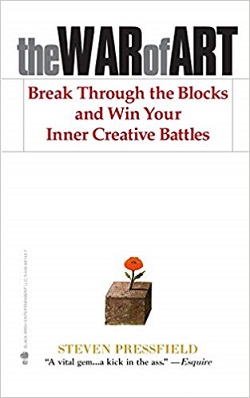
The War Of Art

“Nick, you should write an inner game textbook!” are words I’ve heard many a daygame savant speak to me. Now, I dare say I’ve been tempted. Tony Robbins proved a long time ago that “mindset” books are a license to print money. It’s simple, really. Just tell everyone what they want to hear, and wrap it up in language that seems to elevate the reader. They’ll sit on their fat ass, lap it up, and then recommend it to all their friends.

Mark Manson recently proved this with his execrable The Subtle Art Of Not Giving A F**K. His singular contribution to the advancement of mindset literature was to uses asterisks [1] in the place of swear words on the front cover, thus guaranteeing every mid-wit passing through the airport bookstore would pick up a copy. Smart move, Mark. That he’s a snake-oil seller with nothing to say doesn’t matter. It didn’t for Tony Robbins.

Something I realised years ago is you can either be good, or you can be successful. You can’t be both. To hit mainstream acceptance, you must be shit. The lowest common denominator in our retard culture demands it. There are very, very rare cases – The Godfather, Dark Souls – where an authentic vision can achieve financial success but even then they are drowned out by the likes of Avatar and Fortnite. Within the Game world, the key point is this: does your book make people feel guilty for not approaching? If it does, you’ve just limited yourself to a tiny audience. You should’ve gone the Models route, of bromides and platitudes that never require the reader to get off his arse but he still feels like his Game has improved.

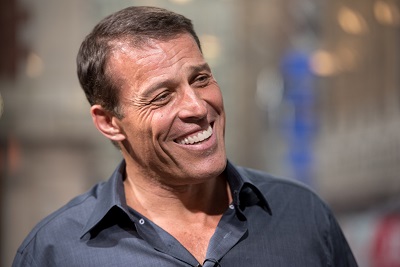
Tony Robbins Visits "Extra"

I’d be laughing my ass off too if I’d monetised his scam

The reason no-one wants to read books that force you to work hard [2] is that forces the reader to confront Resistance. In daygame we call them Weasels, but in Pressfield’s The War Of Art he calls it Resistance and it’s the foundation of his book. That, dear reader, is my segue into the review.

The War Of Art is an inner game book for creatives which can easily be re-written into a daygame inner game textbook [3]. It concerns three main ideas, each the subject of a separate ‘book’ within the same volume. These are:

1. Resistance
2. Turning Pro
3. Muse

Pressfield’s larger point goes as follows. We are all built for a purpose, for a higher calling that requires we express ourselves creatively, be it writing, painting, businessing, or charitying. It is the pursuit of our purpose that brings us happiness and contentment. The problem is that any time we attempt to rise to the higher plane, Resistance prevents us. It is our death wish, our shadow self, seeking to sabotage our greatness. Pressfield’s solution is to Turn Pro, meaning you approach your calling like a professional approaches his profession and a craftsman approaches his trade. Sit down, focus on technique, and grind it out. That sets up the conditions for the crucial third phase: your Muse arrives and brings with her divine inspiration.

Pressfield sees artists as vessels through which divine inspiration flows. Their works are not from or of the artist, but rather flow through the artist from the eternal to the flesh-and-blood real world. The artist’s job is to knuckle down, get cracking, and prepare themselves to receive the inspiration. I thoroughly enjoyed the book. To give you a flavour of it I shall now quote Pressfield at length, using word substitution to turn it into a daygame inner game screed.

Everything that follows below is from his book, adapted slightly by me, dipping in across many chapters.

I get up, take a shower, have breakfast. I read the paper, brush my teeth. If I have phone calls to make, I make them. I’ve got my coffee now. I put on my lucky work boots and stitch up the lucky laces. It’s about ten-thirty now. I step onto the streets and plunge into my first set. When I start making mistakes, I know I’m getting tired. That’s four hours or so. I’ve hit the point of diminishing returns. I wrap for the day. How many sets did I do? I don’t care. Are they any good? I don’t even think about it. All that matters is I’ve put in my time and hit it with all I’ve got. All that counts is that, for this day, for this session, I have overcome Resistance.

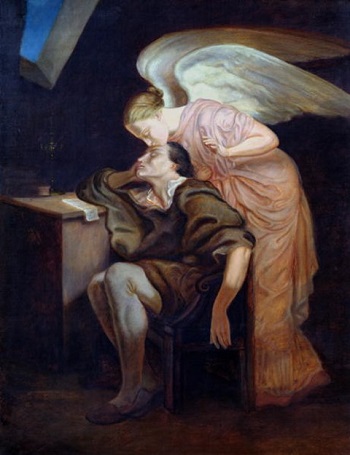
Cezannes-The-Kiss-of-the-Muse

The kiss of the Muse

Most of us have two lives. The life we live, and the unlived life within us. Between the two stands Resistance.

Resistance is the most toxic force on the planet [4]. It is the root of more unhappiness than poverty, disease, and erectile dysfunction. To yield to Resistance deforms out spirit. Every sun casts a shadow, and genius’s shadow is Resistance. I looked everywhere for the enemy and failed to see it right in front of my face. How many of us have become drunks and drug addicts, developed tumours and neuroses, succumbed to painkillers, gossip, and compulsive cell phone use, simply because we don’t do that thing that our hearts, our inner genius, is calling us to?

Resistance attacks when we take any principled stand in the face of adversity. When we want to chase the woman of our dreams [5]. Resistance cannot be seen, touched, heard, or smelled. But it can be felt. It’s a repelling force. It’s negative. It’s aim is to shove us away, distract us, prevent us from doing our sets. It is self-generated and self-perpetuated. Resistance is the enemy within. It will assume any form, if that’s what it takes to deceive you. Resistance is always lying and always full of shit. It cannot be reasoned with. It understands nothing but power. It is an engine of destruction, programmed from the factory with one object only: to prevent us from doing our sets.

Rule of thumb: The more important a call or action is to our soul’s evolution, the more Resistance we will feel toward pursuing it.

Resistance has no strength of its own. Every ounce of juice it possesses comes from us. We feed it with power by our fear of it. Master that fear and we conquer Resistance. So if you’re paralysed with fear, it’s a good sign. It shows you what you have to do.

Procrastination is the most common manifestation of Resistance because it’s the easiest to rationalise. We don’t tell ourselves, “I’m never going to talk to girls.” Instead we say, “I am going to talk to girls; I’m just going to start tomorrow.”

serb slag

Frankly, I’d rather have this bird kiss me

Grandiose fantasies are a symptom of Resistance. They’re the sign of an amateur. The professional has learned that success, like happiness, comes as a by-product of work. The professional concentrates on the work and allows rewards to come or not come, whatever they like. Aspiring daygamers defeated by Resistance share one trait. They all think like amateurs. They have not yet turned pro.

The amateur plays for fun. The professional plays for keeps. The amateur plays part-time, the professional full-time. The amateur is a weekend warrior. The professional is there seven days a week. In my view, the amateur does not love the game enough. If he did, he would not pursue it as a side-line, distinct from his “real” vocation. The professional loves it so much he dedicates his life to it. He commits full-time. That’s what I mean when I say turning pro. Resistance hates it when we turn pro.

Someone once asked Somerset Maugham if he wrote on a schedule or only when struck by inspiration. “I write only when inspiration strikes,” he replied. “Fortunately it strikes every morning at nine o’clock sharp.” That’s a pro. Maugham reckoned another, deeper truth; that by sitting down and starting work, he set in motion a mysterious but infallible sequence of events that would produce inspiration.

The daygamer must be like a Marine. He has to know how to be miserable. He has to love being miserable. He has to take pride in being more miserable than any soldier or swabbie or jet jockey. The daygamer committing himself to his calling has volunteered for hell, whether he knows it or not. He will be dining for the duration on a diet of isolation, rejection, self-doubt, despair, ridicule, contempt and humiliation.

What exactly are the qualities that define us as professionals?

We show up every day. We show up no matter what. We stay on the job all day. We are committed over the long haul. The stakes for us are high and real. We do not over-identify with our daygame. We master the technique of our daygame. We have a sense of humour about our daygame. We receive acceptance or rejection in the real world.

Rejection is the price for being in the arena and not on the sidelines. Stop complaining and be grateful. That was when I realised I had become a pro. I had not yet had a success. But I had had a real failure.

The professional respects his craft. He does not consider himself superior to it. He recognises the contributions of those who have gone before him. He apprentices himself to them. The professional dedicates himself to mastering technique not because he believes technique is a substitute for inspiration but because he wants to be in possession of the full arsenal of skills when inspiration does come. The professional is sly. He knows that by toiling beside the front door of technique, he leaves room for genius to enter by the back [6].

There is no mystery to turning pro. It’s a decision brought about by an act of will. We make up our minds to view ourselves as pros and we do it. Simple as that.

If you’d like to see this attitude directly translated into daygame in textbook form, I think you’re gonna want Daygame Mastery and Daygame Infinite, available on Amazon. For a closer look at them go to my product explanation page here.

Sigma Wolf store

[1] Or whatever the plural of asterisk is.
[2] As opposed to paying lip service to it that the reader nods his head along to.
[3] Should I write one, I expect to reference it liberally.
[4] After Leftism.
[5] Or of the Euro Jaunt.
[6] OO-ER Missus!

#117 – The Ravagers, Donald Hamilton BOOK REVIEW

December 7, 2018
krauserpua

Matt Helm The Ravagers

I wonder how hard-boiled and ruthless a protagonist can be before he ceases to become the hero, or even anti-hero, of a novel. There comes a point where the reader can think, “hang on, it isn’t just the baddies, but everybody in this is a cunt!” I found that while watching the first three seasons of House Of Cards. Absolutely every character is a soulless, nihilistic rat. Even when one of them is initially set up as honourable, something will happen to reveal their true snake-like heart.

For example, the Secret Service bodyguard to Hillary Hatchet-Faced Man-Jaw Cuntlady takes sick leave and as he’s dying of cancer he admits he was a creepy gamma obsessed with her. His replacement appears to be a by-the-book man of honour until suddenly he’s revealed as a degenerate faggot, actually kissing Kevin Spacey’s character [1]. The female journalist crusader turns out to be just another greasy-pole climber, not unlike the New York Times slag caught sleeping with the Head of Security for Senate Intelligence Committee in exchange for the un-redacted 82-page Carter Page FISA application [2].

Anyway, House Of Cards is total shit. The Trump era has aged it badly. Now it’s just a load of wrinkly old faggots bumming each other [3]. The point is that everyone in it is a cunt. How can you possibly watch drama when there’s no goodie to support? I think perhaps this whole meta-trend started with the flawed-good guy trope that was big in 1990s action movies onward, such as Bruce Willis in Die Hard (mildly flawed) on through Arnie beginning some movies as a suicidal drunk. It seems many movies and TV shows dispense with the “good” in good guy altogether.

Goodies

Goody, goody yum yum. Yesterday.

Everything is relative. Who is to say what is good and what is bad? Don’t be so judgemental!

Anway, it makes me sick talking about millennials and their bankrupt nihilistic culture so lets get back to Matt Helm in The Ravagers. He’s a hard, hard man but he’s also a patriot and willing to sacrifice for his country. Consider the famous George Orwell quote:

“We sleep soundly in our beds, because rough men stand ready in the night to do violence on those who would harm us”

By the way, that’s the entire lesson of The Lord Of The Rings. The only reason the Hobbits in The Shire can fuss about who has the best marrows at the village fete is because the men of Gondor are keeping the Turks Orcs at bay on the frontier. TLOTR is a warning to the English not to take their ideal society for granted [4]. Matt Helm is one of those rough men. That’s what’s good about the stories: he’s a ruthless killer, but he’s our killer.

God, I wish we still had plenty of these men in the West. They could assassinate all the top brass of the world’s NGOs in a single evening. Imagine a world free of Medicin San Frontiers, Oxfam, Barnardos, UNICEF, and Greenpeace. Wouldn’t that be amazing!

Open Arms

Lock everyone in the hold, then sink it

Anyway, I bring this up because of the brutal ending to The Ravagers. The plot concerns the wife of a scientist who has run off with his briefcase full of military secrets, attempting to make a rendezvous on the East coast of Canada [5]. It’s the usual spy-vs-spy tale of Team Helm trying to outfox Team Corbyn Russia with brutal professionals engaging in deceit and counter-deceit. It all ends in an abandoned mine near the rendezvous. The female commie aims an acid pistol at the aforementioned wife and Helm is able to get a shot off first, shattering the pistol, spraying acid all over the commie’s face [6]. She screams and stumbles off into the mine, clawing at her disintegrating formerly-pretty face.

Helm escorts the wife out of the mine, makes a phone call, and only then returns to find the enemy agent. Here’s how the scene plays out, as he tries to get her to divulge a last snip of information.

“Dave?” [Helm’s cover identity]
The voice was strange and kind of thick. It seemed to come from deep down and far away. I said, “That’s who.”
“Kill me, ” the voice said.
I said, “Sure. Just hang on while I find a suitable rock. Do you prefer having your brains bashed out from front or rear?”
“I mean it. You did this to me. Well, finish it. Kill me.”
“Take it easy, doll.”
She clung on to my hand. “Don’t let them save me! Don’t let them take me to a hospital and … and wash me off and transfuse me and… I saw what it did to Mike Green. I don’t want to live like that. I’d be a freak, a blind, faceless freak with a claw for a hand. Kill me!”
“Sure,” I said. “Sure doll. But it will cost you.”

That’s cold-hearted stuff. I have rather too much empathy to imagine myself in that position [7]. I mean, I tear up when watching videos like this.

Helm continues to stand firm in order to get the info.

She gripped my hand tightly. “I love you, Clevenger [Helm]. You’re almost as mean as I am.”
“Meaner,” I said. “I’ll come visit you in the hospital. See how you’re coming with your left-handed Braille.”
I heard Jenny stir behind me. I guess she thought I was terrible, even though it was her child I was fighting for. She didn’t count here. She didn’t know how it was. She wasn’t a pro, like the two of us.
Naomi laughed harshly. “You’re a darling,” she gasped. “You’re a wonderful, coldblooded beast. There isn’t a drop of sympathy in you, is there?”
“Not a drop.”

Aside from it being a tight, symmetrical conclusion to a good little chase story, that’s a harsh scene. I can’t imagine being so utterly cold to someone in trouble [8]. It’s refreshing to read this stuff in a spy thriller though. Donald Hamilton gets the right balance. If he’d made Helm sadistic, he’d be impossible to support even if on the right side. Too weak, and I’d be shouting at the pages, “why is this soft bag of shit a spy, he’s as delicate as a soyboy.” One thing you’ll never ever hear Helm say sincerely is “Okay, I’ll drop the gun, just let the girl go!” [9]. Thank fuck for that

No girls were sprayed in the face or abandoned in mine shafts during the period covered by my excellent memoirs available here.

Sigma Wolf store

[1] At least he’s over the age of consent, which must be a novelty to Spacey.
[2] Expect to hear a lot more about this in the coming months. General Flynn’s leak-hunter team set up Wolfe and caught him red-handed in treason. The NYT has had the un-redacted FISA application for a year. There’s a reason they don’t reveal it publicly: it completely exonerates Trump of Russian Collusion. The NYT isn’t just Fake News. It’s fully-blooded Enemy Of The People.
[3] Presumably. I stopped watching it during the Pussy Riot / Russian angle.
[4] Little did he know that Sauron would win the rematch by setting up NGOs to resettle Orc refugees throughout the Shire.
[5] Or wherever Nova Scotia is. I’m not checking a map because literally nobody gives a fuck about Canada, not even Canadians.
[6] YES!!!!
[7] She was hot, 22-year-old, and the mine is black dark. The acid only went onto her face and one hand. As far as I’m concerned, there’s still a rape-notch up for grabs.
[8] Subject to their skin colour, of course.
[9] Whereas it seems to be standing orders in Department Z that every agent must drop the gun, no matter at what cost to the mission, if any woman at all is even slightly threatened. That’s what happens when men in their twenties try to write spy fiction.

#116 – Gardens Of Fear, Robert E. Howard BOOK REVIEW

December 6, 2018
krauserpua

Gardens of Fear

I’ve been thinking a lot lately about what compelled me to spend most of my adult life criss-crossing the globe, exploring strange lands. Why is it that my brother has lived his entire life in Newcastle whereas I, who share many of the same interests, left home at 18 for university in another city and then never really came back? [1] My nine-year experiment with Game and Euro Jaunts wasn’t an aberration, but rather just a different expression of the same thrill-seeking and wanderlust. Where did I get that from?

Conan. That’s where.

Read this from Queen Of The Black Coast, the first short story in the Gardens Of Fear anthology. A pirate ship led by Belit has attacked the trader Conan had passage on so he jumped onto Belit’s ship and hacked his way past half her African crew. Conan finally held at bay, Belit steps in to offer him a place by her side. Sword in hand, dripping blood, he thinks it over:

His eyes swept the bloodstained ranks, seeking expressions of wrath or jealousy. He saw none. The fury was gone from the ebon faces. He realised that to these men Belit was more than a woman: a goddess whose will was unquestioned. He glanced at the Argus, wallowing in the crimson sea-wash, heeling far over, her decks awash, held up by the grappling irons. He glanced at the blue-fringed shore, at the far green hazes of the ocean, at the vibrant figure which stood before him; and his barbaric soul stirred within him. To quest these shining blue realms with that white-skinned young tiger-cat – to love, laugh, wander and pillage-
“I’ll sail with you,” he grunted, shaking the red drops from his blade.

I first read this story in 2006, when I lived in Tokyo. It spoke to me: the thirst for travel and adventure, to range the wide world and see what’s out there. I wanted to live. I felt that Newcastle was too small and parochial to hold me, and even London was too similar, too close [2]. Robert E Howard wrote his Conan stories from the small Texas town of Cross Plains, which he rarely left. He travelled vicariously, through his voracious reading of history in the local library and the adventure in the pulps. His stories yearn with wanderlust. Conan stories speak to every man who wants to pick up his metaphorical sword [3] and set out on an adventure with only his wits to protect him. I loved it.

6ae55bb344e2bd8f92573fbb659bdd52--arte-geek-conan-barbarian

Me on a date outside The Four Seasons hotel in Moscow

A rolling stone gathers no moss. Such a transient exploratory lifestyle can only be maintained if you have a philosophy that supports it. What does Conan say about his own?

“I have known many gods. He who denies them is as blind as he who trusts them too deeply. I seek not beyond death. It may be the blackness averred by the Nemedian sceptics, or Crom’s realm of ice and cloud, or the snowy plains and vaulted halls of the Nordheimer’s Valhalla. I know not, nor do I care. Let me live deep while I live; let me know the rich juices of red meat and stinging wine on my palate, the hot embrace of white arms, the mad exultation of battle when the blue blades flame and crimson, and I am content. Let teachers and priests and philosophers brood over questions of reality and illusion. I know this: if life is illusion, then I am no less an illusion, and being thus, the illusion is real to me. I live, I burn with life, I love, I slay, and am content.”

This is a rationale couched in the bombast of heroic fantasy that equally applies to the more down-to-earth daygamer chasing skirt across several continents. I suspect most of you can relate to it. Let other people talk of mortgages, professional advancement, and IKEA furniture. Let me book a budget flight, share an Airbnb with my mates, and then chase skirt. Let me have afternoon beers on the sunny sidewalk cafes of Kiev, a big fat burger from Submarine on Knez Mihailova, and then check out the dancing skirt in Icon and Gipsy in Moscow. Lads, laughs, booze, and skirt. I am content.

Until 2017, in my case.

Conan has no children. The stories don’t mention them. At no time does he seek to put down roots. He often schemes to take over a country and install himself as king, but even when he temporarily achieves it, the wanderlust gets him and the stone begins rolling again. By the time Conan reaches middle age, REH has stopped writing about him. What happened in the end? Did he settle down with a wench and raise a brood of sturdy barbarian boys? Or did he slip down the ranks of sell-swords, fighting on auto-pilot through a series of pointless wars at the ends of the earth until one day he couldn’t quite slip the sweep of a broadsword and his adventuring ended in an unmarked grave?

Ruminations aside, this is an excellent collection. It’s volume six in the ten-volume special edition The Weird Works Of Robert E Howard, of which I own nine [4]. They present REH’s stories in order of publication and in the original texts, without the various politically-correct edits made when Conan was re-popularised with the 1970 TOR Books paperbacks. REH invented the heroic fantasy genre that J.R.R. Tolkien would go on to perfect. I’ve always preferred the REH originals. They are more hard-boiled and don’t have any stupid fucking elves and dwarves.

There’s nothing lustier and more red-blooded than an REH Conan story. I absolutely recommend them. This particular volume is an expensive way to read Conan. You can usually pick up the entire REH oeuvre for a couple of quid on Kindle.

If you like lads, laughs, booze and skirt you’ll very much like my memoir series available here. If not, you’re a bit of a faggot so you might as well fuck off and start bumming Turks [5]

Sigma Wolf store

[1] “Who gives a fuck, tell me if this Conan book is any good?” you might reasonably reply.
[2] I no longer feel that way, suggesting I’m coming full circle.
[3] Or laptop and rucksack.
[4] The missing volume, The Black Hounds Of Death, is outrageously expensive.
[5] If you don’t already.

Daygame: Pick Up Girls Everywhere

December 5, 2018
krauserpua

Long-time readers will remember the book I co-wrote back in 2015 [1], Beginner Daygame, which has since been withdrawn from sale. That’s kind of a shame because it was a good introductory book but, well, my mate from Wales wanted to distance himself from me in 2016 so I complied with his request to withdraw it. Since then, my next-most suitable book for beginners has been the older and ever-reliable Daygame Nitro.

But what about a specific beginner-focused introduction to the London Daygame Model? Are there any of those?

No, I don’t mean a beginner’s book from one of the shitty know-nothing “daygamer” buffoons like RSD or Natural Lifestyles, or Johnny Fucking Cassell. I mean a daygame book from someone who (i) understands the game (ii) has a track record of success shagging nice birds (iii) is capable of teaching it in a systematic fashion. Teaching the actual LDM, that is.

Daygame Pick Up Girls Everywhere

My friend and sometime-wing TDdaygame has just released his first book so I’m announcing it here to give it a little boost. You can find his sales page here including a link to buy the PDF. I may review it in the future, but for now it’s just an announcement. Those of you who buy it, feel free to leave your feedback in the comments here.

[1] My part of the “co-” being about 90% of it.

#115 – The Bridge On The Drina, Ivo Andric BOOK REVIEW

December 5, 2018
krauserpua

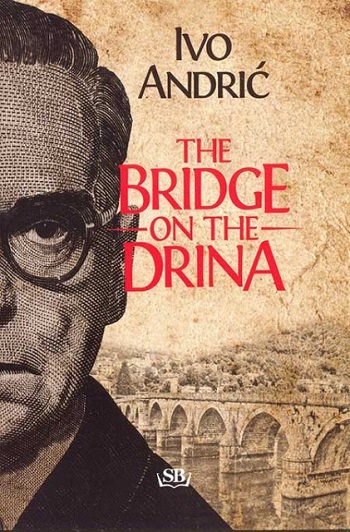
the-bridge-on-the-drina-ivo-andric_473875

Generally speaking I avoid any book that wins a literary prize, as it’s a cast-iron guarantee that it’ll be a load of shit. I can’t speak much for the Nobel prizes for science but the fringe Nobels for Peace, Economics, and Literature are all a joke. Just look at the Peace prize roster, for instance.

Al Gore won it in 2007. What did he actually achieve in the way of peace? Nothing. But he did further the communist scam of Global Warming while making a billionaire of himself in the process scamming the taxpayer. The same year, the International Panel On Climate Change won it with him, completing a commie liar clean sweep. Obama famously won it in 2009 for doing literally nothing. He’d only just been inaugurated, and of course it’s comical now considering how many wars he started, how many kids he droned, and his active deliberate role in giving Iran nuclear weapons, shoving the Near East and North Africa into civil war, and his recent attempts to turn the USA into a totalitarian state. All the winners since him are the usual non-entity diversity candidates, the most ridiculous being the Paki bitch Malala Yousafzai whose dad was a CIA agent.

Trump ending the Korean War, crushing ISIS, taking on human trafficking, and preventing Hillary starting World War 3 against Russia….. nah, that’s not Peace Prize worthy. I needn’t go into the Economics Nobel, that’s even more of a joke. Paul Krugman won it, for fuck’s sake, a wormtongue lying Jew if ever there was one.

Muslim Cunt

He awarded himself the Distinguished Service medal too

So, I tend to avoid Nobels. I broke from that lifelong pattern to read Ivo Andric’s The Bridge On The Drina after a Serb friend recommended it. It was the 1961 winner, a chronicle of Bosnian life under mostly Ottoman rule, centred around the bridge of the title in a small border town. I’ll say this: it’s well written. However, it took me two months to finish.

It’s a bit boring and aimless. Literature is always dull.

The reason The Bridge On The Drina took me so long to read was not its 473 pages. The Hunchback Of Notre Dame is longer and I smashed that in a few days. Nope, it’s because TBOTD is not actually a novel. It’s a chronicle, as Andric himself explained. What’s the difference? A novel has a plot and recurring characters within, with a protagonist and at least one antagonist. There will be intention plus obstacle. The Bridge On The Drina has none of that. Its centrepiece is the bridge itself, a long low white brick structure constructed by the Ottomans, and almost a thousand years of history washes over the bridge until the book ends with the outbreak of World War I in 1914. The Balkan Wars were in 1912 so the last quarter of the book is mostly on a war footing.

There is no central human character here. Every chapter will focus on a couple of locals and tell anecdotes from their life, all related to the bridge and each chosen to illustrate the flow of life and march of history. The main character in one chapter might appear as a minor character a couple of chapters later, and then drop out entirely. For example, a Jewish hotelier named Lotte is the centre of one chapter in 1900, describing in detail her hotel by the bridge as the lively nightlife centrepiece and her own skills in managing the ribaldry of the guests while running a clandestine support network to provide advice and support to her Jewish extended family back in her home village. A couple chapters later she reappears almost twenty years older, a tired wreck having a nervous breakdown under Serb shelling of the town after Franz Ferdinand is assassinated in Sarajevo.

Newcastle

I’ll see your bridge and raise you one, pal

Lacking a central plot driving things forward, it’s easy to put this book down. Most chapters are self-contained and tie up nicely with a ribbon. There are no cliff-hangers. I thoroughly enjoyed most chapters and Andric writes beautifully but there’s very little dragging the reader forwards.

Thematically, the writing matches the central metaphor based on the river washing through the immovable immutable bridge. The fortunes of individuals, families, and the town rise and fall across centuries as the river continues to flow and the bridge always stands. Andric presents most townsfolk as dumb animals, intimately concerned with their own parochial affairs but uncomprehending of the tides of history that buffet them around. They are always subject to forces beyond control. This expresses itself in how major actions are initiated:

  • The Ottomans are repulsed by a Serb uprising that barely impacts the town. An armistice is signed somewhere, and one day Serbs show up to relive the Ottoman guard of the town in a small ceremony.
  • The Austro-Hungarian army shows up as Bosnia is annexed. One day the locals are sitting on the bridge smoking tobacco and singing songs. The next day foreign soldiers are bivouacked on the slopes outside and buying food in the shops.

Andric never uses characters who are movers of history. In a normal novel, the bridge-building may focus on the engineer tasked with designing it: an Ottoman Howard Roarke, if you will. In an army it may have scenes involving generals or planners. In The Bridge On The Drina it’s the stonemasons, carpenters, militia-men, and sentries. They are all bewildered, not privy to the great plans. Everyone is passive, the river of history washing them away.

Andric is a perceptive writer on human psychology and PUA-inclined readers will no doubt recognise this character portrait from chapter 19. It’s just prior to the Balkan War of 1912 and several students are back in town after completing their studies in the major cities of Vienna and Sarajevo. They are all big-mouthed socialists of one type or the other. Two former friends are walking late one evening across the bridge. One, Stikovic, is a classic gamma who managed to bullshit a local young school mistress, Zorka, into shagging him, and now she’s fallen for him. His companion is Glasicanin who had already been friend-zoned by her and is still pining. We take up the scene towards the end, after Stikovic has been running his mouth with grand plans of revolution and Serbian sovereignty.

“Is this an allusion to Zorka?” Stikovic suddenly asked.
“Yes, if you like, let us talk of that too. Yes, because of Zorka also. You do not care a jot for her. It is only your inability to stop and restrain yourself before anything which momentarily and by chance is offered to you and which flatters your vanity. Yes, that is so. You seduce a poor, muddled and inexperienced schoolmistress just as you write articles and poems, deliver speeches and lectures. And even before you have completely conquered them you are already tired of them, for your vanity becomes bored and looks for something beyond. But that is your own curse too, that you can stop nowhere, that you can never be sated and satisfied. You submit everything to your vanity but you are yourself the first of its slaves and its greatest martyr. It may well be that you will have still greater glory and success, a greater success than the weakness of some love-crazed girl, but you will find no satisfaction in any one thing, for your vanity will whip you onwards, for it swallows everything, even the greatest successes and then forgets them immediately [1], but the slightest failure or insult it will remember forever [2]. And when everything is withered, broken, soiled, humiliated, disintegrated and destroyed about you, then you will remain alone in the wilderness you have yourself created, face to face with your vanity and you will have nothing to offer it. Then you will devour yourself, but that will not help you, for your vanity accustomed to richer food [3] will despise and reject you. That is what you are, though you may seem different in the eyes of most men [4] and though you think differently of yourself. But I know.”

That’s a remarkably insightful takedown of a PUA player by a friend-zoned chode. Here’s where Andric is particularly clever, in how Stikovic, a narcissist, reacts to it. He responds exactly as modern writers on narcissism (e.g. How To Deal With Narcissists, or Richard Grannon‘s YouTube channel) would predict: he finds the critique itself as a source of narcissistic supply:

[Stikovic] felt every harsh comment but he no longer found in all that this scarcely visible friend beside him had said any insult or any danger. On the other hand, it seemed to him that with every word of Glasicanin he grew, and that he flew on invisible wings, swift and unheard, exulting and daring, high above all men on this earth and their ties, laws and feelings, alone, proud and great, and happy or with some feeling akin to happiness. He flew above everything. That voice, those words of his rival, were only the sound of the waters and the roar of an invisible, lesser world far below him.

That’s grandiosity. The more things change, the more they stay the same. Andric can’t have been a dummy because as a writer he could’ve easily written it to be nice-guy Glasicanin who banged Zorka, but he chose Stikovic. The girl was taken in by the grandiose big-mouth [5] and no amount of reasoned argument made good the chode’s loss.

That’s just a section of one chapter. The Bridge On The Drina is absolutely chock-full of such interesting anecdotes and insights into human nature. I greatly enjoyed it, but it was a book I nibbled away at a chapter at a time, not a headlong rush to reach the climax.

If the idea of big-mouthed narcissists cucking chodes in Bosnia with nubile Balkan ladies appeals to you, you’ll very much like my memoir series. See the product page here.

Sigma Wolf store

[1] Unless he was to write a memoir about it.
[2] Gamma males are terrified of being wrong and it shames them forever, thus they hold grudges forever towards anyone who publicly embarrasses them.
[3] Twenty YHT notches per year, that is.
[4] On YouTube and RVF.
[5] Well, it was always the secret to my game too.

#114 – Mr Majestyk, Elmore Leonard BOOK REVIEW

December 2, 2018
krauserpua

Mr Majestyk

Elmore Leonard began as a writer of westerns – pretty hard-boiled ones – and went on to become famous for his sassy crime thrillers, many of which became big budget Hollywood movies. If you’ve seen George Clooney in Out Of Sight, John Travolta in Get Shorty, or Robert De Niro in Jackie Brown, then you know Elmore Leonard. Each is based on a book of his.

I always liked Leonard for his crisp dialogue and the economical thinking and acting of his characters. It’s the very opposite of the flights of fancy in Gothic stories such as The Hunchback Of Notre Dame or Wuthering Heights. There is none of the grandiosity of cathedrals, windswept moors, or soldiers battling and besieged castles. Leonard’s adventures happen at street level with only a handful of hard-bitten characters attempting to outwit each other. Even when set during momentous events, such as his Cuba Libre in the Spanish-American war, the book concerns only a few people as they weave an individual path through the chaos.

Because at heart, Leonard’s books are still westerns.

Have you seen Sergio Leone’s The Good, The Bad, And The Ugly? If you haven’t, stop reading now and watch it. It’s possibly the greatest movie of all-time [1]. That story is set during the American Civil War, about three bandits hunting the same treasure, each of them attempting to side-step the momentous tides of history eddying around them in order to thread a narrow path to the loot. That’s how Cuba Libre is. In Leone’s movie there’s a scene where the three bandits must each cross a heavily contested bridge, the Blues and Greys on opposite banks. It’s a good scene in how three individualists both leverage and avoid the pitched battle going on around them in order to cross the river and make haste towards a cemetery over the hill.

Mr Majestyk is a western dressed up as a modern crime thriller. It begins with Mr Vincent Majestyk, a demobbed veteran of the recent Indochina war, who is in his second year as a melon grower by the Mexican border of the USA. As he’s attempting to pick his crop a local hustler tries to shake him down. One thing leads to another and suddenly he’s on the wrong end of a high-priced hit man’s, Frank Renka, vendetta. Majestyk attempts to hold the line, harvest the melons, while avoiding a showdown with Renka.

It’s a classic western plot: a reformed but deadly man seeking the quiet life (replace rancher for melon farmer to make it western), an ineffective sheriff and the protagonist’s grim reliance on doing it all himself. There’s the corrupt local bandit, the ruthless hired gun, and the inevitable showdown. This book is a Clint Eastwood western transplanted into 1974. All the themes and the tone ring clearly as western.

Movie Poster

It had to be Bronson

Mr Majestyk is a short book with a tightly focused plot. There’s nothing extraneous. No sub-plots, no social commentary, no attempt to contextualise within the grand sweep of history. There’s just a rugged individualist trying to live his life and then a few bad apples who try to ruin him. He must turn the tables and seek revenge. The real standout of the book is the crispness with which Leonard handles the prose and dialogue. These are people of few words and few actions, but every single movement has significance. His later crime books tended to take on the ‘caper’ style, of a rag-tag bunch of chancers each double-crossing the others to get his mitts on the treasure for himself. Get Shorty and its sequel Get Cool are exactly that. Mr Majestyk is more of a sigma book. One man, independent, who had better not be fucked with.

If you’d like to read more from a deadly, ruthless sigma male who plots a path of violent revenge against fearsome adversaries then you’ll like be disappointed by my memoir series. However, if drinking whiskey and shagging loads of birds would satisfy you, then go check them out on my product page here.

Triple X 7

I’ve banged lookalikes of every girl in this one

[1] Not including Private’s Triple X Video Magazine 7.

#113 – The Alarming Clock, Michael Avallone BOOK REVIEW

December 1, 2018
krauserpua

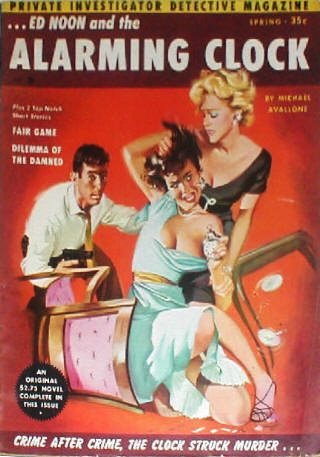
Alarming Clock

I suppose he had to fire a dud eventually, and novel five in the Ed Noon series is when Michael Avallone has finally written a pedestrian hard-boiled story. The Alarming Clock is entirely based around a single plotline: a Russian spy at the Department Of Defense has obtained secret codes to the US nuclear arsenal and engraved them onto the serial number inside a cheap clock. A group of former-SS freelancers are waiting to receive it when the seller gets cold feet and leaves the clock in Ed Noon’s office. Noon was shopping for groceries at the time.

So, Noon gets back to the office, finds the package, and wonders what the hell is going on. There’s a letter for him.

Mr Noon,
Imperative you hold this for me until I can contact you later. You may open package to inspect it but do not by any means let the enclosed leave your hands. Many people would kill you for this item but it can also make you a millionaire. A mutual friend sent me to you.
Will call soon
Roland Ritz

At first he mistakes the ticking for a bomb so he drowns the package in his sink, to ruin the explosives. Then he opens it and is puzzled that it’s just a normal clock. The plot becomes a clock-hunt as Noon’s instinct has him immediately hide the clock and replace it with his normal desktop clock. The Germans burst in, at gunpoint, and kidnap Noon together with the (wrong) clock. Everything that follows is Noon stalling them as he attempts to piece together why the clock is so goddamned important as the Germans and a team of fake FBI agents squabble and attempt to reclaim it.

The plot conceit is fine, it all proceeds logically, and it’s not a bad book at all. However, it’s missing the Noon flavour. Yeah he’s held up at gunpoint, slugged on the head, and bangs a dame. Yeah, he cracks wise and pisses off the cops. But some vital ingredient is missing. This plays like a thriller rather than a hard-boiled detective story.

FInland

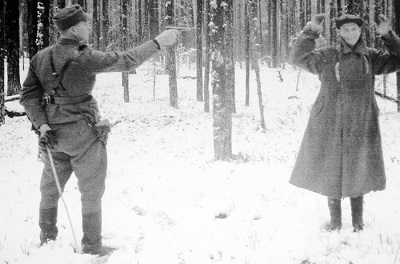
Russian spies are a cheerful bunch

Noon’s neighbour, a clock repairman called Alec St Peter, gets it worst [1]. He’s a WW2 vet whose hands were blown off while testing explosives. At first, Noon thinks the clock was meant for him.

I got organised. I turned the lights out in Alec St. Peter’s office and went back to my own workshop. I tool Alec’s metal hands with me. As I carried them into the mouse auditorium, I suddenly wondered what it must be like to have hooks instead of flesh and blood fists. Alec never talked much about them even if he seemed to be completely un-self-conscious about them. You can never really tell about cripples.

This is the kind of tone I like about Ed Noon books. You can’t imagine Perry Mason thinking that way. The things which come to Noon’s mind are always slightly off-kilter. The Huns had kidnapped Alec and beat the shit out of him. It’s his imperilment that motivates Noon to give Jerry a bloody nose. His old ex-escort girlfriend makes an appearance too, and is soon kidnapped and almost raped by the Huns.

I dunno, I just can’t get inspired to talk about this book. It was alright. I read it cover to cover during a 9-hour bus ride down to Macedonia and it kept me diverted for much of that time. It did the job, nothing more. There weren’t any themes or moments that jumped out at me as talking points. About the only thing worth mentioning is I don’t like books that cast Nazis as automatic bad guys. But then again, Avallone always makes the Commies worse, so it balances out in the end.

If you join my special VIP Inner Circle Gold Program for the small price of just $149 [2] you will receive a complimentary limited edition Krauser Clock that will give off a magical LMR-busting aura in your bedroom. Failing that, check out my products on this page.

A Nonce

Unrelated WTF? Who takes life advice from THIS THING?

[1] Well, of the proper characters. Roland Ritz is shot dead in Noon’s office and the Germans are gunned down in a shootout with cops at the end.
[2] Per month

#112 – The Case Of The Bouncing Betty, Michael Avallone BOOK REVIEW

December 1, 2018
krauserpua

Bouncing Betty

Those of you not yet banned from Twitter for hate speech will have likely seen the latest reeeeeeeeing from liberal snowflakes: the Rudolph The Red Nosed Reindeer television special. Laughing stock website The Huffington Post published an article decrying the “marginalisation” of Rudolph, finding the tale “seriously problematic”. You probably think I’m joking. Oh no, go read the story. Here’s a quote:

He asks Rudolph if he can drive his sled through the snowstorm.

At this point in the story, instead of fighting Santa and demanding for the abuse to end, Rudolph gives in and lets Santa exploit him for an even further extent of time. After that, Rudolph is treated nicely as long as he lets himself be exploited for years to come and the story ends on that bombshell.

The story clearly suggests that dysfunctional people are ok for society as long as we can find a way to use or exploit them for our own personal gain.

Rudolph the Red-nosed Reindeer represents how in the past, people with dysfunctions had been exploited for others’ gains. This story suggests that if people with dysfunctions don’t exploit themselves to others, they are sitting about and being useless and lazy.

Now, we all know why liberals get triggered like this: they are society’s losers. Marxism is an ideology of losers, suggesting those losers band together to attack the winners. A liberal will be triggered by Rudolph’s exclusion for having a dodgy nose because they were the kids marginalised at school for being cowards, whiners, weaklings, and fatties.

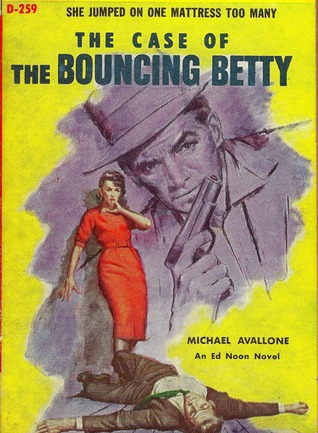
Did I say fatties? Well, what a smooth segue into Michael Avallone’s The Case Of The Bouncing Betty, the sixth novel in the Ed Noon private eye series. The name comes from a German WW2 landmine that would spring up several feet into the air before exploding. You can imagine how gruesome that would be. This novel appropriates the name because Noon’s client, Betty Heck, is 440lbs. That’s in 1954, the pre-Tumblr era, when 440lbs wasn’t merely “slightly chubby”.

There’s no way this book would get published in 2018. Avallone is merciless in mocking Betty’s weight – even though he presents her as a sympathetic character overall. Here’s the very opening lines:

The first time I saw Betty she was bouncing. She kept on bouncing right up until the day she died [1]. Why she died was no more important than why she bounced. Because when I found out why Betty bounced I found out why she died.

That’s not as facetious as it sounds, by the way. That first paragraph is a strictly logical foreshowing of the plot – what I’m about to spoil. Betty works as a mattress tester [2] for Sleep-Tite bedding company precisely because her weight gives the mattresses a solid stress test. Her boss Bartholomew Artel has gotten into a dope smuggling racket with Tommy Chin and his eldest sun from the Chop Suey restaurant across the road from Ed Noon’s detective agency. The distribution end has been agreed with Mafia boss Bim Caesar. Unfortunately, two unanticipated events scuttle the plan. First, Artel falls in love with Lois Hunt and decides to elope and go straight. Second, when bouncing on the mattresses, Betty splits the seams and all the dope pours out.

It’s at this moment the story opens:

The door swung back and Bouncing Betty bounced in. All four hundred and forty pounds of her. And I suddenly felt a helluva lot safer with a gun in my hand.

She stopped bouncing long enough to glare at me, then bounced over to the client’s chair on the other side of the desk and flopped into it with a sigh that seemed to lower the Marilyn Monroe calendar a full quarter of an inch. The chair groaned with age.

Betty hires Noon as a bodyguard because she’s had three attempts on her life and doesn’t know why (she didn’t recognise the dope). If you’ve read the previous five Noon books you know exactly what’s coming next……. an aggressive man barges into the office. It’s Artel, and he offers to double Betty’s price if Noon will drop the case. You can guess what happens right after that too: an unknown shooter fires from outside Noon’s office (in this case from a rooftop across the street) and murders Artel. I swear, this is how five of the first six Noon novels begin.

Hot bird

Not Betty, yesterday

The mystery that follows is fun in its own way, as Noon gets on the wrong side of Bim Caesar, survives a nightclub shoot-out, is kidnapped at gunpoint twice, and I think he’s slugged on the head once too. The prettiest woman is brutally raped and almost murdered – Noon books always have the prettiest dames getting mistreated. He’s also accused of a murder by his cop friends who – yet again – forget all the previous times they suspected him of murder and he was exonerated. He even goes on the run – again.

What sets The Case Of The Bouncing Betty apart is the constant ripping on Betty’s weight. Almost every page she’s on has either Noon or another character marginalising her. It’s seriously problematic [3]. For example:

She rolled her glass in her fat fingers. It looked no bigger than a thimble.

She kept on laughing. Genuine laughter that made her mountainous breasts rhumba, mambo and just about everything else.

I was tying up my shoes and thinking about a cup of coffee when the bedroom door pushed open. I couldn’t see Lois Hunt for a full second because Betty Heck, all four hundred and forty pounds of her, was filling the doorway as she stretched… Betty lumbered into the room and Lois Hunt came around her left side, looking for a cigarette.

It’s not just the main plot point that hinges on Betty’s lard-ass. When cornered in their apartment by three hoods, Betty uses her width to obscure a gangster’s view to block a shotgun, before slugging him. One of the murder attempts fails because she’s too fat to fit through the elevator doors when they try to shove her down the shaft. Even the hoods rip into her weight.

Betty Heck shrieked low but cut it off immediately as Bucky thrust the shotgun almost in her face, “Shut up, Fatso, before we start on you.”

I dare say this unending tirade of fat-shaming made The Case Of The Bouncing Betty even more fun than usual. I never tire of laughing at fatties [4]. This was a good return to form after a disappointing fifth book.

If you’d like my books because they are really good and stuff, then go here to check out my product range, with explanations of what’s what and what’s not.

Sigma Wolf store

[1] Until the very moment of her death, actually, because she’s pushed down a flight of stairs and breaks her neck.
[2] That is not a 1954 slang for what is now called a THOT.
[3] In a funny way
[4] Now that I’m no longer one of them.

#111 – Violence In Velvet, Michael Avallone BOOK REVIEW

November 29, 2018
krauserpua

Violence in velvet

Compared to the tightly convoluted plotting and extensive theorising of Perry Mason novels, the Ed Noon stuff is far more straightforward and action oriented. Mason is very rarely endangered and almost never physically assaulted. His jeopardy always comes from cutting a corner – usually tampering with evidence or manipulating a client – so as to frustrate the police and risk his disbarment for obstructing justice. He doesn’t pull a gun, or have one pulled on him. He’s never sapped on the back of the head, tied up in a basement, or threatened by mob bosses.

That stuff happens all the time to Noon. He’s been knocked cold more times than Amir Khan.

The Mason books also clearly involve the reader in theorising through the case. There are always mid-story scenes of Mason sitting in his office picking at the evidence with his secretary Della Street or his private eye Paul Drake. These scenes are to summarise the evidence for the reader and highlight key components of the puzzle. Agatha Christie does the same thing. Michael Avallone prefer the Sherlock Holmes method of storytelling, in which the detective keeps his cards close to his chest until the big final reveal.

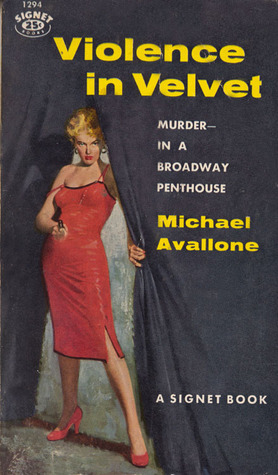
This fourth Noon novel, Violence In Velvet, does not begin with a dame in this office, a violent man bursting in, and then a third unseen character shooting said man dead (you’d be surprised how often that happens in Noon stories). If I remember correctly, there are no corpses in Noon’s office at all, which is a rarity. Instead, Noon is sitting in the bar across from his office when a ten-year old kid – Lucille – comes in and offers to pay her pocket money to hire Noon. She claims her dad wants to kill her mum.

Noon takes the kid back to her parent’s apartment, and stumbles onto mummy’s corpse. She’s been shot in the face with a .45. The shaken kid picks up the gun and fires it at Noon, missing. Then a dame bursts in – the dad’s secretary and mistress – and also pulls a gun.

33

“You call me a squirrel one more time!”

Now, that probably sounds really odd but believe me as the book progresses this seemingly irrational behaviour from the big dame and little dame starts to make sense. This is a tale in which Daddy is a Broadway star and there’s a love triangle afoot. Having a murder occur live during a baseball game in the third book, Dead Game, it seems Avallone wanted to up the ante by having a murder during a stage performance in Violence In Velvet.

Aside from that, it’s a typical Noon book. It has the usual cheesy dialogue too:

“His name is Noon, Miss Tucker, ” Lucille piped up, obviously enjoying herself immensely. “You know. Like twelve o’clock.”
“Now you know,” I told Helen Tucker. “So dry up or I’ll strike you twelve times.”

There’s the usual action too, of the sort you never get in a Perry Mason. The husband, Guy Prentice, shows up at the murder scene while the police are still there and Noon is in a bad mood – having had two guns fired at him by Lucille and Helen respectively. Prentice is a primadonna and Noon suspects his show of grief is an act. So he needles him.

“You dirty, filthy swine,” he murmured. “Who do you think you are – God?”
“Not God,” I said coldly. “Just a guy who doesn’t go around murdering women.”
It just wasn’t my day. I tried to wriggle off the hook but I couldn’t. And there was more to come.
Because Lucille leaped forward like a little tigress, locked my legs with her wiry, slender arms and sank every tooth that was in her mouth into the fleshy part of my upper thigh. I howled and tried to shake her off, and it took all of my attention off things.
Which cost me. Guy Prentice seemed to bounce off the floor at me like a released spring with a fist at the end of it. I’d never been punched by a famous man before. But speaking for all of the men punched by famous men the world over, mine was a special four-star performance.
His fist whooshed up to my chin, exploded like the A-bomb, and the detonation roared around my skull. I went down into a mushrooming darkness with the sound of the doorbell for musical accompaniment.

Your reaction to that excerpt will tell you if Ed Noon books are for you. I like that type of facetious bumbling high-action style and don’t find it at all low brow. It’s straightforward, without pretence, and doesn’t let fancy language get in the way of telling the story.

If low brow is your thing, you can’t get lower brow than a memoir about a middle-aged man flying budget airlines, staying in cheap AirBnB apartments, and banging young women of questionable chastity. Or you could buy my textbooks to learn how to live the dream yourself. Get ’em here.

#110 – The Case Of The Drowning Duck, Erle Stanley Gardner BOOK REVIEW

November 29, 2018
krauserpua

Drowning Duck

There are many reasons to like Erle Stanley Gardner’s writing: his distinctive characters, the suave interplay between Perry Mason and his faithful secretary Della Street, the investigative insight from Paul Drake, or the convoluted but carefully-intertwined plot threads. But of all things, it’s the way Gardner has his protagonist Perry Mason think which I like most of all. He has admirable logic that pulls you in just as Arthur Conan Doyle did with Sherlock Holmes.

In chapter thirteen, there’s a very nice example of it. Let’s have a look, shall we?

The central conceit of The Case Of The Drowning Duck is that an insufferably proud rich dude asks Mason to re-open an old murder case from eighteen years previously. One Horace Adams was convicted and executed for murdering his business partner out East, in 1924, and now Adams’ son is about to marry the client (Witherspoon)’s daughter. Adams’ mother told her son a cockamamie [1] story about him having been kidnapped aged 3, to cover up the murder charge. Witherspoon will not permit his daughter to marry a boy with the mark of Cain, but has hired Mason just on the off-chance Horace Adams was wrongly convicted.

When you write as many detective mysteries as Gardner – and this was number twenty in the Mason series – you get creative. He does a masterful job hopping between the old murder case and modern-day peril. Once the dust is kicked up there’s a tale of blackmail, shakedowns, and new murders. So, halfway through the book, Mason sits down with his regular private eye Drake and discusses the case. Specifically, his methodology of attacking the case.

Mason said, “Let’s look at this thing logically. The big trouble is we get hypnotised by facts and start placing a false interpretation upon those facts because of the sheer weight of circumstances.”

This is somewhat opposed to Sherlock Holmes who, in Scandal In Bohemia, advised:

It is a capital mistake to theorize before one has data. Insensibly one begins to twist facts to suit theories, instead of theories to suit facts.

Now, I think this comes down to whether the detective is reasoning within an open or a closed system. The Holmes stories are known as “locked room puzzles” meaning they usually involve a sealed crime scene and small suspect list. Doyle sets up a small amount of solid evidence from which a tight chain of deductive reasoning can be made: the footprints near the body are size ten, with a certain distance of stride, and deeper impressions on the right foot, and there is a particular cigar ash. Thus Holmes can walk into the only two tobacconists in London that sell that cigar and ask if a man over 6’3″ with a bad left leg came in to buy some. Holmes will carefully observe a scene to collect facts and then stir the pot to uncover more. However, his stories usually involve close reasoning. Once you’re sure of the key facts, the conclusion is elementary.

Mason never has things so clear cut. His facts are more like Miss Marple‘s: witness testimony and gradually uncovered relationships between characters. When reading Holmes you get the feeling that the crime is a static target that must be gradually uncovered. Mason stories are a blurred moving target as the lawyer tries to keep up with a shifting reality. Thus where Holmes must decide where to look and then observe carefully until he has uncovered sufficient key facts, Mason must manage the psychologies, set traps, and fool witnesses into revealing their secrets. To do that, Mason requires a big picture early. Facts can change it, but he needs to constantly reason out the big picture and try fitting the facts.

Mason said, “When you once get the correct master pattern, every single event fits into that pattern. It dovetails with every other event which impinges upon it. When you get a master pattern which seems to accomodate all of the events except one, and you can’t make that event fit in, it’s pretty apt to mean that your master pattern is wrong.”

It’s this logic which makes me increasingly confident of The Storm, QAnon, and Pizzagate. What are those, you ask? Briefly, The Storm is a theory that Trump is weeding out all the corruption and racketeering from the US Government which will entail taking down the key crime families: Clintons and Obamas. QAnon theorises that the entire world is run by a secret Cabal who pilfer taxpayers money and they attempt to betray the West but the good guys (Team Trump) are fighting a secret war to take them down. Pizzagate theorises that the world is run by a network of Satanic paedophiles of which the Vatican and Hillary’s campaign managers are key nodes.

Whew!

As it happens, I’m 100% convinced of The Storm because all of the evidence is publicly available and the actions are out in the open too – testimony under oath before Congress and Senate, Trump’s appointments and executive orders, indictments, FISA applications, firings and retirings and so on. The Storm doesn’t rely upon anonymous sources or rumour. You can see all the information in official documents, transcripts, announcements and so on. Much of it involves Government employees or Congressmen acting in their official capacities. The key is how to fit the facts together: having the correct Master Pattern. It’s all hidden in plain sight. I’m rather less convinced of QAnon and Pizzagate because those theories actually require that it’s based on anonymous sources, rumour, and clandestine meetings. Call me wary.

This is why I took great interest in the recent Miami Herald story on convicted paedophile Jeffrey Epstein. Who is Epstein, you ask?

Epstein

At least he has taste

He was raping under-age girls in Palm Beach, Florida and was cut the sweetest of all possible plea deals in which he was sentence to one year in prison, but let out six days a week for “work release”. Basically, he got off scot-free. Read the Herald story to be brought up to date. Now, given that this happened over ten years ago, why is it a big story now? Why is the biggest newspaper in Florida forcing Epstein and child sex-abuse rings onto the front page. Ignore the Trump reference, this story hits the Clintons hardest of all. Why now?

Now, more than a decade later, two unrelated civil lawsuits — one set for trial on Dec. 4 — could reveal more about Epstein’s crimes. The Dec. 4 case, in Palm Beach County state court, involves Epstein and Edwards, whom Epstein had accused of legal misdeeds in representing several victims. The case is noteworthy because it will mark the first time that Epstein’s victims will have their day in court, and several of them are scheduled to testify.

But why is that going to court now? Could it be related to Trump finally having a 53-47 Senate, and Jeff Sessions handing over the Department of Justice to AG Whitaker?

This represents one of the many “single events” that fit into the Pizzagate “master pattern”. We already know Bill Clinton travelled to Epstein’s “lolita island” in the US Virgin Islands 27 times, including many without his Secret Service detail – that’s all in the publicly available flight manifests filed with the FAA. We already know Trump suddenly banned Epstein from his properties for propositioning an underage girl. We also heard Trump clearly allude to Hillary’s NGO child-trafficking in Haiti following the earthquake (skip to 12:30).

These are all single events fitting into the Pizzagate master pattern. If you want a good breakdown, go check out this blog for a Pizzagate summary.

I doubt Mason would conclude from the currently-available evidence that Pizzagate is the correct master pattern, but I dare say he wouldn’t be able to come up with a better working hypothesis. As each of these single events emerges to reinforce the theory – and none at all to discredit it – I grow increasingly confident that Pizzagate is real. How confident? Currently, about 40%. It’s still a long-shot.

No duck was drowned in the book, by the way.

If you prefer your girls to be of legal age, consider my memoir. If you’d like a master pattern for how to get ’em, check out my textbooks. All available here.

[1] I always wanted to use that word in a blog post.