

You are probably aware of Hans Christian Anderson‘s famous story The Emperor’s New Clothes. Two weavers promise an emperor a new suit of clothes that they say is invisible to those who are unfit for their positions, stupid, or incompetent – while in reality, they make no clothes at all, making everyone believe the clothes are invisible to them. When the emperor parades before his subjects in his new “clothes”, no one dares to say that they do not see any suit of clothes on him for fear that they will be seen as stupid. Finally a child cries out, “But he isn’t wearing anything at all!”
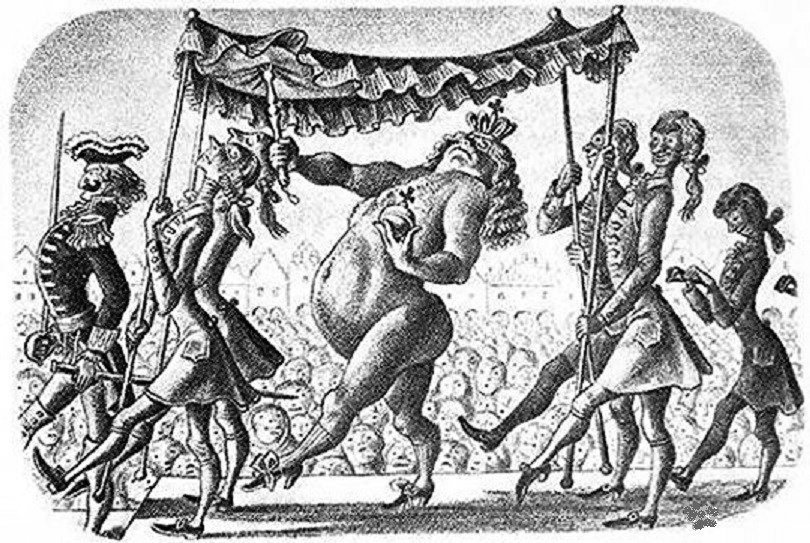
Fake News parallels obvious
To me, that describes most of the classics I’ve read. I don’t speak from lack of effort. In the last few years I’ve read plenty, being quite enthused especially by the Wordsworth Classics editions. A quick consultation of my reading log shows I’ve plowed through Ben Hur, The Master & Margarita, War And Peace [1], The Arabian Nights, A Tale Of Two Cities, The Story Of A Nobody, The Gambler, The Hunchback Of Notre Dame, Wuthering Heights, Ivanhoe, plus an ungodly amount of Dumas. I’ve also managed some other classics prior to that. Of those, only the Dumas books and Ivanhoe stood on their own merits as a good read [2]. The rest were all….. a slog.
Every single one of them was painfully over-written. It felt like the writers were poseurs attempting to impress their peers with the wordsmanship of their prose, rather than constructing good books. Almost to a man, the authors I tried were unable to plot effectively, create compelling believable characters, and – most saliently – unable to pace the book so that I wanted to keep reading it. They were not page-turners. I had no desire to see how the characters overcame the obstacles set [3]. I finished the books only because I felt like I should.
But surely you learned something about the human condition, Nick?
Not really. The classics are full of hokey philosophy, poor theology, and mad ramblings. Russian writers are just miserable nihilists wallowing in squalor. The Arabs are sick savages praising the dumbest, cruellest of kings as wise philanthropists. The French are…. well, French [4]. I think it’s not an overstatement to say the weighty issues and observations on the human condition contained within potboiler genre fiction are absolutely the equal- if not better observed- than those in the classics. I found myself stopping to consider ideas in Stephen Marlowe’s Chester Drum series or Donald Hamilton’s Matt Helm books more often than in Dostoevsky, Hugo, or Dickens.
Gamma cunts. I’m calling it, now.
But isn’t this all subjective, Nick? you cry, unwilling to call the emperor’s clothes what they are. Let’s consider that. There are objective criteria to good story writing [5]. For a start, if you’re writing drama you need intention plus obstacle. If you’re setting a scene, you need to turn exposition into ammunition. If something isn’t helping the story, or, worse, is noise obscuring the signal, then it should be excised. With that in mind, let’s consider a random chapter selection from Ben Hur.
“You are about to read one of the finest novels ever written,” the first lines of the Signet Classics introduction assured me. Well, let’s put that to the test shall we. Here it is unedited [6] for Chapter Two of Book Five. The hero is going to meet a young tart he fancies who is the daughter of a crippled trader.
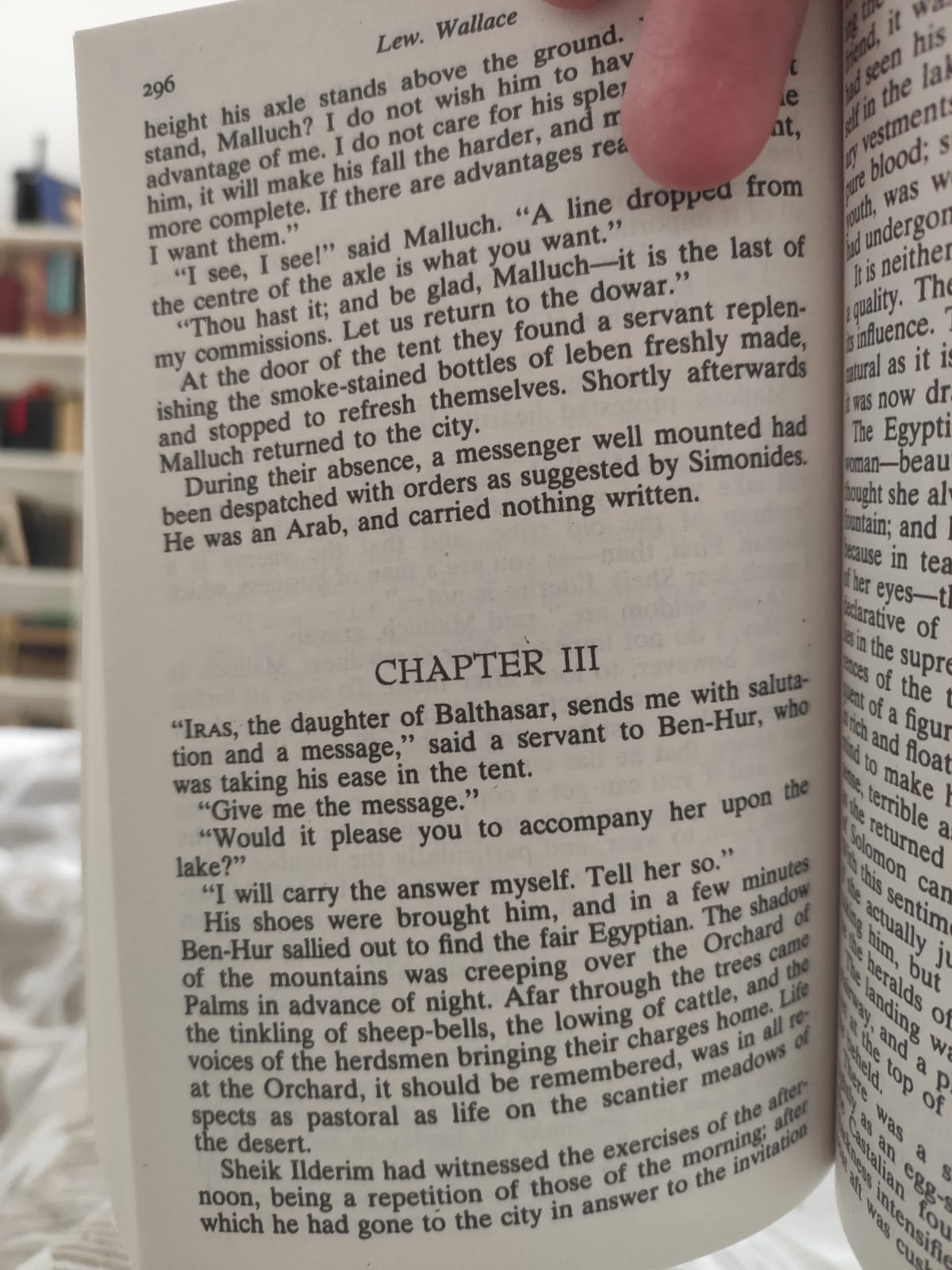
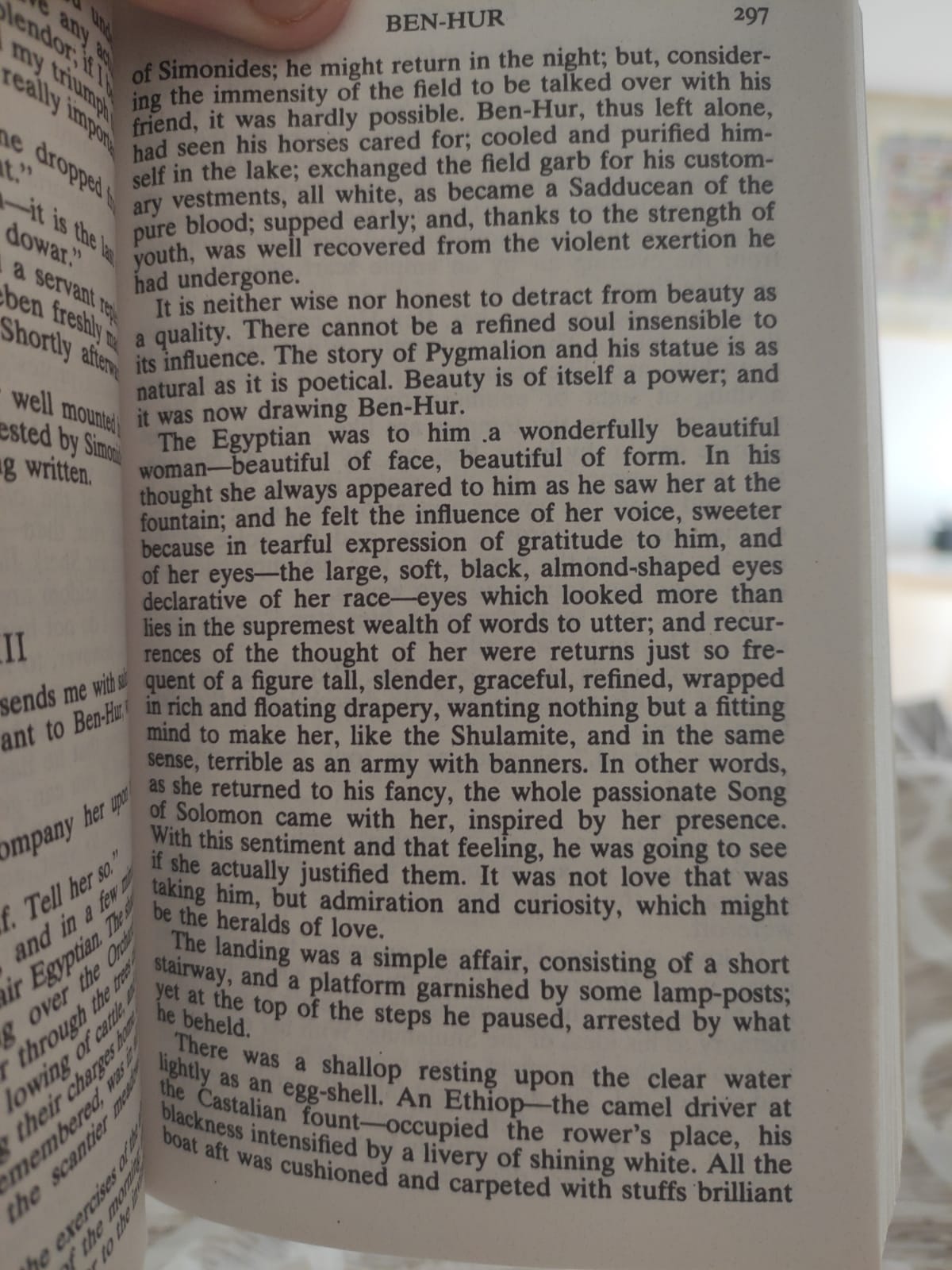
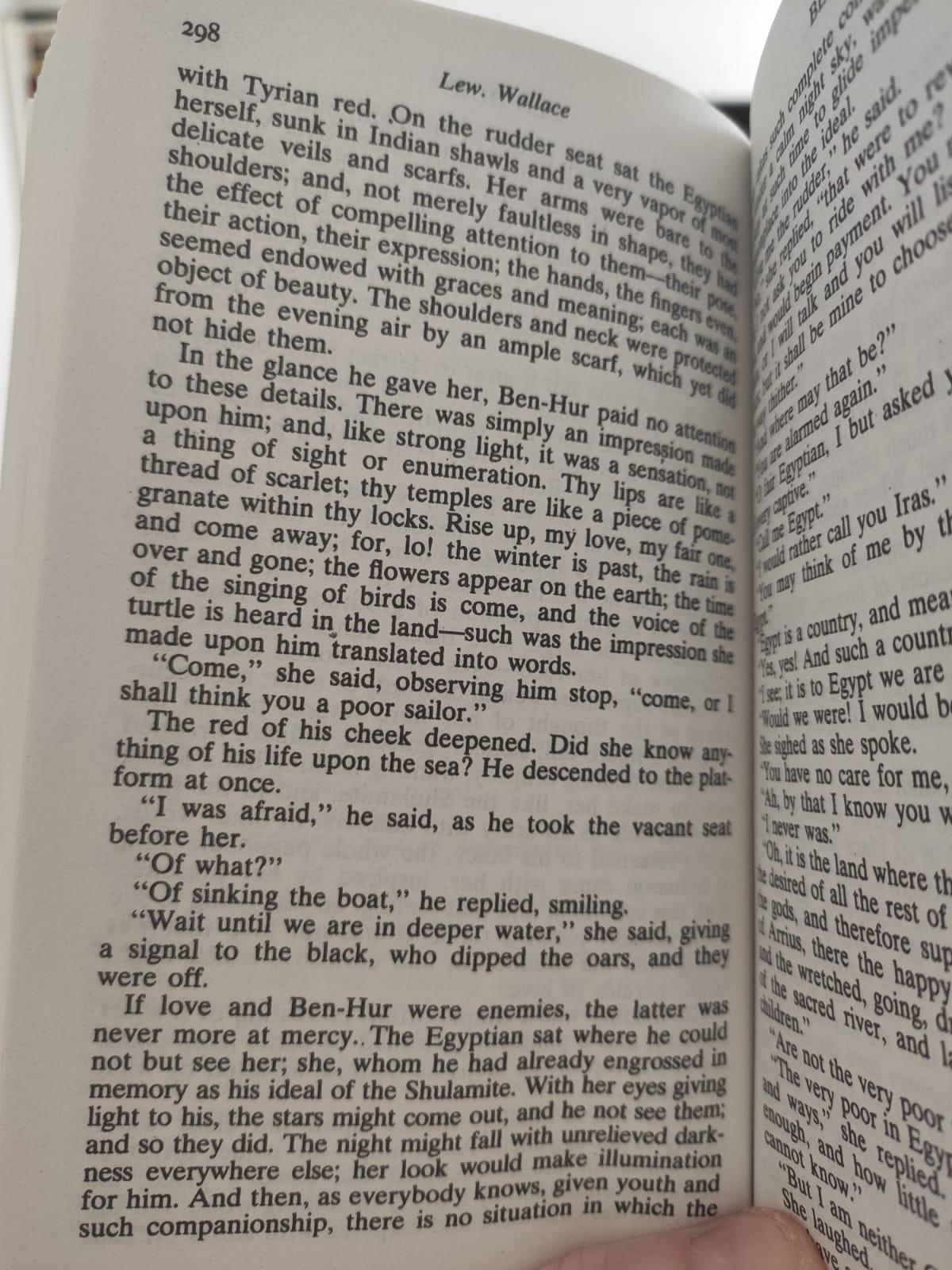

That was turgid, was it not? Now let’s consider the vastly-improved Krauser Edition:
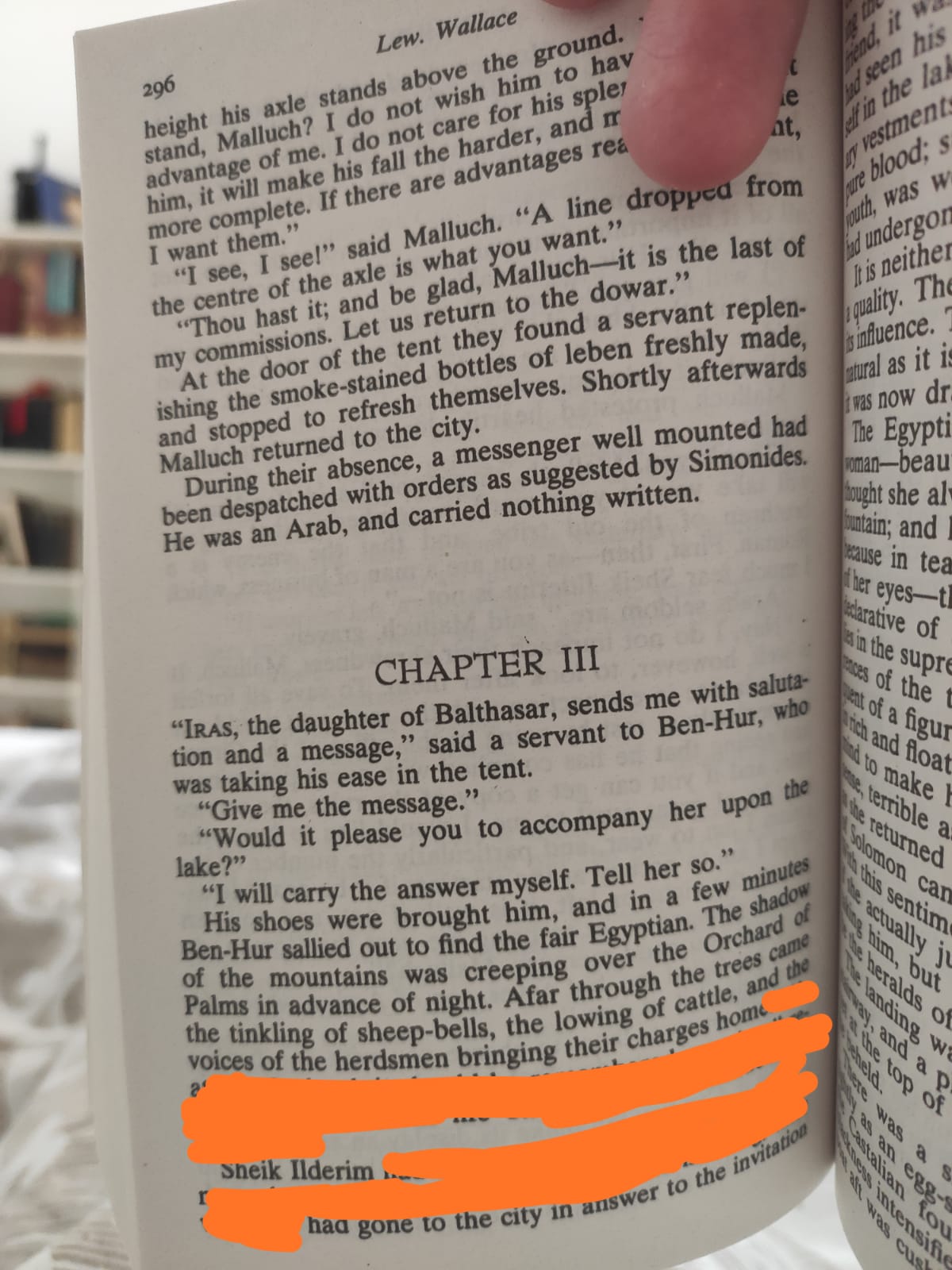
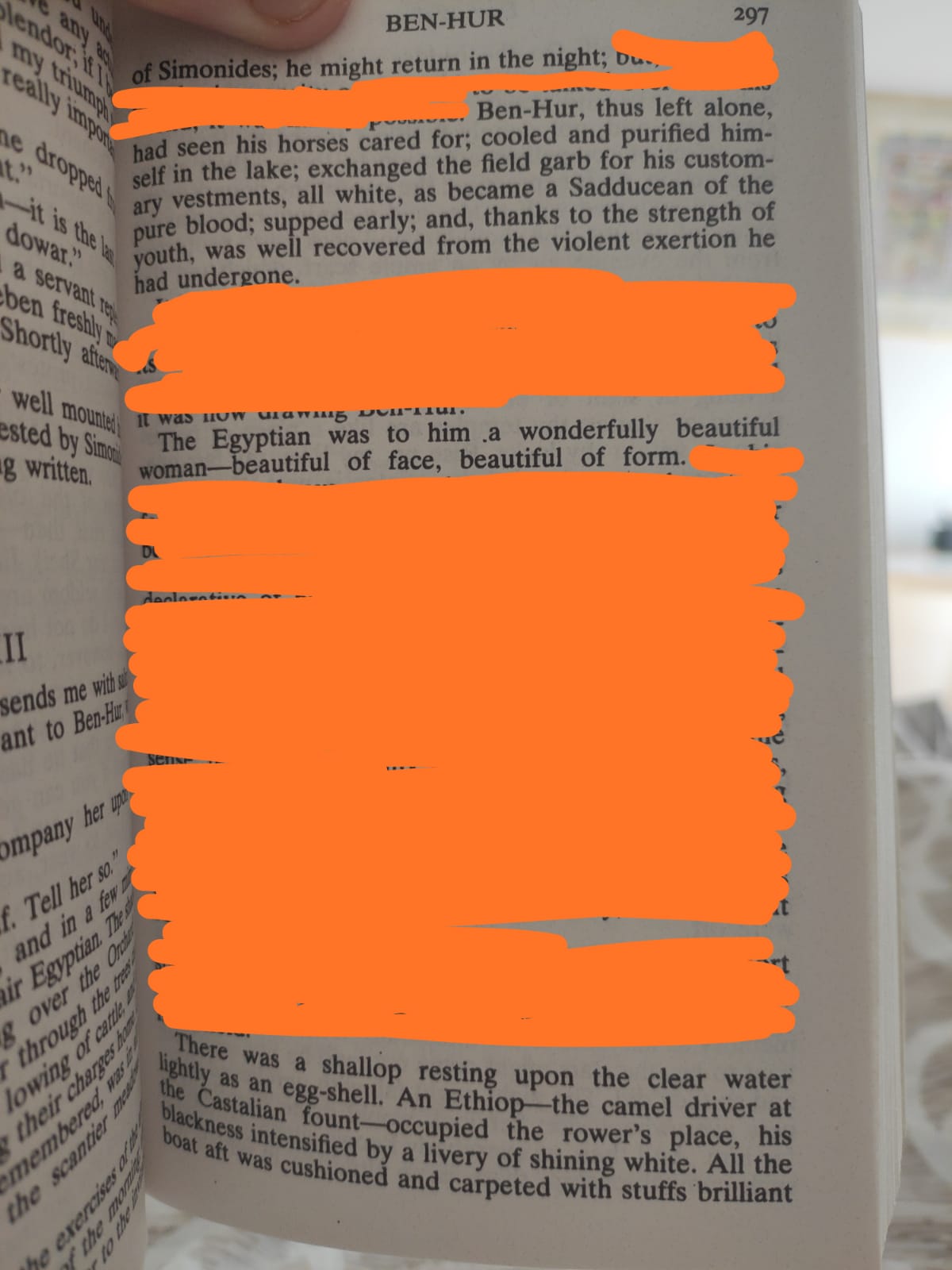
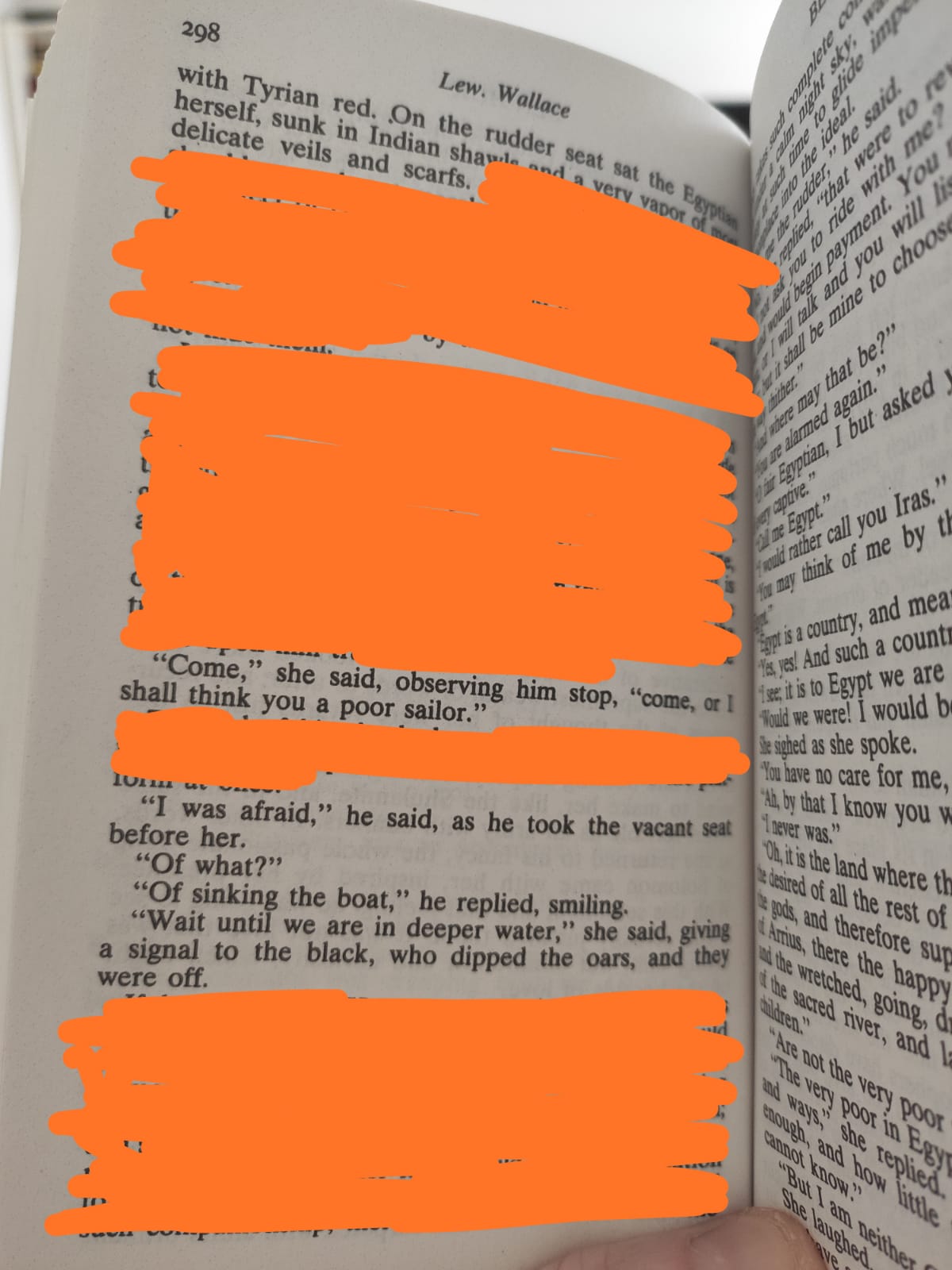
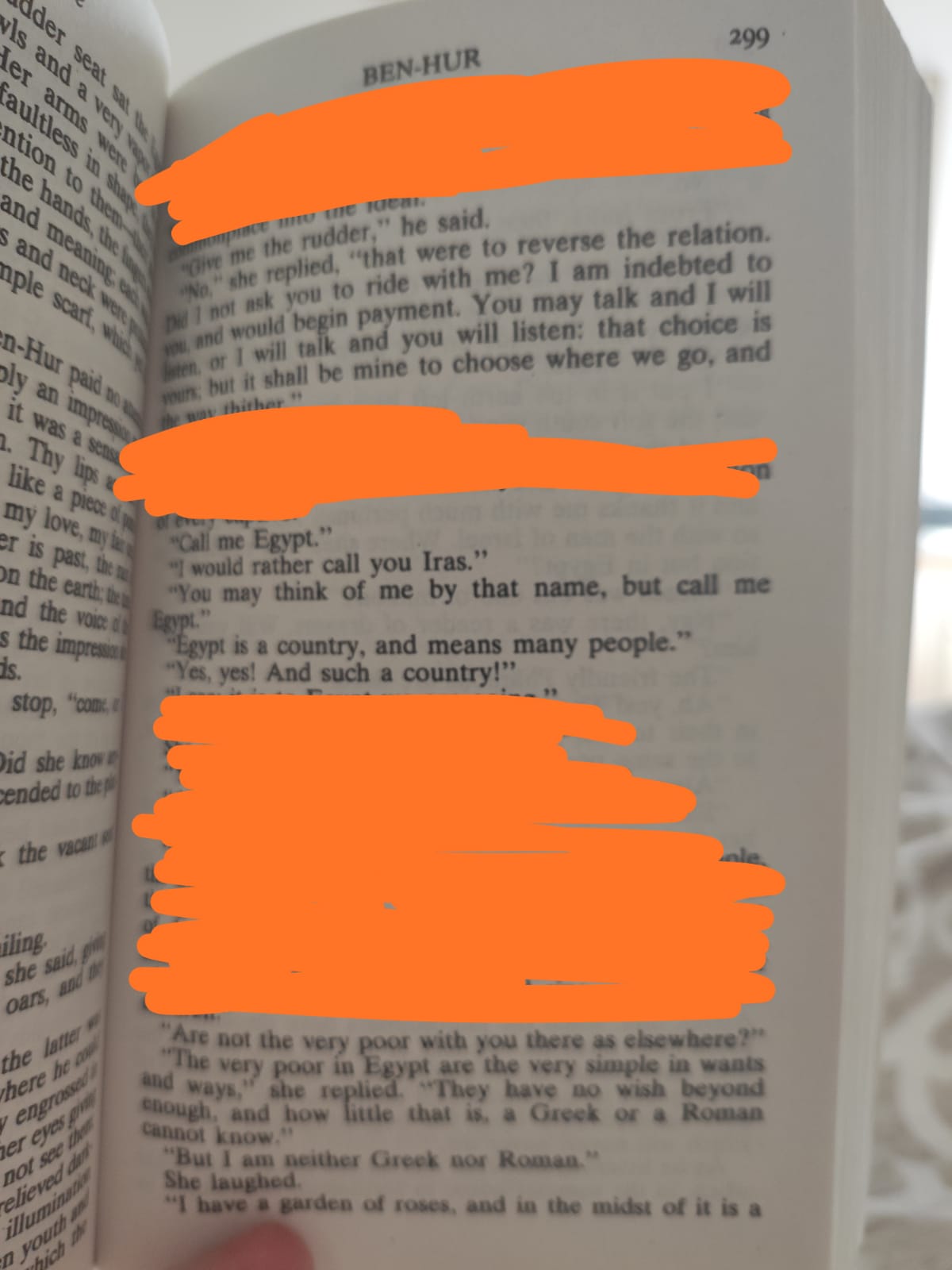
Notice how my deletions don’t remove a single line of value. Absolutely everything I removed was pointless blather that bogged down the plot and made the main character look like a right fucking faggot. All that immersion-breaking purple prose is gone, leaving only the stuff that actually happens. Mind you, what remains is still total shite. It’s an unsaveable book. There’s 150 pages of story wrapped up in 450 pages of fluff and, when you finally unpick it all, you find out that Lew Wallace has just cobbled together a revenge story of the same structure and themes as The Count Of Monte Cristo, except that Dumas beat him to the punch by thirty years and did it miles better. Dumas’ book is actually really good and races along as a proper page-turner.
Ben Hur – Finest novel my arse. It’s a bag of shite.
Let me tenuously connect this rant to the subject of daygame. When browsing Jimmy’s Twitter account I saw him laughing at a link to manosphere name Donovan Sharpe. The guy was bragging about how a “man on a mission” lives out his day. Take a look at the photo he posted.

Like a homeless dude giving investment advice
Lol.
He might want to change his testosterone provider because that shirtless photo just looks like a fat slob to me. And, frankly, I would not be bragging about shacking up with a fat lass. If photos like that of me surfaced on the internet, I’d get emergency injunctions to get them removed lest my reputation be forever tarnished [7]
The lesson of the Emperor’s New Clothes, as delivered by the impulsive kid at the end of the story, is to see things as they really are rather than how you’ve been carefully gas-lighted to think you should see them. Gas-lighting can only work when it appeals to our worst emotions, such as Pride in Andersen’s tale. When something (e.g. a classic) or somebody (e.g. a well-known PUA coach) is established as something to be taken seriously you should always first ask yourself: why? What has he / it done to deserve this position? When you’re new to an arena, say just getting into pick-up, it’s natural to not know up from down and to therefore look to the mob to tell you who to follow. That’s what all these poseurs with Twitter accounts, YouTube channels, and podcasts [8] are banking on. They are banking on your natural reticence to stand up, point at the emperor, and say “he’s not wearing any clothes.”
Pretend you never read any of that and just buy Daygame Mastery here, the best instructional textbook in the history of pick-up unless you are too stupid, incompetent or unfit for your position as a daygamer
[1] Gave up halfway through. It’s so boring.
[2] And, unless you specifically like Dumas’ style, only his most famous works are good. Once you drop down to his second-tier efforts, there’s a plunge in quality.
[3] Which is, quite literally, the essence of drama.
[4] Snobbish, cowardly fags obsessed with cheese and wine.
[5] Anyone banging on about “what is objectivity? everything is subjective” or setting a straw man comparison to peer-reviewed mathematical proofs can fuck off right now. We are not in a uni student bar.
[6] And, fuck me, if ever a book needed editing it is this one.
[7] More than it already is, that is to say.
[8] Rarely blogs, as charlatans tend not to be very literary unless they are Jewish.







 Krauser PUA