#44 – Adam Smith, D.D. Raphael BOOK REVIEW

March 25, 2018
krauserpua

I have a low opinion of modern universities, which is hardly a controversial one to hold nowadays. There was a time when only a small proportion of the UK population attended higher education, being those who were from lower orders and had graduated grammar school due to intelligence and hard work, or those from the middle and upper classes who benefited from a private-school-to-university escalator system.

Either way, the end result was universities taught students towards the top 20% of academic ability. Then the communists came along and decided it should be 50%. Anyone who knew the Bell Curve could predict what happened next.

Before long, you got this

retards 2

Retards, yesterday

The modern university is now a Satanic institution. I don’t mean that literally. However, a modern university functions only to completely corrupt the younger generation. It turns the men into faggots, the women into whores, and all of them into mindless Marxist drones. More recently, it’s also been turning blacks into uppity racist vandals. Thanks Obama!

University is now something to avoid. Back when I graduated it had three things to recommend it to students:

  1. Tuition was paid by the taxpayer, as was a small maintenance grant
  2. The educational content was still pro-civilisation. Even the Sociology department was only half Marxists.
  3. A university degree helped get a professional job.

In 2018 it does none of those things. You finish university with massive debt, no prospects, and a head full of dogshit. So what does a young man do if he wishes to replicate the old-style classical education that university once delivered? Well, that’s easy. The internet changed everything.

There are many quality YouTube channels out there so you could do a lot worse than to follow Stefan Molyneaux, or Voxiversity, or the multitude of channels uploading Jordan Peterson courses. There are channels devoted to Medieval history, or warfare, or philosophy, or….. well, everything really. The only problem is in filtering the wheat from the chaff but I’ve already given you a good start. Decide what you’d like to study then schedule a “study course” with an hour or two every evening and a set “reading list” of lectures.

It’s really easy [1]

Past masters

Easy, I tell you!

For as much as I like YouTube and the explosion of blogs, there’s no substitute for reading and writing. There is something about the long-form book that can cover topics in greater detail and penetrate your brain deeper than simple video can. This was made especially vivid to me when reading a Jordan Peterson essay on the flip-side to reading: writing. It’s a fantastic essay and I thoroughly recommend it.

For Peterson, writing is thinking.

He begins by explaining that most students don’t realise why they are assigned essays. They treat them instrumentally, as the thing they need to do to get a grade. Peterson stresses that though this is what they’ve devolved too, originally they were a tool for learning:

“The primary reason to write an essay is so that the writer can formulate and organise an informed, coherent and sophisticated set of ideas about something important.”

Writing is inseparable from thinking, and actions based on good thinking will lead to far less painful outcomes than those based on muddled thinking. He builds a strong case for the why, for the reasons to want to develop your own writing (and thus thinking) capabilities. He then patiently leads the reader (it’s intended for his undergraduate students) through a methodology for essay writing. For me, it’s his theoretical and psychological observations between the technical advice that is most illuminating [2]

I don’t want to write more on his essay. They are Peterson’s insights and I don’t want to claim them as my own. Read the essay (second red link). You won’t regret it. Then come back to this post.

Jordan Peterson Jew Fears Tidy Room

Done?

Now you see why I’m engaged in Project High Value Man [3] and it is accomplished through massive amounts of reading and then writing an essay on every single book. These reviews are essays. I’m taking a point or two from the book and then organising my thoughts around it. This encourages me to read each book actively, with a student’s mind rather than an idle chump looking for easy entertainment. Even the pulpiest of pulp fiction can inspire thought on the deeper issues in life.

My Time Life history project was designed to reproduce the historical education I never received at university. I asked myself what did I most want to learn and the answer was “all of world history”. So I thought it through and prioritised breadth of learning over depth, determining to fit all the pieces of world history into my mental map first and only then choose particular themes to dive deep into.

I’m currently ten books through the twenty, so the breadth phase hasn’t yet finished. It’s a long term project and I just happened to take advantage of winter hibernation to get off to a fast start.

This book, Adam Smith from the Past Masters series [4], could fit nicely into a History Of Ideas course, should you wish to reconstruct a classical university education on that topic. I’m quite amazed at how easy it is to be spoon fed such incredible scholarship. The Past Masters series from Oxford University Press is all available on Amazon and Ebay, starting at 1p for paperbacks and £5 on Kindle. As of 1989 when my copy was published, the series had SIXTY FOUR volumes.
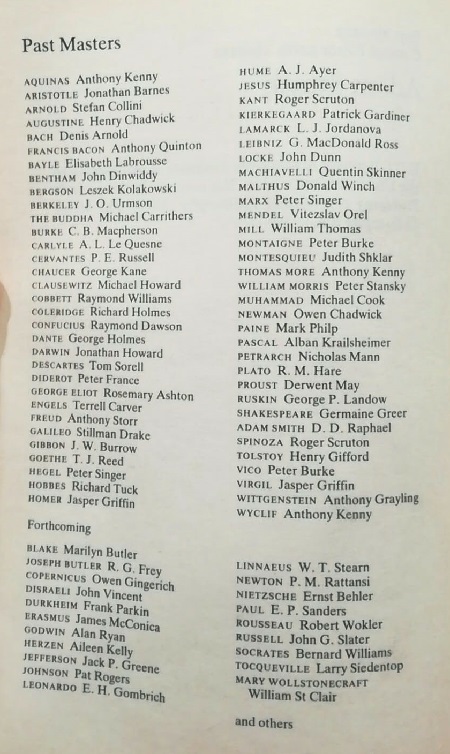
Past Masters list

Count ’em

They are short books, about 100 pages each. You could read one in a day, no problem. Imagine the potential. Read ONE Past Masters book per week, and write a short 1000-word essay on it when you’re done (if you blog it, I’ll link it). In one year you’ll have covered 52 of the world’s greatest minds [5]. Not just skimming them either, you’ll have really thought about them.

That’s no small thing, learning how 52 of the world’s greatest minds thought. And doing it in one year and costing only a couple of hundred pounds [6]

As I wrote in Daygame Infinite and elsewhere, I’d become a little disillusioned with Euro Jaunting. Though I was enjoying the day-to-day experience of chasing and clacking skirt, I was neglecting my more wolfish interests and slowly hollowing out. Thus when winter hibernation rolled around I decided to rededicate myself to my higher passions: literature, philosophy, history, and writing. I wanted to forestall my decline into a dunderheaded rabbit driving around chasing low-calibre skirt like its the only thing in life.

If you’d like to ignore everything I said about reading Past Masters and instead chase skirt like a dunderhead, then I’ve got just the book for you: Daygame Infinite. From April to October the dunderhead lifestyle is actually a whole load of fun.
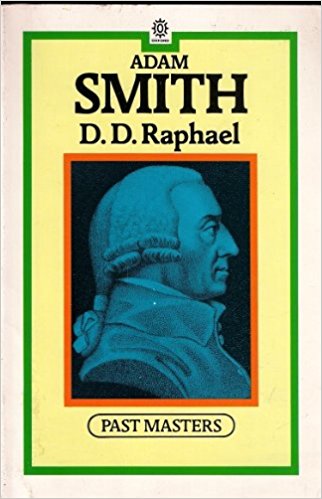
Adam Smith D D Raphael

and this is pretty good too

[1] Of course you won’t actually do it, because that requires thinking and commitment, the lack of which is why you haven’t done anything before and won’t ever change.
[2] I’m already a very good writer. And a modest one.
[3] A somewhat tongue-in-cheek title
[4] Which, I realise now, I’m not actually going to review properly because I’ve gone off on such a tangent already. It’s very good, though.
[5] And if they write asking permission to do a Krauser volume, I’ll grant it
[6] But of course you won’t do it. Because you don’t really want to be high value. You just want to talk about it in blog comments.


#43 – Wide World Adventures, August 1929, Adventure House BOOK REVIEW

March 25, 2018
krauserpua

WIDE-WORLD-ADVENTURES-29.08

Tommy Robinson visits Telford

Are you an adventurer?

Now, let’s be clear what it means to be an adventurer. Back in 1929 you might skip bail ahead of the bondsman in New York and sign onto a ship headed for the South Seas. At other times in history an adventurous spirit might trek his way through the Himalayas with just a guide, a goat, and a curved blade. Or perhaps he’d run security on a rubber plantation in the Ecuadoran jungle, horsewhip in hand and a hundred sweaty natives cursing his name.

Adventure is harder to find in 2018. We live pampered, sheltered lives, never far from Wi-Fi or video gaming. Are we condemned to experience our adventures vicariously through others? [1] Are we limited to storybooks, movies and games?

It was when reading the letters page at the back of this pulp magazine reprint that I considered what role the magazine had originally played, who its readers were, and why they read it. Wide World Adventures was evidently quite a new periodical and the editors were soliciting reader opinion on content and help in spreading word-of-mouth to friends and newsstand buyers [2]

In particular, this letter from one Fred H. Barner of 7 Valentine St, Roxbury, Mass. [3] caught my eye. I’ll reproduce it in full because it really jumped out at me:

Dear Editor,

Even though I have only read two or three copies of WIDE WORLD ADVENTURES, I can call it the best magazine I have ever read. You can bet that I won’t miss a single copy. The stories can’t be any better.

The article in “With Pick and Pan” by John A. Thompson, on opal mining, struck me just right. Have any of the readers ever tried opaling or any other kind of mining? Let’s hear from you.

“Adventurers All” is great [the name of the reader’s letters section, K.] Aren’t we all adventurers at heart even though we may be chained to a desk in some hot stuffy office? We can’t all roam around the world looking for adventure, but we can at least read about what someone else has done – someone who has been more lucky than most of us.

I would like to hear from some of you fellows who live in South American, Australia and Africa. Let’s hear from anybody, no matter where you live.

Aren’t we all adventurers at heart?

That letter could easily be a reader’s comment on a Player’s Journey blog or a post in a pick-up forum like RVF or Naughty Nomad. Not much has changed in 89 years. Young men still burn with the thirst for travel and adventure. In 1929 they’d walk to the newsstand and pick up the latest from a selection of their favourite pulp magazines. Nowadays we have daygame blogs and memoirs.

1938-newsstand-colorized

The newsstands have really gone downhill since then

It comes to the same thing: Adventurous men dreaming big and building a community to facilitate it, either those lucky enough to chase down experiences, or those slaving in an office and patiently plotting for a future where they too will be free to roam. I’m so used to the lifestyle that I’ve come to take it for granted. I’d like to (posthumously) thank one Fred H. Barner of 7 Valentine St, Roxbury, Mass. for reminding me just what a great time it is to be alive.

The world is still full of adventure. It’s really not hard to find, be it a long weekend to spam approach Galleria mall and Florianska street in Krakow, or to live by a beach in Thailand to swim, surf, train BJJ, and chase dirty tourist girls [4]

Oh, and what about this issue of Wide World Adventures? Is it any good? you ask.

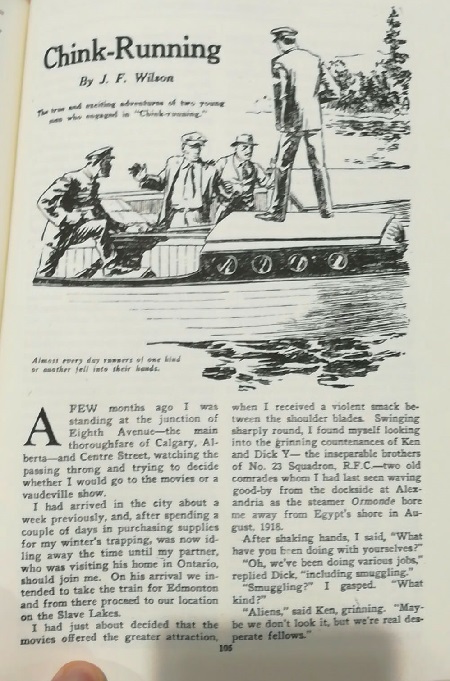
Yes it is. I thoroughly enjoyed it. It’s towards the upper end of writing quality for the pulps and every one of its seven stories was fun to read. The Cross And Rubies is a novella about two yahoos who take a boat to Burma on a hot tip for buried treasure only to run into local bandits and an odd white secret agent in their midst. The Coffin Ship is an undercover investigation into Chinese bandits waylaying their own countrymen on the shuttle boat to Indonesian copper mines. Three Graves On The Beach is like a wild western revenge tale as a grim man-hunter pursues the bandit troupe who murdered his friend – but set in the South Seas. That was my favourite. Spinifex and Gold is an Australian Outback story of betrayal. The Jest Of The Jade Joss is a far east tale of confronting a Triad warlord aboard his merchant ship. African Outlaws retells the legend of a hardy adventurer in the Transvaal as he leaves mayhem behind him. Lastly is the hilariously-named Chink-Running about coyotes trying to outwit ICE on the Canadian border, smuggling illegal immigrants into the USA.

Like I said, the more things change, the more they remain the same.

WIDE-WORLD-ADVENTURES-chink running

I find it hilarious, and that’s all there is to it

If you’d like to live your adventure vicariously, be sure to grab my memoir series. If you’d rather live it directly, get a hold of Daygame Infinite.

[1] I put rather a high price on my own hide, so you won’t see me picking up a rifle to fight ISIS in the Iraqi desert or infiltrate Mexican drug cartels for the DEA. I’m quite happy experiencing that vicariously, thank you very much.
[2] I’m sure this approach is more commercially successful than my own rather high-handed attitude towards my own readers. Sorry, the fact remains that I’m still a bit of a cunt.
[3] I guess I just doxxed him, 89 years after he wrote the letter.
[4] One reader knows exactly who I’m talking about.

#42 – The Cocktail Waitress, James M. Cain BOOK REVIEW

March 25, 2018
krauserpua

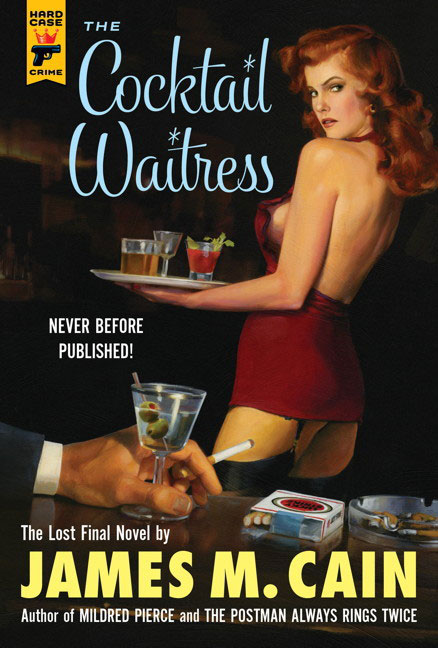
The Cocktail Waitress

If you’ve heard the phrase “the postman always rings twice”, that’s because it’s the name of James M. Cain’s debut novel which was subsequently made into a movie. I wish someone would tell my postman to ring twice, because that work-shy public-sector cunt doesn’t hang around at all when an Amazon delivery needs signing for. He rings once, then I have to hurry out of the shower dripping wet or quickly crimp out the last turd and race to the door trying as best as I can to hold my arse cheeks apart so the fudge doesn’t spread before I can get back on the throne.

But I digress.

Cain is widely considered to be one of the three greats of hard-boiled detective fiction, the other two being Dashiel Hammett and Raymond Chandler, both of whom I’m read extensively. This is my first Cain book. Chandler didn’t like him at all, saying “He is every kind of writer I detest… a Proust in greasy overalls, a dirty little boy with a piece of chalk and a board fence and nobody looking.” You could say I was intrigued.

LA Confidential 6

If new to the genre, try LA Confidential

Hard-boiled fiction dragged murder out of upper-class drawing rooms [1] and into the alleyway where it belongs. It’s characterised by tawdry motels, cheap tarts, alcoholic men, and every character has an angle to screw every other. I learned a lot about humanity from my sojourns into hard-boiled, because I’d always preferred a view of the world closer to Sir Nigel and his gallant knights. For any men who struggle to shed their naive view of the world, I recommend an immersion course in crime fiction. Pick any five Hard Case Crime novels and see how your mental map changes to incorporate the new worldview.

I spoke yesterday about how some writers present mundane everyday situations but fill them with nuance, deception, and sinister implication. It’s good training for a wannabe player, to practice tuning your mind into the hidden wavelengths of human interaction, like seeing the world through infrared googles or in x-ray. You see levels of scheming and manoeuvring otherwise invisible [2].

X Ray Specs

“IOIs!! I see them now!”

For example yesterday evening I had a Skype consultation with a daygame client. We were reviewing the status of his leads. He’d describe the set (sometimes with audio), send me screencaps of the messages, and describe the dates. We’d then try to figure out where he was at and how to proceed. Each time, a key stage in the analysis was this:

Put yourself into the girl’s position and try to understand her objectives and motivations.

It sounds obvious but many men have a personality that defaults to considering only their own actions, or of taking her actions at face value. If you are such a man, consider your homework assignment to read some hardboiled fiction. Get used to seeing angles. It comes naturally to rabbits, but not to wolves.

This preamble is particularly relevant to The Cocktail Waitress. It’s written from the first person perspective of a gold-digging slag who is recording her side of the story to clear her name after several murder accusations. Cain does a very convincing job of simulating the sophistry and self-delusion of a Machiavellian woman [3]

The principal device here is of the unreliable narrator. The reader is entirely dependent upon Joan Medford’s (the waitress) account as she introduces only those facts she wants us to see. Cain deftly hints by omission at those she tries to conceal. Medford wants us to believe she is buffeted by forces beyond her control and the victim of terrible luck. She is shocked – shocked I tell you – by the string of wild coincidences that seem so suspicious until you can just listen to her side of the story and how they aren’t anywhere near as bad as they first appear.

The story opens at the funeral of her husband. He was a heavy drinker and abuser – though we only have her word for that. She mentions her young boy Tad’s damaged shoulder but there are later hints that it might not have been her husband Ron who hit him. Joan and Ron had a shotgun marriage when she fell pregnant at 17 and was cut off by her well-to-do parents. One night he comes home steaming in his friend’s borrowed car and she throws him out. He drives into a culvert wall at 70mph and dies.

Unemployed, widowed and broke, Joan must temporarily entrust her three year old son with her sister-in-law Ethel, who hates her. Ethel is the main antagonist in the book, a jealous woman who’s recent hysterectomy has rendered her barren, so she is scheming to take Joan’s son for her own. But remember this is written by an unreliable narrator. Ethel doesn’t ever do anything bad, but rather Joan ascribes nefarious motives to her. It’s a whispering campaign. Joan is attempting to demonise Ethel to her readership, accusing her of the very scheming and whispering campaigns that she herself is engaging in.

It’s the classic Alinskyite tactic of the Left. Accuse others of what you yourself are doing [4]

10-most-unbelievable-gold-digger-1

Very much in love

One of the two cops assigned to Ron’s death is highly suspicious of Joan, thinking she may have laced his beer with the sedative Thalidomide. Joan’s narrative treats him as young and impulsive, rather vindictive, and writes that his older partner assures her he’s just hot-headed and there’s nothing suspicious. As a narrative device it’s common – disagreeing cops in a case – but in The Cocktail Waitress it has an extra layer of meaning: Joan is using an appeal to the older cop’s authority to discredit the judgement of the younger cop who is against her. It’s the unreliable narrator advice again. Remember, this book is written as if she’s justifying herself to the world (to avoid punishment).

She takes an emergency job at a cocktail bar where she wears a revealing costume and scores big tips. She assures us she really didn’t want such demeaning work but she simply had no choice: it was to secure her son’s future. Almost immediately she’s receiving the attentions of several men and again we are left as readers to wonder if this is an unfortunate coincidence to befall a bereaved widow who just wants to make an honest dollar, or if she’s actively harvesting dopey men and hiding that from us.

Two men fall hard. A young attractive hot-head and a battered old rich simp. The rest of the book has her make the familiar dual-mating strategy decisions: sex with the attractive guy, bilk the old guy out of his life savings. Being a crime story, she gets herself into all kinds of trouble and some people die.

The first crime doesn’t actually happen until halfway through the story and until then I felt like the book dragged. The book is clever, but it’s slower than I’d like. When it picks up in the second half you realise why it’s published by Hard Case Crime and not Harlequin. Still, I prefer my sex and violence to come thick and fast from the beginning, just like my real life.

Cain keeps turning the screw as he entices us to see through Joan Medford’s bullshit and begin treating all of her words as syrupy lies. The book becomes more interesting in trying to reason out what Joan is hiding from us, more than what she tells us. Because the book is, within the conceit of its narrative place, tied to facts. She’s writing for readers who’ve read the newspapers, read the trial reports, and some of whom work for the police in the district where the murders happened. She must persuade those readers, so she can’t tell any lie that can be disproved by a third party or the credibility of her elaborate self-justification would fall apart.

That forces her to admit unsavoury details, then scramble to explain them away. You get the feeling any conversation said one-to-one in private is recounted as a tissue of lies but things said publicly are truthfully reported (if spun to her favour). It really is very cleverly written.

Unfortunately the greatest strength of The Cocktail Waitress is also it’s undoing. It’s 254 pages of a silly tart justifying her own bad behaviour and spinning stories to manipulate you into white knighting her, or at least taking her side. Every player who has ever dated a silly tart knows how gruelling it is to endure such nonsensical self-serving prattle. At least on a date you know it’s over in a few hours and you might fuck her. This book took me three days to finish and there was no sex at the end of it.

If you want a fast-moving, gritty crime story then skip this. If you’d like to conduct a psychological experiment of putting yourself into the position of a dirty gold-digger and seeing how she’d manipulate her targets, give this a try. Next time you’re on Seeking Arrangement it might save your life.

Dopey cunt with golddigger

She’s costing him $1m a month according to Hollywood gossip

If you’d like to dodge gold-diggers entirely and just bang birds who fancy you, consider Daygame Infinite. It is one of the “big three” of Game textbooks, alongside Daygame Mastery and something else that some magician in a furry hat wrote.

[1] That is to say, Agatha Christie locked room puzzles
[2] No, I’m not talking about the Jews. At least not today.
[3] Otherwise known as “a woman”.
[4] Russian collusion, sexual harassment, and using your political position to enrich yourself being three you might have heard the Democrats accuse Trump of. Oh, and yes, Alinsky was a Jew.

#41 – The Glass Cage, Colin Wilson BOOK REVIEW

March 24, 2018
krauserpua

It’s very rare I’ll read a book that someone thrusts into my hands uninvited. I like to wait until my subconscious prompts me to explore a particular genre or writer. Sometimes I’ll have my eye on a book for several years until I finally feel I sudden urge to read it. Perhaps that’s weird. I don’t know. I’m stubborn and I always try to follow my subconscious. Little good comes from trying to overrule your instincts.

So when my brother thrust two smelly paperbacks into my hands last week, I muttered “thanks” and threw them onto the pile. To my surprise, I found myself picking up and reading The Witching Night cover-to-cover that evening, and then this book the evening after. I think I just wanted something outside my usual genres.

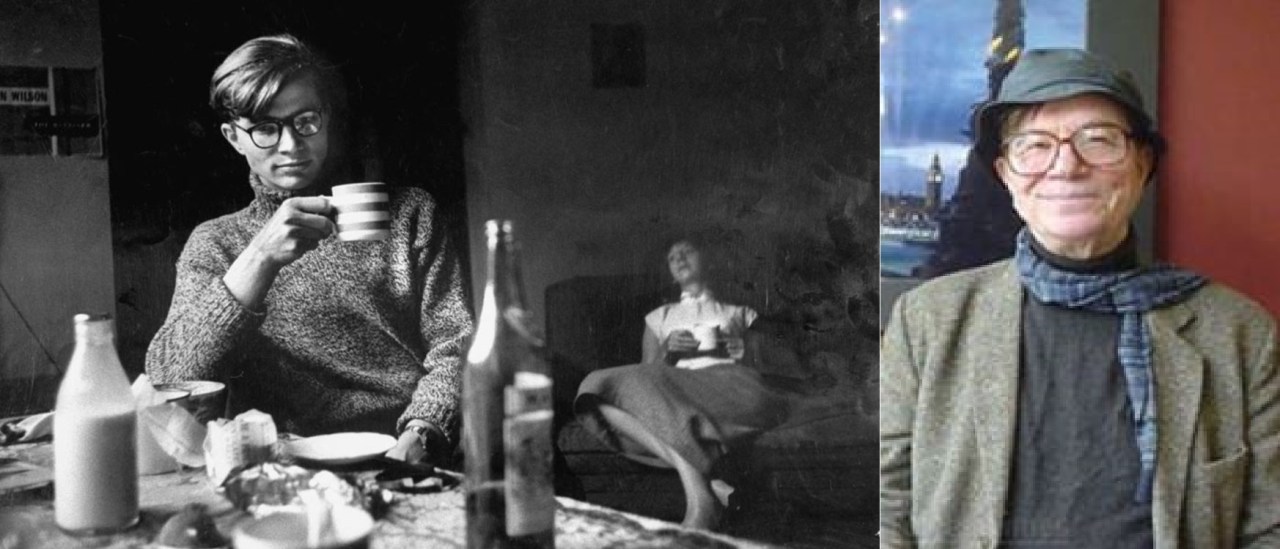
So, Colin Wilson. Where to start? How about with a photo.

Wilson 2

I really don’t know what to make of this guy but the one thing I’m certain of is he’s interesting. Look carefully at that photo and make educated guesses about his personality type. I’d say the young Wilson could well be sigma. He’s good looking, bright with energy, and giving a believable affectation of a beatnik artist. Or is he just a gamma who’s serotonin is off-the-charts because he’s actually hoodwinked society into believing his bullshit [1]. George Orwell famously wrote that every man at fifty has the face he deserves. The older Wilson looks like a fruity old pedophile.

So, which is it? Or neither?

Wilson came from humble [2] beginnings and dedicated himself to writing at the age of sixteen, churning out short stories and political essays. At just twenty-five he published The Outsider and made a huge splash in literary circles. Wilson describes the genesis of the book in 1954 as follows:

“It struck me that I was in the position of so many of my favourite characters in fiction: Dostoevsky’s Raskolnikov, Rilke’s Malte Laurids Brigge, the young writer in Hamsun’s Hunger: alone in my room, feeling totally cut off from the rest of society. It was not a position I relished…Yet an inner compulsion had forced me into this position of isolation. I began writing about it in my journal, trying to pin it down. And then, quite suddenly, I saw that I had the makings of a book. I turned to the back of my journal and wrote at the head of the page: ‘Notes for a book The Outsider in Literature’…”

The book, viewed through a modern red-pill PUA lens [3], is an exploration of the Sigma Male. Wilson is attempting to trace the socio-sexual archetype through famous literature and then apply it to his own experiences. Vox Day, you see, was perceptive when he explained the temptation of every reader of his socio-sexual hierarchy attempts to redefine himself into a higher category [4]. It would appear Wilson was a talented gamma trying to redefine himself as sigma, though he lacked the theoretical structure to do so.

For a 25-year old to do that, and so successfully that the literati bought the bridge he was selling, is testament to just how smart this young lad was. He was the toast of London and the serotonin flowed. Doubtless, he banged a few hotties off the back of it.

The Glass Cage

As I began reading The Glass Cage, I was at first very interested in Wilson’s prose. It was clean, thoughtful, and drew me in. I felt like I was reading a very intelligent man’s work. He was only 35 when he wrote this book too. It’s nominally a detective story, about a scholar of William Blake who is challenged by a friend to try to find a serial killer currently tearing up the lower orders of London. However, I grew increasingly disturbed by the philosophical undercurrents.

Part One of the book is all set in the Lake District near Keswick. The protagonist, Damon Reade, is a reclusive mid-thirties scholar living in a cottage five miles from town, next door to a small family of shifty gypsies. A local policeman comes to visit because a London serial killer has been chalking quotations from William Blake onto the walls where he dumped his victims. As the UK’s preeminent Blake scholar, the police want to know if there’s any pattern or clue within the killer’s choice of quotations. Or if he’s received any crank letters which may be from the killer.

Reade resents the intrusion of the outside world, being an extremely introverted and bookish man. He later walks into the village to see his sole friend, a fat ageing seller of antiquarian books. The friend has recently become legal guardian of a fifteen year old niece, following the death of her parents. Reade has known this girl since she was ten.

What follows is creepy as fuck.

For several chapters this fifteen year old niece is flirting with and attempting to seduce Reade. Bear in mind Reade is very obviously a Mary Sue character for Wilson himself. The uncle is a panty fetishist who in one scene tells his niece to lift her skirts to show Reade the frilly new panties he’d bought her. The girl thinks it’s slightly odd, but no big deal. By the end of Part One, this girl has spent the night in Reade’s bed, kissed, but not yet fucked. It also turns out Reade is a virgin.

Florence Pugh and Maisie Williams in 'The Falling'

Gagging for it. Over-35s only, please

As if the subject matter wasn’t creepy enough, the scenes were written for titillation and Wilson seems to be normalising the situation:

“But you don’t mind, do you? I wouldn’t try to lie to you. Do you want to marry me?”
“You’re too young to marry.”
“I know. And you’re twenty years my senior. Will you marry me, please? Am I being terrible?”
He propped himself up and looked down at her. Her eyes were open and candid. He said quietly, “Yes, I’ll marry you if you really want me to.”
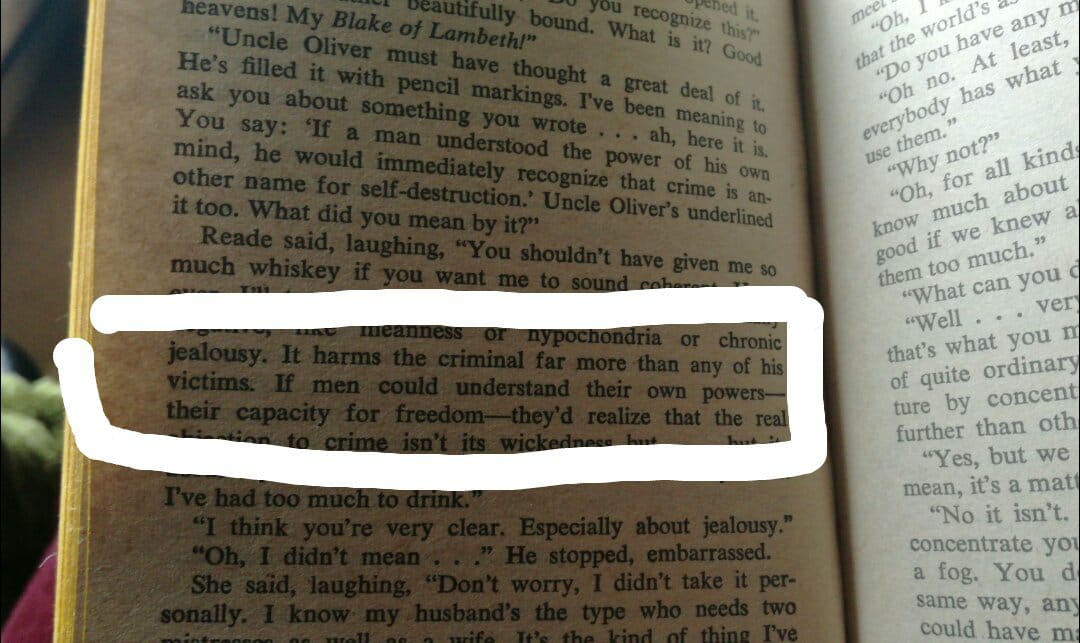
She smiled, and for a moment he wondered if she was going to cry; her eyes took on a strange, clouded expression. She said, “And you’ll tell Uncle Hugh tomorrow?” [page 44]

The uncle gives his consent. This isn’t the serial killer being introduced. This is the hero. I felt like I should put the book down and wash my hands. Perhaps this is a good time to quote the real-time chat I had with my brother on Facebook:

Me: “I’m really not sure I want to read this. Without spoiling the story, tell me if the hero is actually a pedo. This entire chapter has been two creepy old men grooming a girl, and her in love with the hero since she’s ten, and now trying to seduce him at 15. Basically, pedo apologetics that kids want it.”

I sent him another photo of a page.

Me: “Jesus. Is this intentionally weird in a clever way to bring out characterisation, or is Wilson really such an oddball?”
Him: “He’s definitely an oddball. But a literary type. He puts gays in quite a bit but always because it’s the 1960s and every club or pub sounds more seedy if there’s some gays in. In most books I’m sure the hero has to run away from unwanted fag attention.”
Me: “I’m 80 pages in. Pretty good, just odd views about women.”
Him: [quoting The Guardian feature on Wilson] “But now, at 73, he has written an autobiography. Dreaming To Some Purpose, of considerable charm. It is jaw-droppingly – one might say cringe-makingly – honest and often unintentionally hilarious. I particularly enjoyed his account of how, as a panty-fetishist and visiting lecturer at an American university, he contrived to look up his students’ skirts with the aid of a glass-bottomed mug”
Me: “He’s certainly a bit fruity. I checked his photos. The Glass Cage is full of panty fetishism.”
Him: “He was basically you before you were born. A self-declared genius who was mostly self taught and wrote on all manner of subjects.”

A natural gamma with some sigma traits, then.

Me: “Sounds a lot like a fruity man’s view of how men and women interact”
Him: “He was actually married more than once. With kids from both marriages.”
Me: “I read the wiki. But I was thinking, what kind of man is irresistible to pretty barely-legal girls? And then I realised it’s obvious: a 35-year old reclusive scholar of a dead poet, who lives in the forest surrounded by gypsy criminals, is a virgin, and had one fat old mate. I’ve seen it on Euro Jaunts. Those guys clean up!”
Him: “If he wasn’t dead you could sell him one of your books.”

By the time I reached Part Two, where Reade takes a train to London and attempts to solve the murders, I felt I had a good read on Wilson’s personality type. The rest of the book bore it out. On his first night in London, a black 17yr old cleaner in his apartment block seduces him and he fucks her, but feels cheapened by the experience. She’s an actual whore, but jumps him for free. Two days later she jumps another character. The old friend he’s living with, a famous composer named Butler, is constantly leching and on the first night a young model comes round to fuck him, then later he fucks some other women.

Millie

Also gagging for it. Not fussy.

It’s the most unlikely ideas of male-female relations you’re ever likely to see. Men are just minding their own business and hot young women leap onto their dicks. It’s the same way sex happens in modern science-fiction and fantasy. Pure gamma wish fulfilment.

I read the book cover-to-cover in just over one day because it’s actually quite compelling and the prose style is so smooth that the pages just keep turning even when the plot sags. The whole time I was more interested in solving the puzzle of Wilson’s mind than I was the puzzle of who the murderer is.

Was this book a legitmate statement of Wilson’s own world-view, or was he convincingly inhabiting the minds of characters who he deliberately made into degenerate oddballs in order to titillate his literati readership who liked to slum it with the commoners? Did he really believe women throw themselves around like that in squalid Portobello Road apartments, or was he mocking the upper class literati who thought that’s what they did?

I don’t have the answer, as this is the only Wilson book I’ve read.

29511057_10209345211142006_6860300641416249344_o

The murderer is the real victim of his own murders

Towards the end of the book, Reade identifies the killer but tries to get him off with the murders because “I find it difficult to believe a reader of Blake can be fully irredeemable”. His mate Butler is aghast, that he would sympathise with the man who has brutally murdered and dismembered nine innocent victims just because they like the same poet.

Again, I can’t tell if Wilson is trying to outrage us with such a sanctimonious protagonist or if Wilson himself is really so evil as to think that’s a defensible position. The whole time I’m reading, I suspect Wilson is a prankster. He’s a clever man deliberately messing with the emotions of his readers.

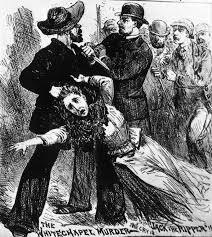
Jack the ripper

“But I like Blake!”

So, it’s a fascinating book. I can’t tell is Wilson is trolling the literati scum who invited him to wine parties on the back of The Outsider and then ostracised him when they realised he was working class. Or, is he just a fruity degenerate with the gamma male’s love of pederasty?

If you’d like a book on seducing women half your age which totally isn’t at all creepy you might like Daygame Infinite. It has pictures and everything.

[1] Every gamma dreams of becoming the Recognised King rather than the Secret King. That will lead, to believe Jordan Peterson, his brain to reward him with serotonin for rising up the dominance hierarchy and thus he’ll come to adopt the behaviours and vibe of the sigma rather than the gamma.
[2] Or should that be, ‘umble?
[3] I’m sure the literary world is really crying out for such an interpretation.
[4] Rollo Tomassi has also often noted how many of his readers attempt to redefine alpha to fit themselves perfectly.

#40 – The Witching Night, C.S. Cody BOOK REVIEW

March 24, 2018
krauserpua

In the USA of 1952, when this horror novel was written, it was actually illegal to write Satanic-themed fiction unless you used a pseudonym beginning with two initials. Thus we had writers like H.P. Lovecraft, C.A. Smith, A.A. Milne and of course this book’s author C.S. Cody.

I just made that up [1]

I have, however, been reading an awful lot of Howard Phillips Lovecraft recently. You may have read about him in The Guardian or Huffington Post a few years ago because the fat pedophiles of the World Fantasy Convention [2] were up in arms that their award trophy of all these years was a bust of HPL and they’d just realised that – shock, horror – he was racist [3]

racist

RACIST I tell you!

HPL is the guy who invented his own sub-genre, “creeping horror”. He was writing in the 1920s when the established sub-genres had been defined by Bram Stoker’s Dracula (the charismatic predatory vampire of high social class) and Mary Shelley’s Frankenstein (the mad scientist and tortured monster). HPL drew his influence more from Edgar Allan Poe, using the madness and mania of the human mind and allying it with the idea of secret societies and the hidden slumbering dark gods they were trying to awaken. His key contribution was The Call of Cthulhu in which HPL allied all that with “cosmic horror” and thus created an enduring Mythos.

Bloodborne, arguable the greatest action game of the PS4 generation, owes it’s entire lore to the Cthulhu Mythos.

bloodborne final boss

Cosmic horror, yesterday. I wasn’t scared. I killed the fuck out of it.

My brother is well into HPL so he’s always banging on at me to read more. I bought a yuuuge compendium edition of HPL short stories at the market for a fiver and left it on my shelf for two years. After writing 39 book reviews in the first two months of this year I thought to myself, “I think I’ll read something very long, that I shan’t finish, thus relieving myself of the pressure to review the bloody thing”. My eyes wandered to the shelf and there it was, almost 1,000 pages of small-font HPL work. I opened it.

I shall continue this review by adopting the HPL literary style……

Extract from the diary of N.N. Krauser, author and scholar, Gateshead, UK.

My hand trembles as I put pen to paper. The wind howls outside, an unspeakable wail carried across the dark skies like a whisper of ghosts in a forgotten cemetery. My time, I fear, is up as the clinging tendrils of madness entwine my scorched brain. I have seen things that cannot be unseen. I have read words, lost words in dusty tomes hidden in cobwebbed vaults of forbidden Sumerian archives, words that no man was ever meant to read. Who is that? Someone is coming. They are coming? Have they found me already? I know they suspect I read that lost chapter of Milton’s Arcane Rituals Of Haitian Voodoo.

Hahaha! I laugh manically, fearfully. I must set myself to outline my narrative, fool though I am to believe any other soul may read it. I am damned. Yet, I must struggle to organise my thoughts, make some sense of the unfathomable cosmic horror that will inevitably overtake me. Alas! So, with trembling hand I attempt to relay that strange twisted turn of events that perhaps no mortal man would dare believe.

It began, I see now, on a cool spring afternoon when I was due to visit my great-uncle Wilfred, the famous botanist who had recently returned from a scientific expedition to Uruguay. The Jarrow Amateur Botanist Society were hosting a speech where he’d deliver remarks on his findings in those dark jungles never before penetrated by the bright illumination of Science.

That’s all I can manage.

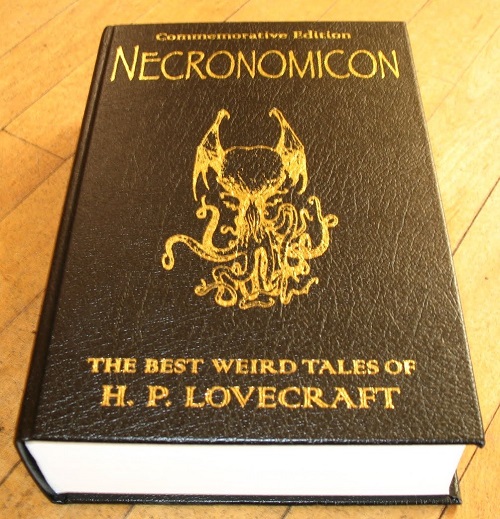
Perhaps you already see the big problem with HPL. Though blessed with a feverish and fertile imagination, HPL couldn’t write to save his life. His prose is downright awful. I don’t say this from a mere cursory glance. This month I read 19 of his short stories, coming to 250 pages, or a quarter of the compendium edition. That’s equivalent to over 500 pages of a normally-set paperback. I have a good idea of his style.

necronomicon-e1382286111645

Then how about YOU try reading the fucking thing?

And it’s awful. Sentences stagger along interminably with ever increasing complexity of sub-clauses. He never uses a simple word when his thesaurus suggests an obtuse alternative. Every sight seen is indescribable, every sound unspeakable, every occurrence unfathomable, and every source of knowledge forbidden. Worst of all, nothing ever happens.

I realise this is deliberate. HPL was attempting to develop an original way of writing. His stories are rarely in the usual format, where there’s a scene with characters who communicate with dialogue, and actions press the plot forwards. Rather, HPL is imitating an attempt by unreliable narrators to chronicle their own experiences after the fact, while driven half-mad. He likes to refer to news clippings of strange events around the world, to paraphrased accounts given in lost manuscripts, and to found letters and diaries of long-dead madmen. You could call him the originator of the “found footage” genre.

“What did you reckon of HPL?” asked my brother, hoping I’d caught the bug.
“Unfathomable. Unspeakable. I dare not relate what I learned.”
“No, really, what did you think?”
“There ought to be a secondary market of HPL stories re-written by proper novelists. Imagine how good a book Lee Child or Michael Crichton could write in the Cthulhu Mythos.”

He told me that’s precisely what has happened. Oh. [4] A week later he hands over a copy of The Witching Night. “It’s like HPL but without the slumbering demon” he said. That’s exactly what it is. It’s quite a good book.

It begins very HPL-like. The author is suffering incipient madness and fears imminent death after having meddled with forbidden knowledge. He resolves himself to write an account of his misfortune, in an attempt to stave off insanity. It all began when an old friend showed up at his medical practice with a splitting headache. No tests could identify the cause, and no treatment could alleviate the symptoms. His friend was evasive in explaining how he got the headache, claiming it’s better he didn’t know.

witching night front cover corgi books 1963

Frankly, I wouldn’t trust the bitch

After months of permanent migraines, the friend dies. He leaves a trail of breadcrumbs that the narrator curiously follows. This leads him to an enchantingly beautiful young lady and her oddball friends, including a pompous Romanian emigre who fled his university in Europe. It’s Cthulhu Mythos in all but name. The narrator is ensnared by a coven of witches who put a hex on him. He begins to notice a rising headache…..

Aaron Sorkin, in his Masterclass seminar on screenwriting, said a writer should always consider the correct medium for his tale. It’s not always a book. He said as follows:

  • If the primary expression is thoughts and interpretation, it’s a book
  • If the primary expression is dialogue, it’s a play
  • If it is expressed through actions, it’s a movie.

The Witching Night is all about nuance, second-guessing, uncertainty, and intention. Most of the scenes are superficially common-place and harmless, such as a dinner party of a local residents association, or a dinner in a five star hotel restaurant. Horror and tension is created by the seedy undercurrent of menace that things are not what they seem. In that sense, it reminded me of Len Deighton’s spy thrillers which are – at heart – just a series of routine conversations [5].

The central plot arc is about the narrator being led astray by the beautiful witch. Is she the unfortunate tool of dark forces, or is she a willing malevolent participant? The narrator is kept guessing until the end, though I dare say I wasn’t . In a spy thriller a clumsily foreshadowed twist would destroy the finale, but in a book all about creeping dread, it doesn’t really matter.

This book is indulgent and thick with atmosphere. It was like HPL written as real scenes with real characters. I quite liked it.

If you’d like to read a book that helps you chase after suspicious women without getting constant headaches nor led far stray, you ought to buy Daygame Infinite. It’s by far the best pick-up book ever written. Frankly, you’re lucky such forbidden knowledge is even on sale to the uninitiated such as yourself.

[1] If you believed such obvious bullshit, I suggest you stay away from PUA marketing literature.
[2] Who are not to be confused with the fat pedophiles of the Science Fiction and Fantasy Writers of America association who give the Nebula awards to talentless diversity hacks.
[3] I remember the controversy at the time and checking it just now on Wikipedia I see those fat pedophiles have already airbrushed history, claiming it wasn’t just another SJW attack. That’s what the Left does – non-stop lying, as George Orwell liked to point out.
[4] Not Lee Child or Michael Crichton, but some actual proper novelists did write HPL homages.
[5] And yet they are excellent. I read the entire Game Set Match trilogy. It’s also a good TV show.

Another trickle from the Daygame Infinite stream

March 19, 2018
krauserpua

I’ve been busy lads, sorry. After my ridiculous reading binge that led to 39 book reviews in just over two months, I turned my mind to other matters. I’m still reading, currently up to #43, but I’ll get round to reviewing them later [1]

So, what other matters?

First and foremost is the impending release of the full-colour Daygame Mastery second edition. It’s taken longer than I expected purely because I decided to spend more time writing new material for it. When the 468 pages from the first edition were re-laid in the Infinite style, it came to 401 pages. It’s now 481, the extra 80 pages being entirely new content. So, about a 20% increase.

It also takes a ton of time to carefully monitor the layout to get everything right. These are complex pages with a lot going on. I sent my latest amendments on Friday. If I’m lucky it’ll be finished by the end of the month but don’t bank on it.

The other big project was returning to volume three of the memoir, Younger Hotter Tighter. I’d written the first half by the beginning of January, twenty chapters, then parked it. It’s good to cool off from a book and let ideas settle, then come back to it cold. The book review and Mastery projects pushed it back further.

So, this week I wrote four more chapters and a total of 25k words. It’s up to 95k in total but there’s still 16 chapters remaining for me to chip away at. I hope to reach the end of chapter 30 before I begin travelling, and then cheerfully plod on while I’m on the road. Don’t expect to see YHT any time soon but be sure it will be done. This isn’t an idle fancy. My memoir project will be completed this year.

I have ten days of hibernation remaining.

[1] So far, my reviews total almost 50k words, which is the length of a short novel all on its own.

Ruminations on this blog’s direction #1

March 9, 2018
krauserpua

A friend of mine recently sent me a long message commenting upon this year’s change of direction in the blog towards doing book reviews. His general conclusion was “great to read, but likely bad for business”. I think I probably owe my readers an explanation.

Around mid-2015 my attitude to daygame had changed. From early 2009 right through to the end of 2014 I’d felt like I was on a journey of self-improvement. I was very clear what I wanted – shag lots of birds and become a skilled player – and set myself walking that path. There was always doubt over whether I’d achieve my goals, but the goals themselves were very clear [1]. Most of you can relate to this because you are either walking down that path yourselves or have, like me, completed the journey.

This is why my memoir series ends at the close of 2014. It’s the end of that particular journey.

The Players Journey

Since then I’ve been daygaming for the fun of it with no real end goal in mind. Lacking any sense of a project it became increasingly aimless. I’d already banged enough girls, I was experiencing heavily diminishing returns in improving my technical Game, and it all felt rather like treading water. Well, considering how much fun I was still having, perhaps the better metaphor is it felt like relaxing in a jacuzzi. But, importantly, the sense of forward motion had stalled.

From mid-2016 I started to get increasingly long periods of daygame revulsion and by mid-2017 was barely even approaching. For two years my subconscious was telling me to change tack but I hadn’t yet figured out what the next project was to be. So I kept at the old routine of Euro Jaunting and chasing skirt. I’m not complaining, I still had a great time.

Rapidly losing my interest in doing or writing about game, I set myself to writing Daygame Infinite. It would be the final distillation of all my daygame experience, written while I still had enough motivation to complete it, and leave a permanent mark. I believe it was a success.

Blogging was badly impacted by Infinite because (i) all my good ideas were saved for the book (ii) writing it took all my creative energy with little left over (iii) Since it’s publication a few months ago, I don’t have anything left to say, as Infinite is still recent and there’s been little time for another round of new ideas to occur to me.

If you want to know about daygame, get Mastery, Infinite, and Overkill. It’s ALL in there and in a far more polished and systematic presentation than this humble blog. By all means read my blog, I do like having a readership, but if your goal is to get good at daygame then those three products are the obvious choice.

There is, however, the culture of daygame. For most of us, daygame is a hobby (even a way of life) and we like to be in the mix chatting and reading about that hobby. It’s pleasant. It feels like a community. There is a growing world of daygame culture, such as other blogs, YouTube channels and podcasts. I personally don’t pay any attention to that stuff anymore but I used to, and enjoyed it while I did. My blog and YouTube will continue to contribute to the cultural side of daygame and I intend to pick it up more next month when I start travelling again.

I suggest you don’t conflate the cultural side with the instructional side. Both are good, but they aren’t the same thing. My major recent contribution to the culture side is my memoir series.

If readers are interested, I’ll continue this line of thought in another post explaining why I’m doing the book reviews and how it fits into Game development.

[1] Even when mission creep expanded the goals, I always knew the next one.

#39 – Son Of Monte Cristo volume II, Alexandre Dumas BOOK REVIEW

March 9, 2018
krauserpua

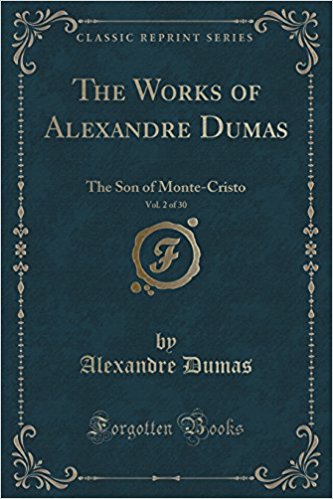
Son of Monte Cristo

Inquisitive minds will have noted my rule of thumb introduced in yesterday’s Jules Verne review. Jules Lermina’s Son Of Monte Cristo is a far superior book and I read all 356 pages of volume two in one afternoon non-stop [1]. It would appear Lermina has won the “Battle of the Jules” in my mind at least.

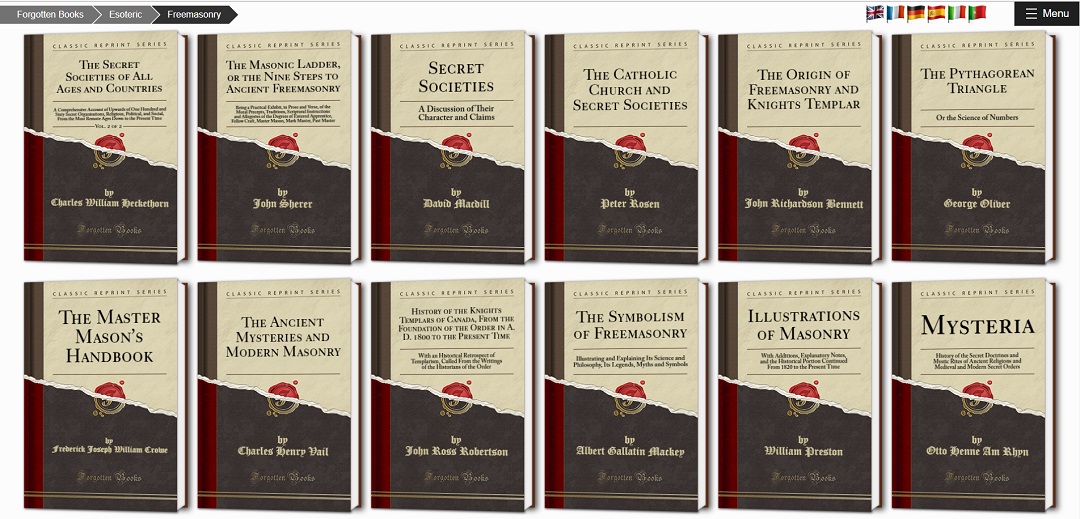
If you haven’t already, I suggest you cast your eye over Forgotten Books. It’s a very odd website and I still can’t quite figure it out. The headline business case is clear: they are unearthing, polishing and republishing important or obscure old books that are out of copyright. That isn’t so remarkable. What is remarkable is they have almost a million titles.

Wait… what?


Forgotten Books

The Freemasonry section alone has 200 books

This isn’t Google with limitless CIA investor funding nor Ferrari selling high margin single items. Forgotten Books is scratching out a living from 18th and 19th Century books that nobody read the first time around either. Consider some titles on sale:

We aren’t talking Harry Potter sales numbers here, are we lads? Clearly they are using some kind of automation but I wonder who scanned all these original paper copies into the system and who checked their software’s output. Who uploaded the products to Amazon? [2]. I held off on buying any Forgotten Books paperbacks for over a month because I assumed they’d be rushed botched jobs, or that it’s all a scam.

But I can’t resist the idea of having a treasure trove of lost scholarship. This was my way in.

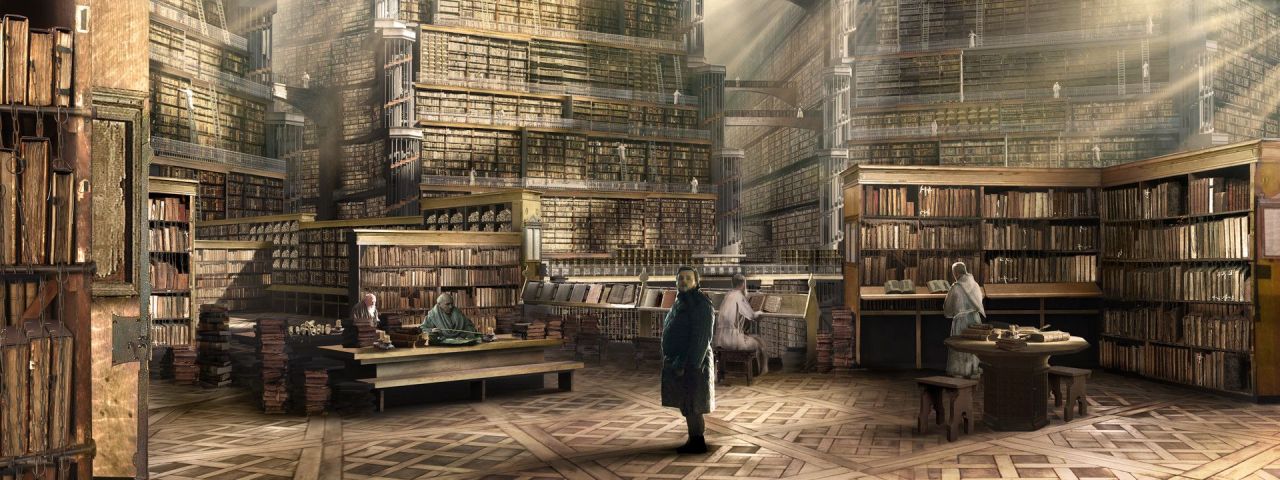
You see, I’ve always wanted a library of my own. Not a public library that plebs can use for free coffee while listening to rap music on their smartphone speakers. I like the great libraries of antiquity, such as in Alexandria, or the fictional library in Game Of Thrones where the fat cuck discovers the secret to stopping the white walkers. I like George Lucas’ private library in his house. I like the libraries where Dennis Wheatley characters sip port, smoke cigarettes, and plot the destruction of communism.

Game of thrones library

I’m glad winter is coming because I intend to spend it here

Back in my university days I’d enjoy exploring untraveled aisles of leather-bound academic journals dating back up to a hundred years. Some university would put out The Postivist Journal of Criminology [3] starting in 1923 and it would run quarterly for two decades. Each issue would have ten academic papers, each summarising a genuine research project backed by statistics, graphs, and methodological musing. My university would have a subscription and at the end of the year some librarian would have them bound into a single volume and placed on a shelf. There it would remain unnoticed and unloved for decades until I came along, dusted it off, and tried to figure a way to reference it in my term paper.

A university library is like a hill of rabbit holes, each one lets you tumble into a different world. I like that kind of thing. Forgotten Books lets me reproduce the experience at a fraction of the cost. I have my own library of Alexandria at my fingertips [4]

I couldn’t resist so I found Son Of Monte Cristo and ordered a paperback on Amazon. It’s print on demand (using the same printer as Daygame Infinite). Two weeks later I had a copy and it was solid. Nice cover, quality paper, no printing or legibility issues, and it felt weighty in my hands. Not a scam. I was impressed. You can read my review of volume one here.

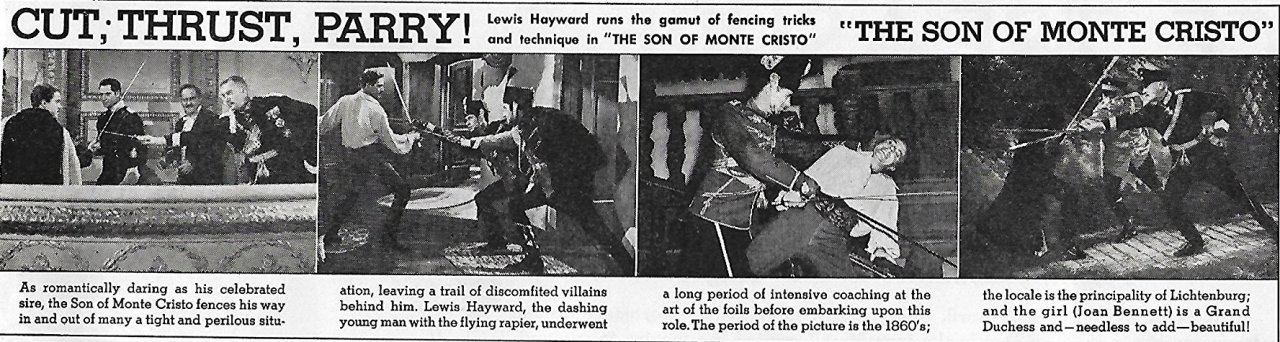
Movie

The movie version

Volume two picks up right where volume one left off, as Edmund Dantes’ team are sitting around a camp fire in Algeria having just seen off marauding Bedouins with the help of some former travelling acrobats led by a man named Fanfaro. This volume begins with Fanfaro’s back story and…….. that backstory (told as flashback) doesn’t end until page 202.

Really. This is a 356-page book and over half of it is a completely unrelated story involving characters who’ve only just been introduced a chapter before, and involving none of the main characters even tangentially. It’s like it was its own novel thrown in upon a tenuous pretext.

You’d likely think this is a bad thing? Nope. It’s an excellent 200-page story. I really enjoyed it. It concerns a dastardly plot for a dissolute vicomte from Paris to murder his brother to secure inheritance of a fortune, then to hunt down and assassinate the brother’s children as remaining legitimate heirs. The travelling acrobats get wrapped up in the plot. It begins with unexpected meetings in a Black Forest tavern in Germany then moves on to Paris.

Son of Monte Cristo

I think they added all the fights in for the movie

The story told, the remaining 156 pages do then tie Fanfaro’s story into Dantes’, so the saga ends with symmetry and purpose. Nonetheless it’s a brave diversion. We are in the unusual position of having a Count Of Monte Cristo book barely involving the Count, and not written by Dumas. Bold [5].

Written only ten years after his fellow Jules’ aquatic adventure, Lermine’s tale is a real page turner. However, the plotting is preposterous in its reliance upon wild coincidences to advance the plot. Here are a couple:

  • Fanfaro must flee across the rooftops from police and accidentally falls through a skylight…. into the new home of his best friend he hasn’t seen in years and didn’t even know was alive.
  • Fanfaro’s sister escapes an abduction and throws herself into the Seine to commit suicide, unwittingly right in front of Spero, Edmund Dantes’ son, who loves her and happens to be walking that street at that moment.
  • This sister fled an Eastern province where her mother was burned alive during a Cossack raid. Ten years later in Paris she asks at a local hospice for an elderly unfortunate to take care of and the clerk assigns her…. her mother, who still lives but has lost her memory.

This book really is coincidence after coincidence. It’s written as if France only has twenty people living there so they are continually pressed up against each other by fate. It didn’t bother me because this is intended as a romantic (in the philosophical sense) tall tale so I switched my brain off and enjoyed the action. Lermine isn’t lacking ingenuity nor the imagination to create interesting plot devices. He’s also in keeping with themes from the Dumas original, such as a family being broken upon under traumatising conditions gradually reconstituting itself through unexpected meetings many years later.

A flaw of this book that isn’t so forgivable is his characterisation of the two Monte Cristo men, the father Edmund and the son Spero. Readers of the Dumas original will have been impressed by his presentation of Edmund Dantes as a complex character. Edmund burns with vengeance but is also tempered by a love for the world and a thirst for self improvement. He’s calculating, brave, resourceful, and patient. Very patient. Edmund Dantes is a mover, a man who bends the world to his will. Modern men like The Count Of Monte Cristo specifically because Dantes is such a great fictional role model.

Lermina’s Dantes doesn’t really do anything but make noble speeches about doing the right thing. He’s constantly referred to by other characters as a great man but within this book does nothing at all to earn it. It’s tell not show. He’s barely even in the book. His son is worse. He’s an impulsive dunderhead who is tossed around by the vagaries of fate, precisely the opposite of Dumas’ Edmund Dantes. It’s hard to root for him because although brave and virtuous, he is very easily tricked. Watching him face up to a challenge is as cringeworthy and incompetent as watching a Deepak Wayne daygame infield.

Perhaps Lermina was trying to convey the tragedy at the heart of the book, that for all of Dantes’ riches, his unquenchable thirst for vengeance ultimately ruined him and all around him. There’s a section towards the end where Spero reflects upon having been overly protected by his father and his training in manly arts was at the expense of learning to chart his own path through the world. So, Spero’s blockheadedness and reactivity may actually be a deliberate theme – he’s not a hero like his dad.

By far the best characters in the book are the black hats. Benedetto the former galley slave is brilliant, a squalid and irredeemable rogue. The Vicomtes of Talizeric, both father and son, are good too in their scheming and vanity.

George Lucas skywalker library

A purchase of Daygame Infinite helps fund the Krauser Library of Antiquity

In summary, if you like the idea of rummaging through literary history like it’s your own virtual library you could do a lot worse than dusting off this story. It won’t uplift you like the Dumas original can but it’s a ripping yarn within the same universe. I just ordered The Countess Of Monte Cristo to see if that can maintain the pace.

If you’d like to see a talented craftsman creating a masterpiece of personal development literature you should get yourself Daygame Infinite. If you’d rather see an unoriginal hack shitting out a pale imitation you could try Str…. no, don’t bother.

[1] Except for toilet breaks and a walk to Tescos to buy a bag of onion rings crisps.
[2] I don’t have any answers.
[3] I just made up that particular journal but it’s close to the real ones.
[4] Literally all 945,609 books if you do the online subscription because it lets you access every volume instantly by PDF. I just happen to prefer paper.
[5] Or total piss-take, depending on your point of view.

#38 – 20,000 Leagues Under The Sea, Jules Verne BOOK REVIEW

March 9, 2018
krauserpua

book cover

Here’s a rule of thumb I use in deciding if a book is any good: do I keep putting it down and reading other books instead?

I bought Twenty Thousand Leagues Under The Sea (TTLUTS) in Serbia in November last year. I’d just knobbed a gypsy-looking girl from Nis who had massive [1] fake tits. I decided that was me done with chasing girls for the year so I wandered into a big bookshop just off the Knez Mihailova main boulevard [2] to their huge English language section and perused the Wordsworth Classics shelves.

Fake tits

Seriously, just like these

“I’ve never tried Jules Verne. He was the original sci-fi writer wasn’t he?”

I wish I hadn’t. I read thirty pages – this story starts off good – but got distracted with Resident Evil VII and the Mafia III dlcs. I read another twenty pages at the arse end of December and was bored. There were still two hundred pages remaining and I just didn’t much fancy the job. It felt like hard work.

Between starting and finishing TTLUTS I read thirty-seven other books. That’s how poor an impression poor Jules Verne made on me. But what’s so wrong with this book?

Here’s my thoughts.

1. Intention + Obstacle
The key driver behind drama is that the protagonist wants/needs something (intention) and then must try to overcome the obstacles in his way. Think back to any fictional book or movie you enjoyed and you can easily pull out the intentions and obstacles. TTLUTS starts out well with mysterious reports of a sea monster than has rammed ships in every ocean, new stories about it, and then a hunting expedition setting out to kill it. The narrator is a natural scientist aboard the hunting ship. This is the good start the book gets off to:

Intention: Find and kill the sea monster
Obstacle: Locating it, and besting it in battle.

As we all know and the cover makes clear, the “sea monster” is actually the world’s first submarine, The Nautilus, piloted by Captain Nemo. The narrator is rescued from the sinking ship and held politely as prisoner aboard the submarine along with two of his colleagues, his servant Conseil and a grisly Canadian harpooner called Ned Land.

From this point on the intention and obstacle disappears. The rest of the book is just Nemo taking them on an underwater magical mystery tour [3] and the narrator documenting the fauna and sea life in excruciating detail. There are occasional dramas, such as being attacked by savages, being trapped under ice, but they all come and go quickly. There is no long-term momentum.

This means the book flounders badly. It’s becalmed, like a sailing ship without wind. This more than any other thing is what makes the book drag. It’s aimless.

Finding-Nemo-finding-nemo-3570035-853-480

Wish I’d never found him

2. Horrible prose
Jules Verne cannot write a good paragraph to save his life. Some of his paragraphs are so long and turgid that they last longer than an enter page. Each page in this paperback edition has 42 lines and approximately 12 words per line. So, some paragraphs are over FIVE HUNDRED words long. That’s a wall-of-text that would make even the most insane conspiracy theorists of QAnon scholarship think “that dudes’s crazy writing walls of text like that”.

Worse is that so much of the prose is pointless zoological detail. For example:

“The vegetation of this desolate continent seemed to me much restricted. Some lichens of the species unsnea melanoxantha lay upon the black rocks; some microscopic plants, rudimentary diatomas, a kind of cells, placed between two quartz shells; long purple and scarley fucus, supported on little swimming bladders, which the breaking of that waves brought to the shore. These constituted the meagre flora of this region. The shore was strewn with molluscs, little mussels, limpets, smooth bucards in the shape of a heart, and particularly some clios, with oblong membraneous bodies, the head of which was formed of two rounded lobes. I also saw myriads of northern clios, one and a quarter inches long, of which a whale would swallow a whole world at a mouthful; and some charming pteropods, perfect sea butterflies, animating the waters on the skirts of the shore” [page 193]

Did that just paint a memorable image in your mind? Of course it fucking didn’t. That’s only the second half of a paragraph too! Lest you think I chose the worst example, I assure you I just turned to a random page a moment before typing. Imagine page after page of these walls of text while nothing is actually happening in the story. Your eyes will glaze over and you’ll struggled not to skim until there’s some action. [4]

3. No character development.
Captain Nemo is a well-educated, cultured man who holds a deep bitterness against landlubbers which is never explained nor resolved. Conseil is a polite plucky servant who says “yes sir” and “I should think so sir” to his master. The narrator is fascinated by the sea adventure and wishes to record everything while half-heartedly thinking of escape. Ned Land is a gruff whale hunter who is impatient to get back on land so as to board another boat and start killing sea beasts again. That’s it. The characters are completely one-dimensional. We never find out their back stories, or deeper motivations, or hopes and dreams, or interests. They never change from page one to page 244. Nobody has a character arc and they barely even interact with each other except to exchange pleasantries.

This book is awful. So why is it considered a classic?

I can only assume it was Verne’s imagination capturing the readership. This book was written in 1870 when science fiction didn’t exist. By casting his book as an adventure under the sea and then pretending to document its wonders, the reader could feel like they were getting a travelogue. It reads a bit like a BBC2 Holiday show.

Fuck the lot of you cunts

Better off with a ticket for this kind of thing

There’s no excuse for the shitty prose or absent plot. It was written a full 25 years after The Count Of Monte Cristo. Frenchmen had long since figured out how to write a good novel.

If you’d like a travelogue of a wild adventure above the sea, gasping in excitement at all the exciting street fauna wandering past the narrator, you’ll have to buy my memoir Balls Deep, A Deplorable Cad, and Adventure Sex

[1] And I mean massive.
[2] Belgrade has many bookshops, all of which seem to do a brisk trade. Yet another reason why I like Serbia.
[3] Living in his yellow submarine. Did you see what I did there?
[4] Bear in mind this is not scientific witness. Verne is just making all this shit up because half the time the Nautilus is in deep ocean that had never been visited for real.

Part 5 of the Daygame Infinite talk

March 7, 2018
krauserpua

Here’s some daygame content for a change, the next part of my Infinite talk.

In other news I booked up my first two months of travel for the 2018 season. I’m going to prioritise girlfriends, socialising with buddies, and drinking beer over the usual skirt chasing but I certainly expect to keep my hand in with the game. Should any pretty girl be sufficiently indiscreet to throw me a come-hither look you can bet I’ll still pounce upon it.

I’ve signed up all four of the residential coaching sessions I wanted to do this year. I’m may yet add to them, so feel free to contact me if you’re interested. Read the “Coaching” tab at the top of the page for details. As yet I’m undecided. People interested in coaching July/August are the most welcome to enquire.

I’m pleased to announce there’s a detailed third review of Daygame Infinite in the comments to this post. Here’s a few snippets:

“The case scenarios cover three different types of girls and also provides further “calibration examples” which is effectively more examples (that’s a good thing). I can say from my personal experience in adopting a similar style (not using same words, but style) that the engagement I am getting from girls has both increased and improved.”

“The book is damn good”

So click on the link if you’d like a third opinion on the product.